EN
EN
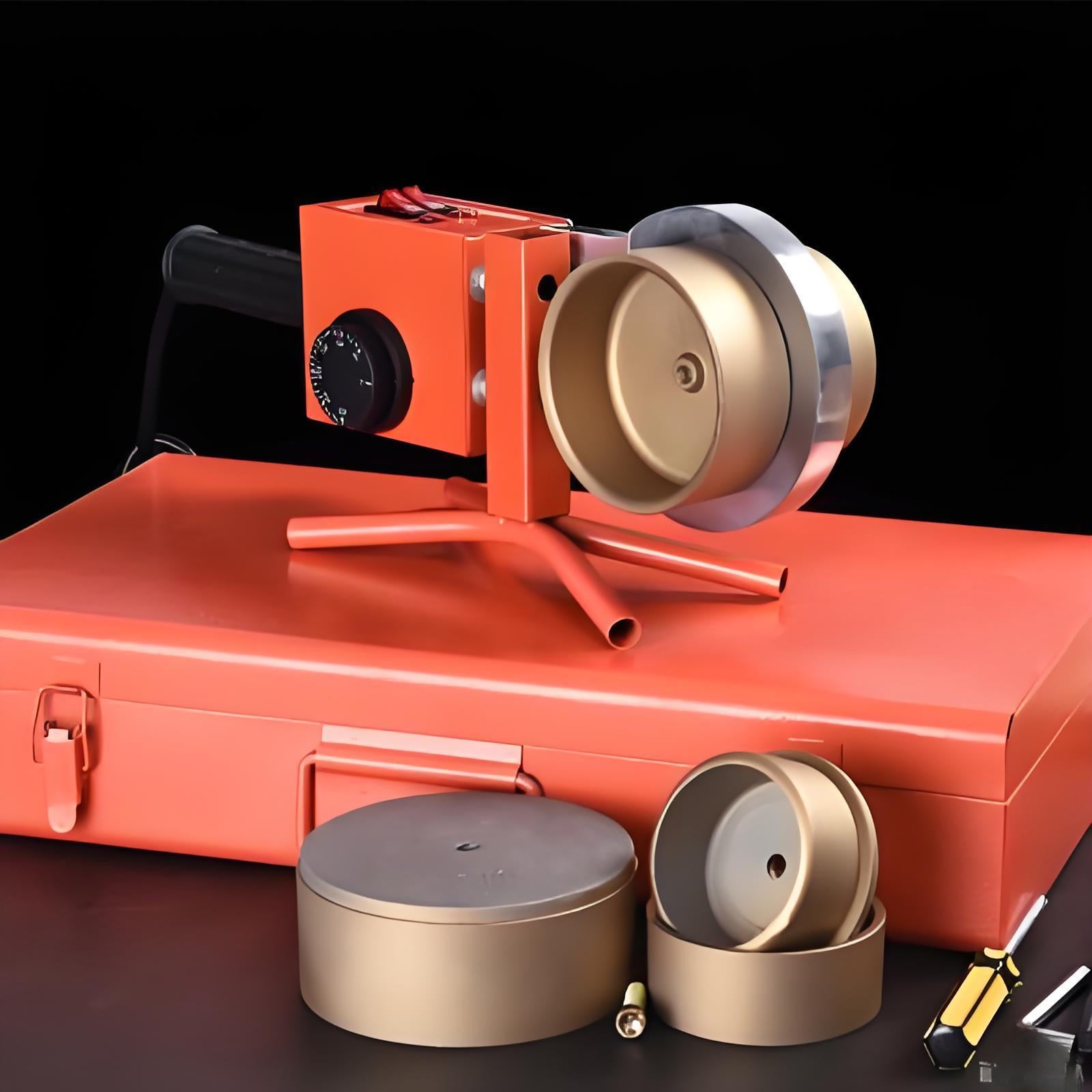
Hot melt socket welding machine
Professional Socket Fusion Machine for Plumbing & Heating Installation
- Overview
- Recommended Products
 Product Description
The main components of the socket fusion welding machine are made of pure aluminum.
Lighter, smoother and stronger than cast and steel moulds.
Adopts electrostatic spraying technology, providing a bright, smooth and durable surface.
Equipped with imported hydraulic power units to reduce maintenance costs and effectively extend service life.
Packed in color cartons for easy access, attractive appearance and firm structure.General Description
Socket fusion welding machine is a special welding device for connecting thermoplastic pipes and fittings. It adopts socket fusion technology, transferring heat from the heating plate to the welding surfaces of plastic components via electric heating to melt them. The heating plate is then quickly removed, and the molten surfaces are joined, solidified and fused into one integral part, completing the welding process.Application Features
This welding method is widely used for connecting HDPE pipes. The socket fusion welding machine is designed and manufactured to ensure stable welding performance and high weld quality.It features an automatic closed-loop IC control system that can automatically detect and judge various welding defects and output corresponding alarm codes. It also supports real-time printing of actual welding parameters for archiving and analysis.In addition, the connection adapter for pipe fittings is optimized to reduce resistance changes caused by poor contact during connection, avoiding deviations in actual welding parameters. These features ensure the reliability and efficiency of the socket fusion welding machine.Working Principle
During welding, clamps matching the pipe diameter are installed on the frame with sufficient support to ensure the pipes are aligned with the frame centerline and easy to move.The heating plate temperature is set between 200–230°C (subject to manufacturer specifications). Power is switched on, and the heating plate, milling cutter and oil pump are activated for test welding.
Steps:
Clean dirt on pipe ends, mark insertion depth and remove surface oxidation;
Clamp pipes on the frame and fit electrofusion sockets;
Align components to ensure coaxiality;
Heat and melt pipes and fittings;
After cooling, a firm, neat and durable joint is achieved.Advantages
Environmental ProtectionNo welding filler is required during welding, making the process safer and more eco-friendly while reducing material costs. No hazardous substances are used, supporting green production.
High Production EfficiencyFast welding cycle ensures high productivity. Welding can be performed at low temperatures, saving time on film removal and scraping. The fusion process is faster and more efficient than brazing.
Welding ReliabilityStable and consistent welding quality with minimal gaps, small resistance deviation, stable tension and controllable thickness.The mature process supports intelligent production lines. Welding parameters including current, time, pressure and deformation can be monitored, recorded and traced.
| Welding Range | 20mm–63mm, 63mm–160mm |
| Applicable Materials | PE, PB, PP, PVDF |
Operating Voltage |
220V±10% or as required |
| Total Power | 0.7kW–1.8kW |
FAQ
1. What is a hot melt socket welding machine?
It's a tool with heated metal irons (heads) used to join small-diameter plastic pipe — mainly PPR pipe and fittings — by melting the pipe end and fitting socket at the same time, then pushing them together to fuse into one solid joint.
2. What pipe sizes can a socket welding machine handle?
Most socket welding machines cover a range from small diameters up to around 63-160mm, using interchangeable iron heads sized to match each pipe diameter. You need the correct iron size for each pipe diameter — one head doesn't fit all sizes.
3. What temperature should the machine be set to?
Most PPR socket fusion is done at around 260°C, but always check the pipe and fitting manufacturer's recommended temperature, since it can vary slightly by resin type and brand. Setting the wrong temperature is a common cause of weak or failed joints.
4. Why does the heating iron have a non-stick coating?
The irons are usually coated (often PTFE/Teflon-style) so melted plastic doesn't stick to the metal surface during fusion. A damaged or worn coating can cause plastic to stick and drag, leading to uneven or contaminated joints — check the coating condition regularly.
5. How long should the pipe and fitting stay on the heating iron?
Heating time depends on pipe diameter — larger diameters need longer heating time to melt evenly through the wall. Manufacturers publish a heating time chart by diameter; guessing or eyeballing heating time is a common cause of weak welds.
6. What's a common mistake that ruins a socket weld?
Twisting the pipe while inserting it into the fitting during fusion is one of the most common mistakes — it disrupts the melted surface and weakens the bond. Pipe and fitting should be pushed straight together without rotating, then held still while the joint cools.
7. Can one machine have multiple heating irons at once?
Yes — many socket welding machines are sold with a set of interchangeable irons for different diameters, and some multi-head units let you mount several sizes at once for faster job-site switching between pipe sizes.
8. Is a socket welding machine portable, or does it need a workshop setup?
Most are designed to be portable and handheld, made for on-site plumbing and heating installation work rather than factory use. They typically just need a standard power outlet or a generator on remote sites.
9. How long does the heating iron coating or element last?
It depends on usage frequency and care, but the coating can wear down faster if it's scraped, overheated beyond the rated temperature, or not cleaned of melted plastic residue. Replacement iron heads are usually available separately when a coating wears out.
10. What should I check before buying a socket welding machine?
Confirm the diameter range and iron sizes match the pipe you'll actually be working with, check that the temperature control is accurate and adjustable, and look for a solid, stable stand or clamp setup — an unstable machine makes consistent, straight fusion joints harder to achieve.
Case
Product:Hot melt socket welding machine
Location:Philippine