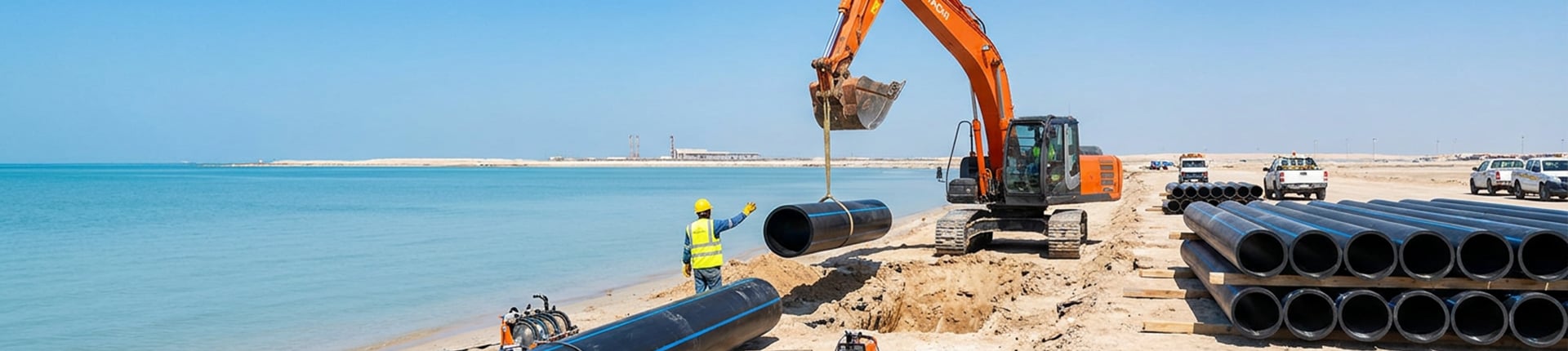
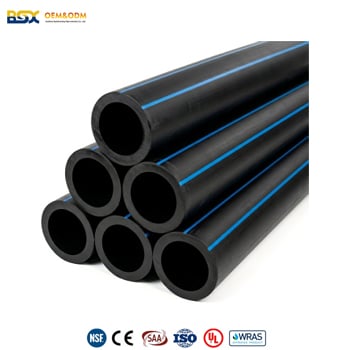
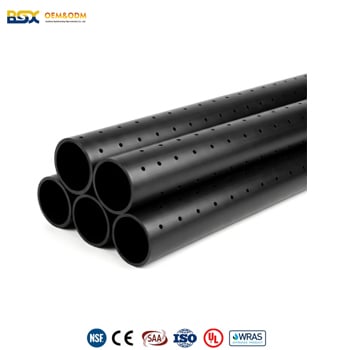
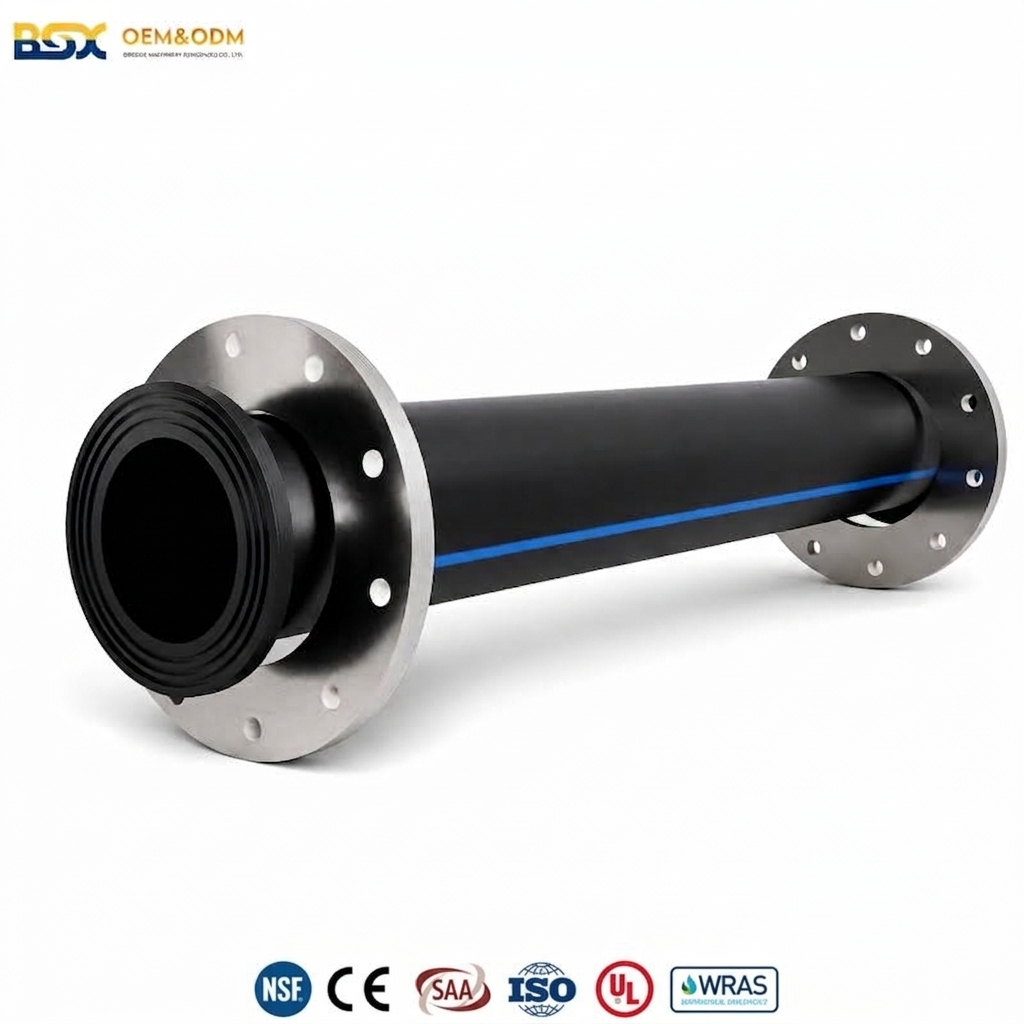
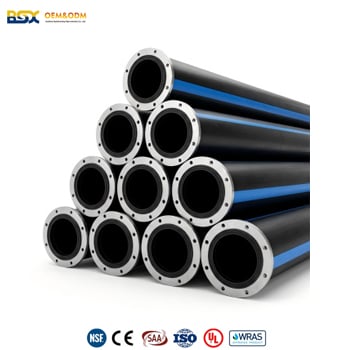
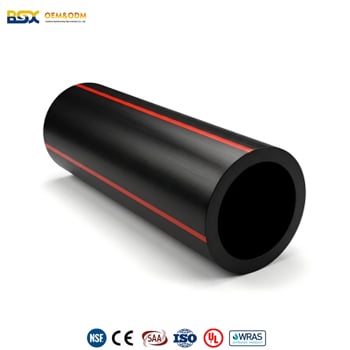
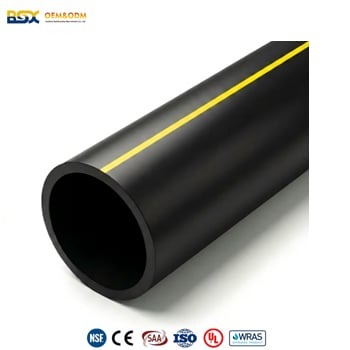
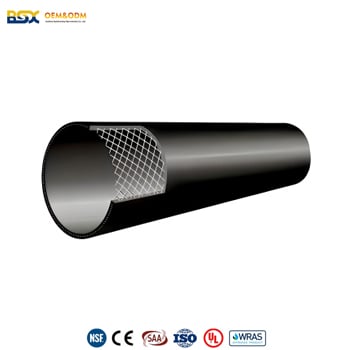
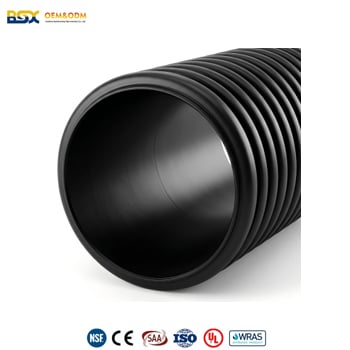
HDPE pipes (High-Density Polyethylene pipes) are made from high-density polyethylene as raw material and are extruded into shape. Their core advantages are lightweight yet strong, corrosion-resistant and impact-resistant, smooth inner walls, reliable connections, and long service life. They are widely used in urban infrastructure, real estate, roads, rivers, agriculture, and other scenarios, and can be installed using either open-cut or trenchless construction methods.
Core Characteristics
- Material and Lifespan: Density around 0.95g/cm³, non-polar; normal buried service life is 50 years, and they are 100% recyclable.
- Corrosion and Impact Resistance: Resistant to most acids, alkalis, and salts; not resistant to strong oxidizing agents/aromatic hydrocarbons/halogenated hydrocarbons; good low-temperature toughness; usable from -60°C to 60°C; resistant to settlement and earthquakes.
- Excellent Hydraulic Performance: Smooth inner walls, Manning coefficient about 0.009; for the same diameter, water transport capacity is 30% higher than traditional pipes; does not scale.
- Lightweight and High Strength: Weighs only 1/8 of steel pipes, ring stiffness SN4–SN16, wear resistance is 4 times that of steel pipes; suitable for conveying abrasive media.
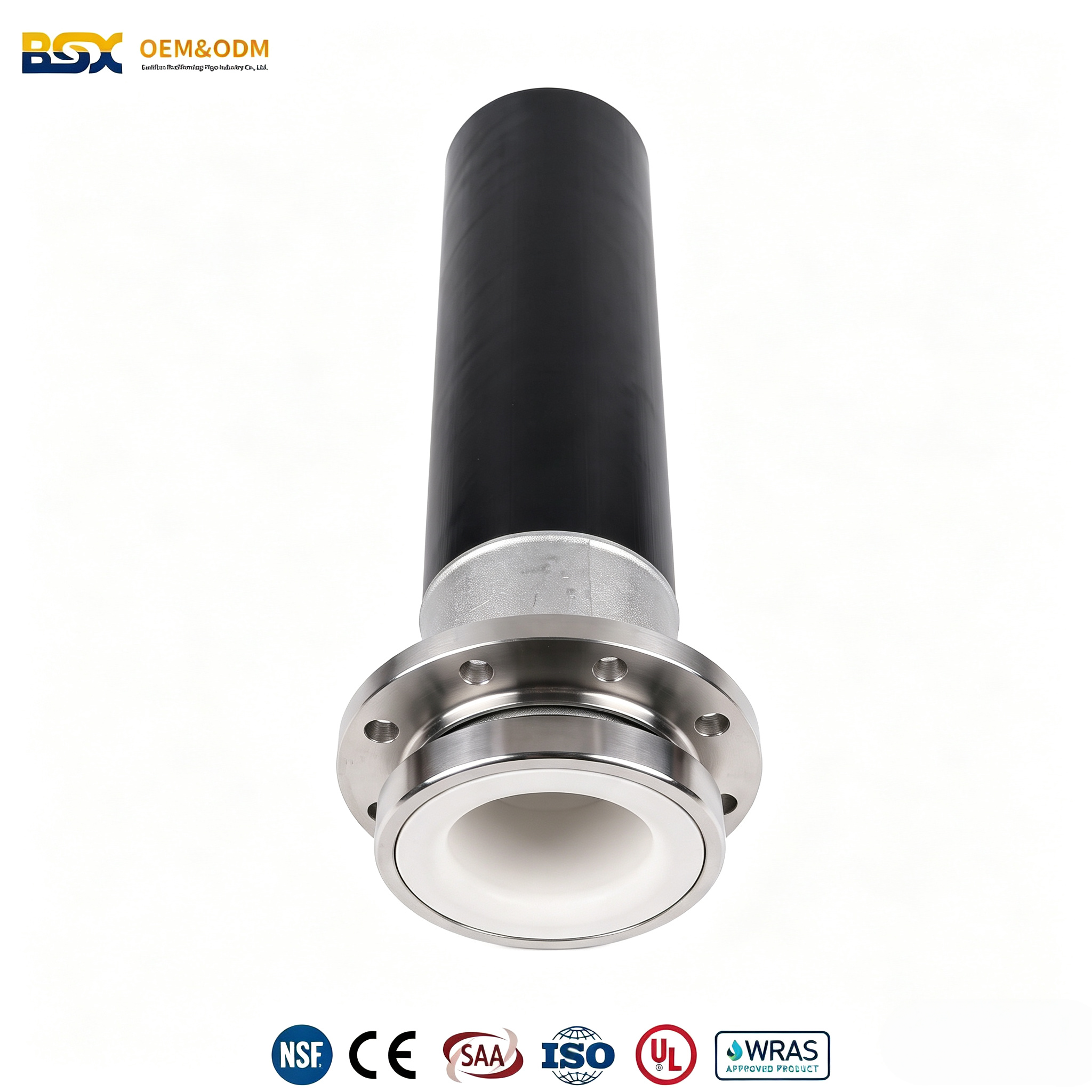
- Reliable Connection: Butt fusion (≥75mm), electrofusion (any diameter, better for small diameters or limited spaces), joint strength ≥ pipe body; drainage can use socket flexible seals.
 EN
EN