EN
EN

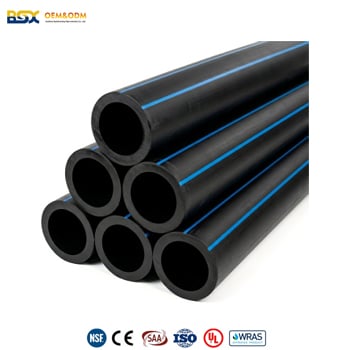
High pressure HDPE pipe for water supply
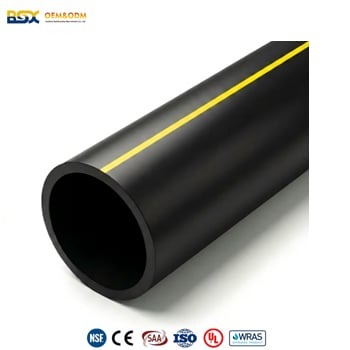
BSX High pressure HDPE pipe for water supply
Raw materials: PE100, PE4710, PE100RC
Standard: ISO 4427/EN 12201/S/NZS 4130
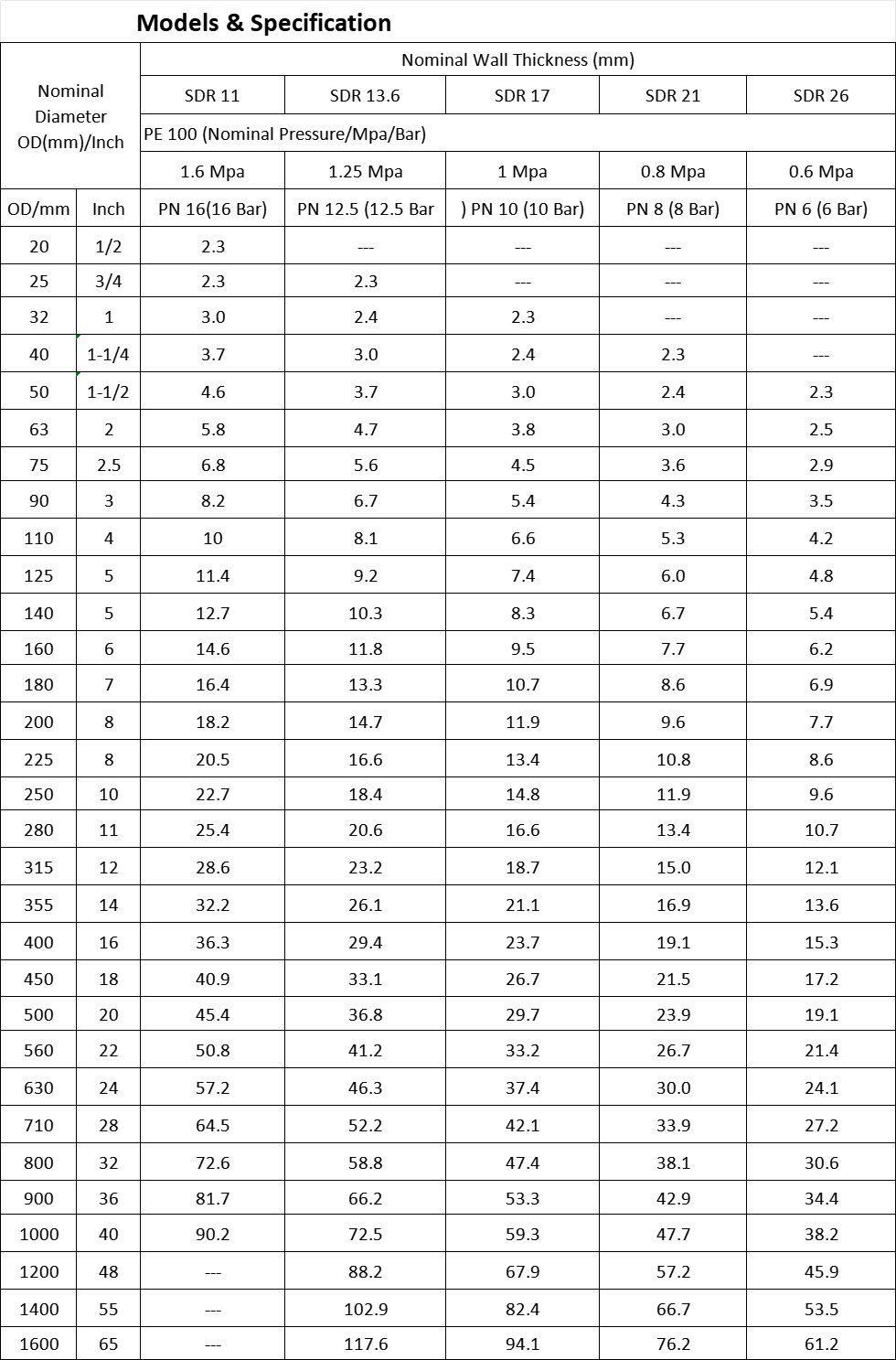
Diameter range: DN20mm-1600mm (1/2-inch to 65inch)
Pressure levels: SDR17, SDR13.6, SDR11, SDR9
PN10、PN12.5、PN16、PN20
Certification: UL, WRAS, NSF, ISO, CE
Length: 5.8 meters (20 feet), 11.8-12 meters//L40 feet
Color: Black background with blue stripes (customizable color)
- Overview
- Recommended Products
 Product Overview
Baishunxing Pipe Industry HDPE Water Supply Pipes are manufactured from premium high-density polyethylene (PE100/PE80) and serve as the ideal replacement for traditional steel and PVC pipes. The blue color typically signifies its specific use for potable water. These pipes are widely used in municipal water supply, industrial fluid transport, and modern agricultural irrigation systems.
Key Features
Non-toxic & Hygienic: The material is biologically inert and contains no heavy metal additives. It does not scale or harbor bacteria, ensuring the hygiene and safety of drinking water during delivery.
Excellent Corrosion Resistance: Resistant to erosion by a wide variety of chemical media. There are no electrochemical corrosion issues, eliminating the need for extra anti-corrosion layers even in corrosive soils.
Smooth Inner Wall: The extremely low friction coefficient minimizes flow resistance, which not only enhances water delivery efficiency but also significantly reduces pumping energy consumption during long-term operation.
High Flexibility: Exceptional impact resistance and elongation at break allow the pipes to bend slightly, effectively adapting to uneven ground settlement and terrain changes.
Major Advantages
Extra Long Service Life:Under standard operating temperatures and pressures, Baishunxing Pipe Industry HDPE Pipes have a service life of over 50 years, significantly reducing system maintenance costs.
Leak-free Connection: By using heat fusion (butt fusion) or electrofusion, the joints achieve molecular-level integration. The joint strength exceeds the pipe itself, ensuring a leak-free piping system.
Low Construction Cost:Lightweight design makes them easy to handle and install on-site, minimizing the need for heavy construction equipment and saving substantial labor and time costs.
Low-Temperature Resistance: With an extremely low embrittlement temperature (down to -60°C), no pipe cracking occurs during construction in freezing environments, providing excellent environmental adaptability.
Typical Applications
Municipal Water Supply: Urban main pipe networks, water plant distribution systems, and rural drinking water safety projects.
Industrial Piping: Process water and slurry transport for chemical, pharmaceutical, and paper industries.
Agricultural Irrigation: Modern water-saving sprinkler and drip irrigation piping systems.
Temporary Water Lines: Temporary water supply systems for construction sites and large-scale events.
FAQ
1. What makes HDPE pipe suitable for high-pressure water supply?
Answer: High-pressure HDPE relies on advanced high-density PE100 resin. Unlike standard plastics, PE100 offers superior Minimum Required Strength (10.0 MPa). This allows it to handle extreme hydrostatic pressure while maintaining structural integrity, making it the premier choice for heavy-duty municipal mains.
2. What SDR (Standard Dimension Ratio) is required for high-pressure water pipes?
Answer: Lower SDR values are mandatory for high-pressure networks because they indicate a thicker pipe wall. As engineering consultants, we specify SDR 11 (PN16) for standard high-pressure mains, and SDR 9 (PN20) or SDR 7.4 (PN25) for extreme industrial pumping applications.
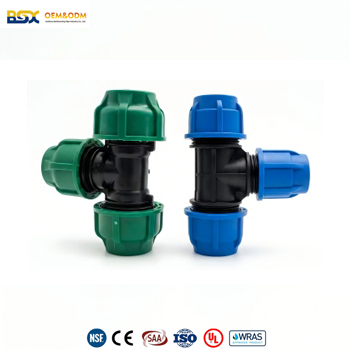
3. How do high-pressure HDPE pipes connect to metal valves without leaking?
Answer: We utilize precision-machined mechanical flange transitions and threaded joints that strictly eliminate the use of rubber rings. Rubber gaskets inevitably degrade under continuous high-pressure water streams. Our gasket-free engineering ensures a permanent, zero-leak seal that matches the pipeline's 50-year lifespan.
4. Can high-pressure HDPE pipes survive in high-temperature tropical regions?
Answer: Yes. For hot climates like Southeast Asia and Africa, we calculate specific temperature derating factors. While standard PN ratings are based on 20°C, high-pressure PE100 pipes maintain exceptional stability even at 40°C, ensuring continuous fluid transport without bursting under intense heat.
5. Does high-pressure water flow cause internal erosion in HDPE pipes?
Answer: No. HDPE possesses incredible abrasion resistance, often outperforming steel. The ultra-smooth internal surface (Hazen-Williams C=150) prevents friction and scaling. Even under high-velocity, high-pressure flow, the pipe retains its original wall thickness and pumping efficiency indefinitely.
6. What is the difference between PE100 and PE100-RC for high-pressure systems?
Answer: PE100-RC (Resistance to Crack) is a highly specialized resin designed for extreme conditions. It offers exceptional resistance to slow crack growth caused by point loads (like sharp rocks). It is highly recommended for high-pressure trenchless installations (HDD) without protective sand bedding.
7. Can high-pressure HDPE pipes withstand severe water hammer?
Answer: Absolutely. The inherent elasticity of HDPE allows it to expand slightly to absorb kinetic energy. High-pressure HDPE mains can safely withstand transient surge pressures (water hammer) up to 1.5 times their nominal working pressure, protecting expensive pumps from shock damage.
8. What is the safest welding method for high-pressure HDPE water mains?
Answer: Butt-fusion is the definitive global standard. This thermal process melts and fuses the pipe ends under strict pressure protocols. The resulting monolithic joint is structurally stronger than the pipe wall itself, guaranteeing absolute safety in high-pressure fluid networks.
9. Are these industrial high-pressure pipes safe for municipal drinking water?
Answer: Yes. They are extruded from 100% virgin, food-grade PE100 material. Despite handling immense industrial pressure, they remain completely non-toxic and biologically inert. They prevent heavy metal leaching and fully comply with WHO and ISO 4427 potable water standards.
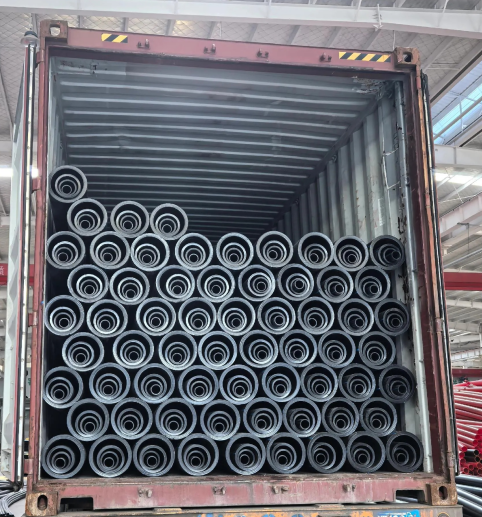
10. How do you optimize global logistics for heavy-wall, high-pressure HDPE?
Answer: High-pressure pipes have thicker walls, which impacts shipping volume. As supply chain experts, we employ strategic telescopic loading—nesting smaller diameter pipes inside larger ones—to maximize shipping container space. This drastically reduces global freight costs for massive infrastructure projects.
Cases
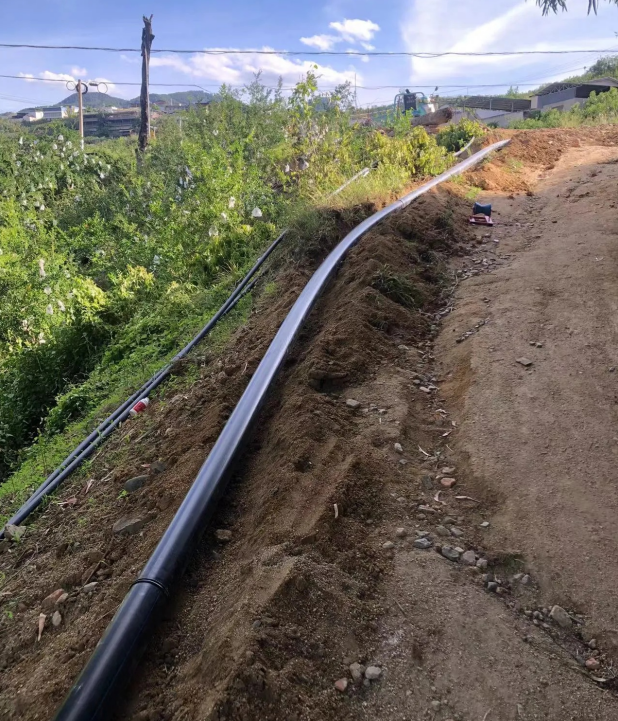
High pressure HDPE pipe for water supply
Product: HDPE pipe
DN160mm SDR11 PN14.6
Location: UAE