EN
EN

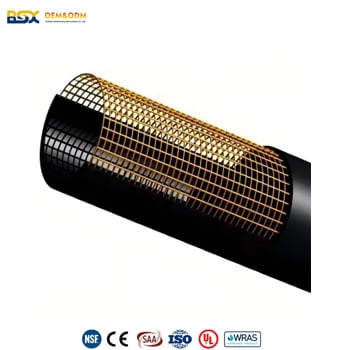
High Pressure Steel Skeleton Reinforced HDPE Pipe for Water Supply
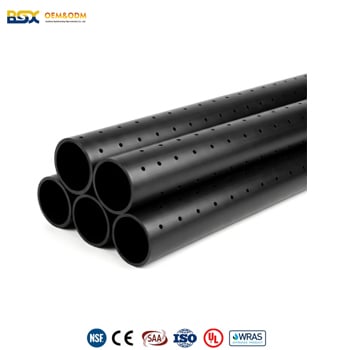
BSX High Pressure Steel Skeleton Reinforced HDPE Pipe for Water Supply
Raw materials: PE100, PE4710, PE100RC
Standard: ISO 4427/EN 12201/S/NZS 4130
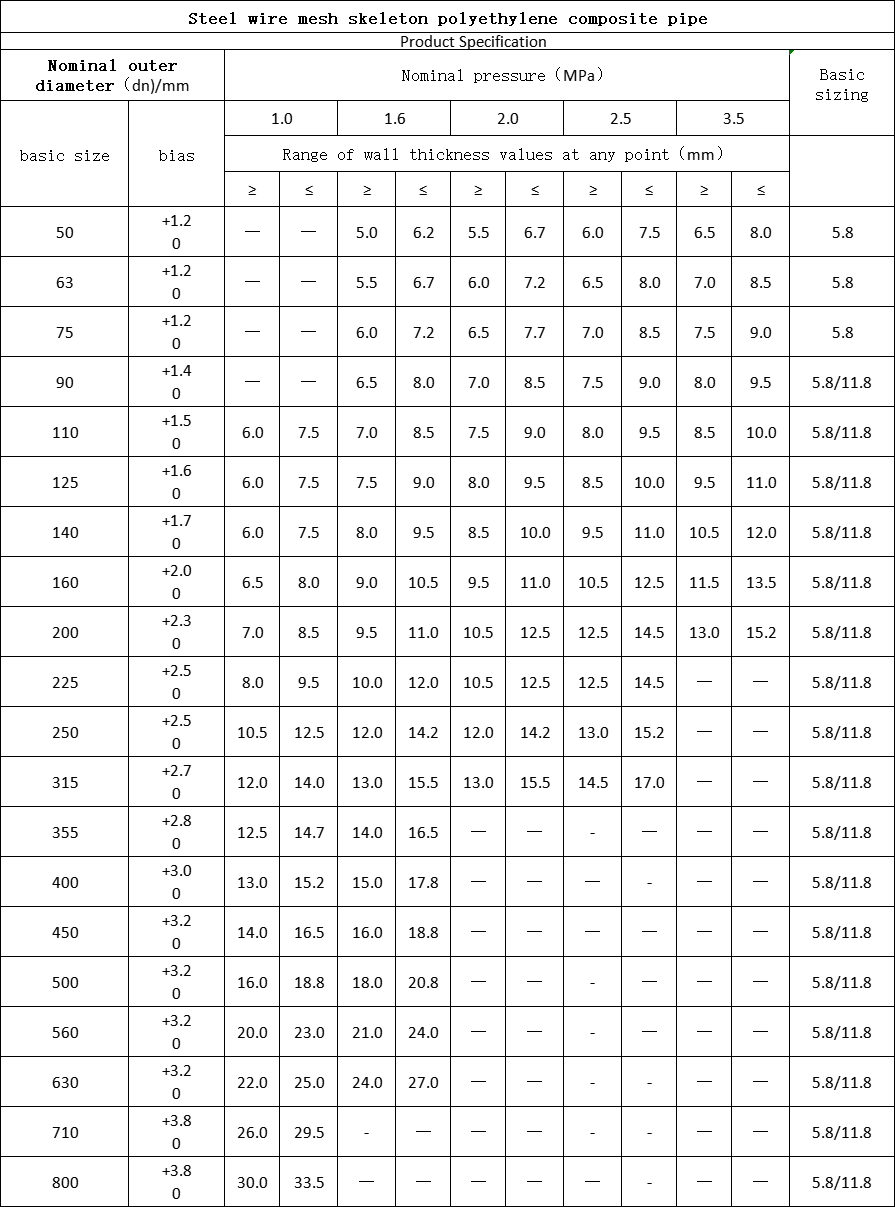
Diameter range: DN50mm-DN800mm
Pressure levels: SDR17, SDR11, SDR9, SDR7.4, SDR6, SDR5
PN10、PN16、PN20、PN25、PN30、PN35、PN40、PN50
Certification: UL, WRAS, NSF, ISO, CE
Length: 5.8 meters (20 feet), 11.8-12 meters//L40 feet
- Overview
- Recommended Products
 Product Overview
Baishunxing Pipe Industry Steel Skeleton Reinforced HDPE Pipe is a new type of double-sided anti-corrosion pressure pipe. It features a mesh steel skeleton, formed by welding high-quality low-carbon steel wires, as the reinforcement and high-density polyethylene (HDPE) as the matrix. The components are fused through thermal extrusion and high-performance adhesive resin. This creates a unified structural entity with exceptional stability and high-pressure bearing capacity.
Key Features
Baishunxing Pipe Industry the steel skeleton pipes produced by Baishunxing have extremely strong structural stability: The steel skeleton is formed by welding longitudinal and circumferential wires, providing the pipe with steel-like rigidity and excellent mechanical impact resistance.
Non-creep Characteristics:The rigid support of the steel skeleton eliminates the creep phenomenon common in pure plastic pipes under high pressure, ensuring long-term dimensional stability.
Good Thermal Conductivity: Due to the metal skeleton, its thermal conductivity is superior to ordinary plastic pipes, allowing it to better adapt to temperature fluctuations in industrial circulating water applications.
Double-sided Corrosion Resistance: Both the inner and outer walls are covered with a thick HDPE layer, effectively resisting erosion from strong acids, alkalis, and various chemical media.
Major Advantages
Safety in High-Pressure Transport:With design pressures typically ranging from 1.6 MPa to 5.0 MPa, it is an ideal choice for long-distance, high-pressure fluid transport.
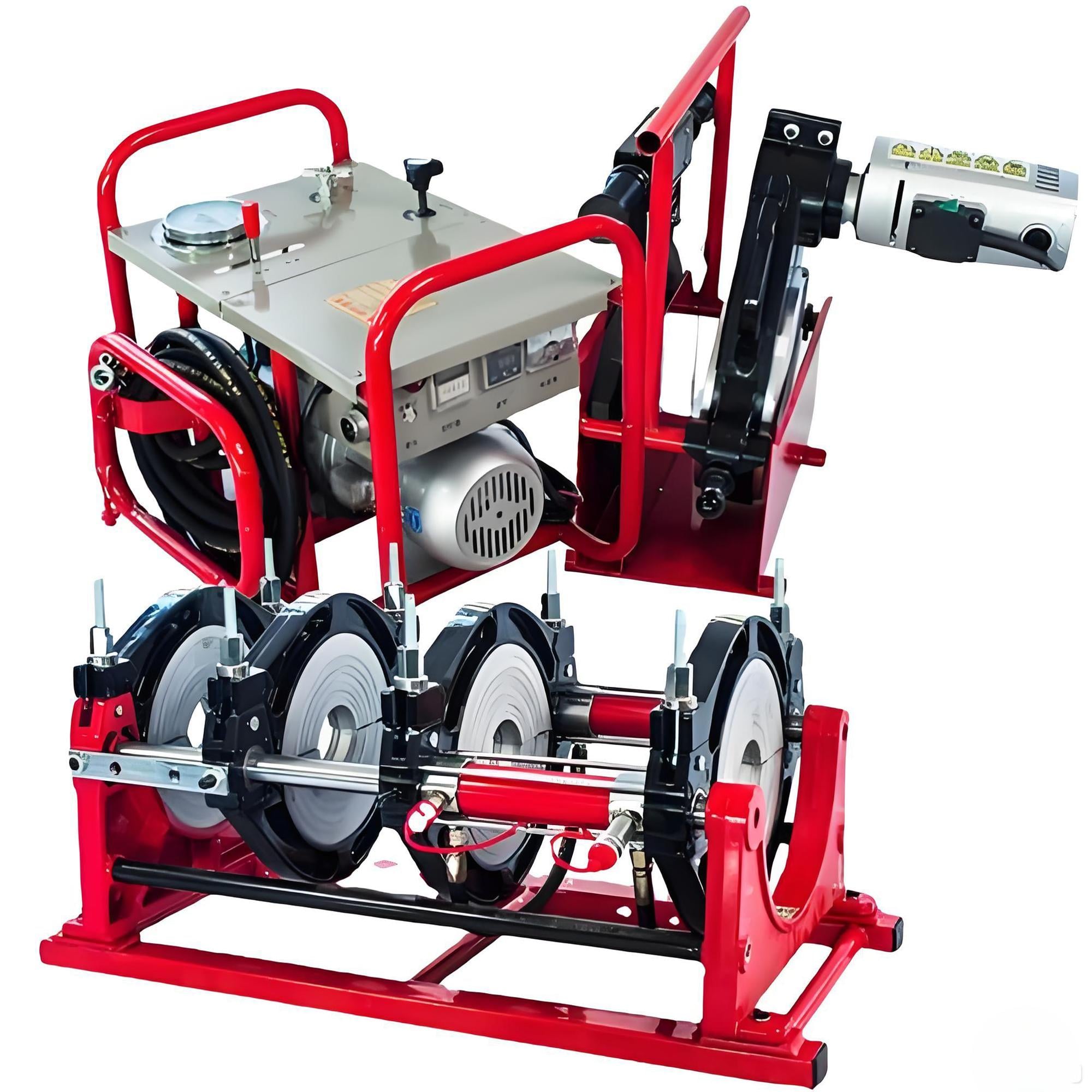
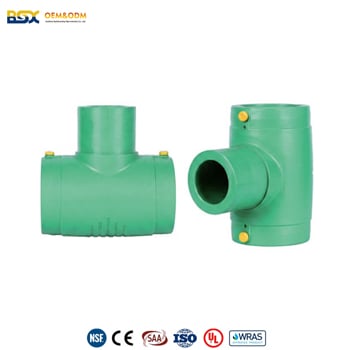
Electrofusion Joining for Zero Leakage:Uses specialized electrofusion fittings that fuse the joint and pipe completely through an automated welding process, resulting in a joint strength higher than the pipe itself.
Seismic and Wear Resistance: It offers good seismic performance, adapting to severe geological changes, and its wear resistance far exceeds that of metal pipes, making it suitable for transporting media containing solid particles.
Ease of Installation & Maintenance:The weight is approximately 1/4 to 1/3 that of steel pipes of the same specification, eliminating the need for heavy lifting equipment. The smooth inner wall prevents scaling, ensuring virtually maintenance-free operation.
Typical Applications
Industrial Process Piping:Transport of various acids, alkalis, circulating water, and slurries for chemical, power, and metallurgical plants.
Mining Projects: Used for mine drainage, tailings transport, and high-pressure water injection lines.
Oil & Gas Industry:Oilfield crude oil collection, water injection lines, and medium-to-high pressure natural gas transport.
Municipal High-Pressure Water Supply:Cross-regional water supply mains and high-pressure fire-fighting system networks.
FAQ
1. What is a Steel Skeleton Reinforced HDPE Pipe?
Answer: It is a composite pipe that integrates a high-strength steel wire mesh within virgin HDPE resin. This hybrid design delivers the ultimate anti-corrosion benefits of plastic combined with the extreme pressure-bearing capacity of steel, ideal for heavy-duty infrastructure.
2. What is the maximum pressure rating for reinforced HDPE pipes?
Answer: Thanks to the embedded steel skeleton, these pipes routinely handle extreme nominal pressures up to 3.5 MPa (PN35) or higher. They are engineered specifically for demanding industrial fluid transport and high-pressure municipal water mains where standard HDPE falls short.
3. Will the internal steel wire rust or corrode over time?
Answer: No. The high-strength steel mesh is fully encapsulated and thermally bonded within the HDPE matrix during extrusion. It is completely isolated from both the internal water flow and external soil moisture, ensuring zero rust and total corrosion resistance.
4. How does this pipe perform in hot tropical climates?
Answer: Exceptionally well. The steel skeleton rigidly restricts the thermal expansion of the plastic, giving the pipe a remarkably low linear expansion coefficient. This prevents warping and maintains structural integrity in high-temperature environments across Southeast Asia and Africa.
5. How are high-pressure mechanical joints secured without failing?
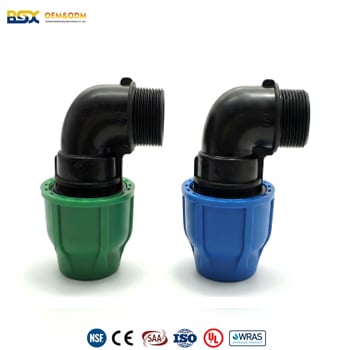
Answer: For mechanical and threaded transitions, our engineering standard strictly eliminates the use of rubber rings, which rapidly degrade under high pressure. Instead, we utilize precision-engineered, metal-to-plastic composite flanges that ensure a fail-safe, zero-leak seal without relying on vulnerable gaskets.
6. Are steel-reinforced HDPE pipes safe for drinking water?
Answer: Absolutely. Because the steel wire is fully encased, the drinking water only contacts the non-toxic, food-grade HDPE interior. This prevents heavy metal leaching and bacterial buildup, strictly complying with international potable water safety standards.
7. Is this pipe suitable for Trenchless Technology (HDD)?
Answer: Yes. The embedded steel reinforcement provides immense tensile strength and exceptional resistance to rapid crack propagation. This makes it an outstanding choice for Horizontal Directional Drilling (HDD), preventing pipe deformation when pulled through abrasive underground bores.
8. How does its weight compare to traditional steel or ductile iron pipes?
Answer: While offering comparable pressure ratings to metal, reinforced HDPE is significantly lighter than solid steel or ductile iron. This drastically reduces heavy machinery requirements on-site and lowers global freight and supply chain costs for large-scale procurement.
9. Can it withstand severe soil settlement or seismic activity?
Answer: Yes. Unlike rigid concrete or pure steel, the composite structure retains a degree of flexibility. It can absorb ground shifts, uneven soil subsidence, and minor seismic shocks without fracturing, making it ideal for rugged topographies.
10. Why choose steel-reinforced HDPE over standard PE100 pipes?
Answer: It provides superior burst strength, significantly lower thermal expansion, and higher resistance to external impact. As engineering consultants, we specify this composite pipe when hydraulic requirements exceed the safe operating thresholds of traditional solid-wall PE100 networks.
Cases
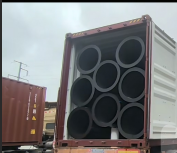
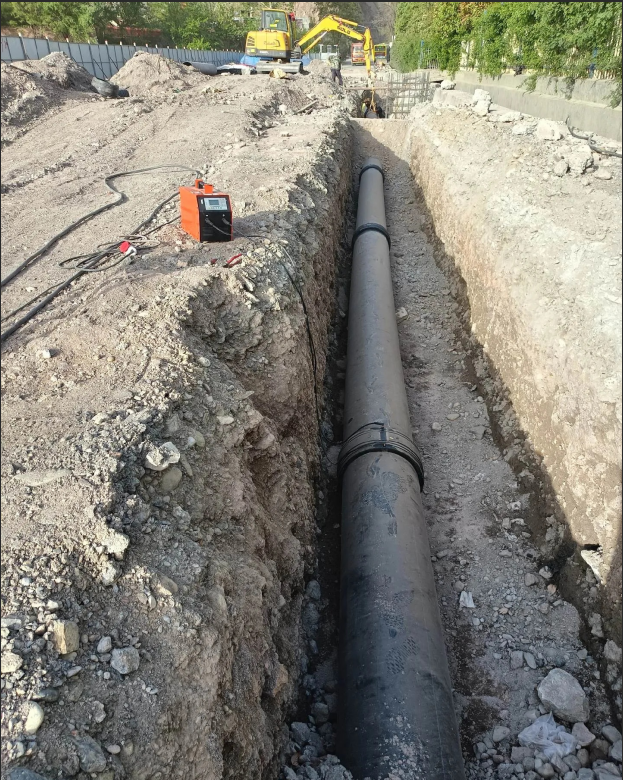
High Pressure Steel Skeleton Reinforced HDPE Pipe for Water Supply
Product: HDPE pipe
DN500mm, PN12.5
Location: Oman