EN
EN

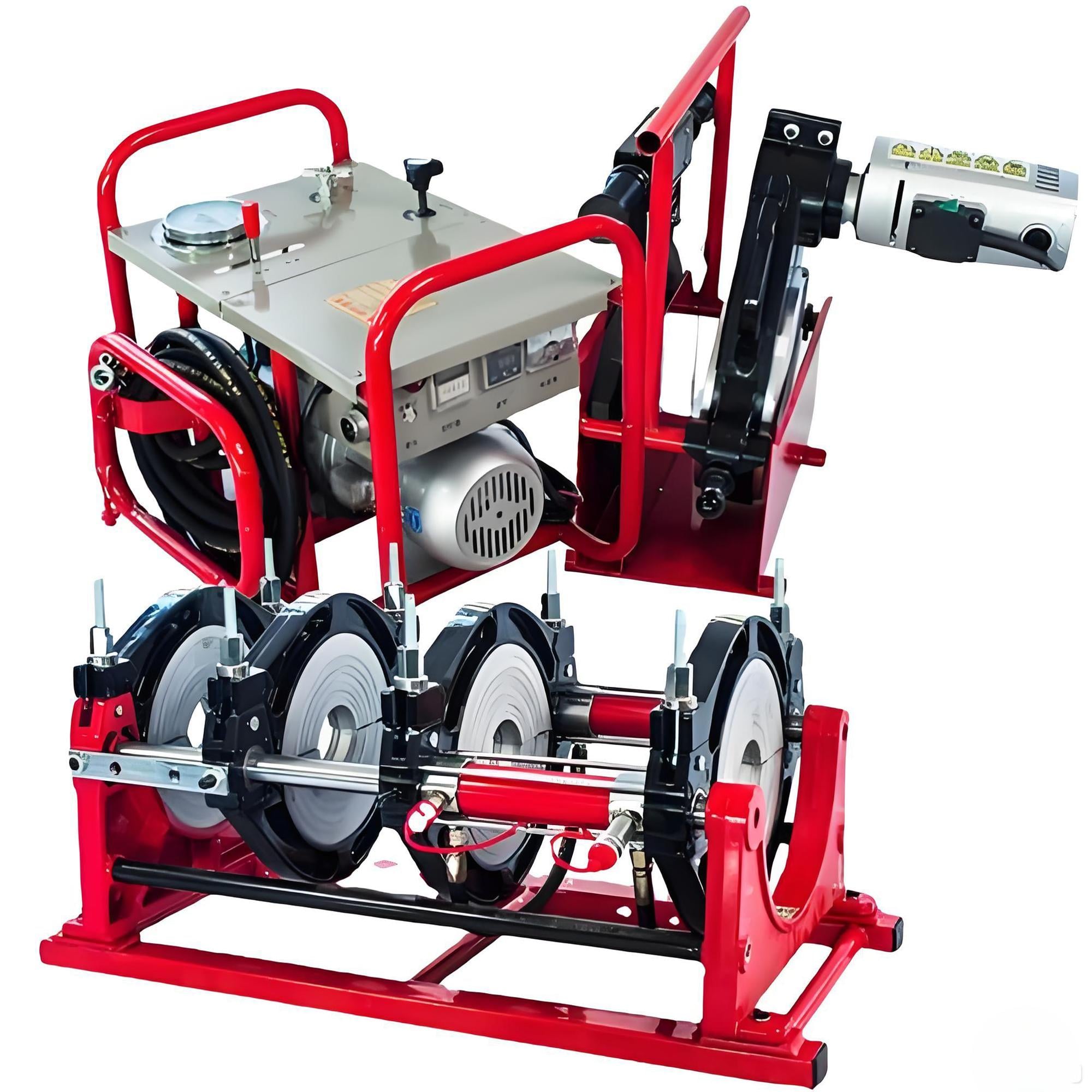
Pipe Welding Machine
Suitable for joining PE, PP and PVDF pipes and fittings in construction sites and workshops.
The whole machine consists of a basic frame, hydraulic unit, electric planer / cutter, and heating plate.
Made of lightweight high-strength materials.
Low initial pressure ensures reliable welding quality for small-diameter pipes.12-month international warranty.
- Overview
- Recommended Products
 Product Description
For High-Density Polyethylene (HDPE) pipes, the most common and reliable welding method is butt fusion welding. Butt fusion is a thermal joining process. Its principle is to heat the ends of two pipes to a specified temperature, then apply sufficient pressure to fuse them together. The quality of the joint depends on the quality of the butt fusion welding machine, proper welding parameters, and the experience of the operator.
Regardless of project size and specific requirements, Puhui Industrial is equipped with HDPE fusion equipment and professional technology, and can always provide suitable solutions. As one of the industry leaders with decades of experience in this field, we specialize in problem-solving and offer customized solutions for every valued customer.
Function of HDPE Butt Fusion Welding Machine
The HDPE butt fusion welding machine is a special thermofusion welding device for thermoplastic pipes and fittings such as HDPE. This welding method melts HDPE material by heating, then cools and solidifies it under pressure to form a strong integral connection. The butt fusion welding machine is carefully designed and manufactured to ensure stable and reliable welding performance, thus guaranteeing the quality and strength of the welded joint.Operation Instructions
Machine Inspection: Before use, ensure all components are intact and properly installed. Check that the heating element and pressure rollers are functioning normally.
Preparation: Clean and level the surfaces of the HDPE pipes or sheets to be welded, ensuring no dust, grease or other contaminants are present.
Temperature Adjustment: Adjust the fusion machine temperature according to the thickness and type of HDPE material. Typically, the temperature ranges from 180°C to 220°C.
Start the Machine: Turn on the power switch; the fusion machine will begin heating. The thermometer will display the current temperature during heating.
Preheating: Wait for the fusion machine to reach the set temperature before starting welding. Preheating time is usually 5 to 10 minutes, depending on the model and specification of the machine.
Welding Setup: Place the HDPE pipe or sheet into the welding area of the machine, align the two ends, and ensure no looseness or wavy deformation.
Welding Process: Close the cover of the fusion machine so that the heating element and pressure rollers contact the HDPE material. Adjust welding speed and pressure as required.
Completion of Welding: When the two edges are heated and pressed together, the machine will stop heating automatically. Allow the weld to cool before opening the cover.
Weld Inspection: Check whether the weld bead is uniform and firm. Reweld if any defects are found.
Shutdown: After welding is completed, turn off the power switch.
Notes for Using HDPE Butt Fusion Welding Machine
Suitable personal protective equipment such as gloves and goggles must be worn when operating the butt fusion machine.For HDPE pipe butt fusion:
Ensure the cut face of the weld is 90° perpendicular to the pipe axis.
Clean the pipe and fitting ends, smooth the joint surfaces, and check that the gap does not exceed 0.3 mm.
Align the pipe and fitting on the same axis; misalignment should not exceed 10% of the wall thickness.
Place the heating tool between the two joint surfaces and apply pressure until melting occurs, forming a smooth and symmetrical bead around the pipe circumference.
FAQ
1. What is a pipe welding machine used for?
It's used to join plastic pipe (HDPE, PPR, PP) by heat fusion instead of glue or threaded fittings. The machine heats the pipe ends (or a fitting) to melting point, then presses them together to form a solid, permanent joint.
2. What types of pipe welding machines are there?
The three main types are butt fusion machines (for joining pipe end-to-end, mainly HDPE), electrofusion machines (for joining pipe using fittings with built-in heating coils), and socket fusion machines (for smaller-diameter pipe, common with PPR). Each is built for a different joining method and pipe size range.
3. Which machine do I need — butt fusion or electrofusion?
Butt fusion is typically used for larger-diameter HDPE pipe joined in long straight runs, while electrofusion is often used for smaller diameters, tie-ins, repairs, or tight spaces where a butt fusion machine's clamps won't fit. Many contractors keep both on hand for different situations on the same job.
4. Can one machine handle both HDPE and PPR pipe?
Butt fusion and electrofusion machines are mainly used for HDPE and similar polyolefin pipe. Socket fusion machines, used for PPR pipe, are a different tool with heating irons sized for smaller plumbing diameters — check your machine's rated pipe type and size range before assuming it covers both.
5. Do I need training or certification to operate a fusion welding machine?
Most codes and reputable projects require operators to be trained and, in many regions, certified for the specific fusion method and pipe size they're working on. Poor fusion technique is one of the leading causes of joint failure, so training isn't just a formality — it directly affects weld quality.
6. What size pipe range can a fusion machine handle?
It varies by machine — smaller manual machines might handle pipe from a small diameter up to around 160mm, while larger hydraulic machines are built for pipe several hundred millimeters or more in diameter. Match the machine to your typical project pipe range, since undersized machines can't properly clamp or heat larger pipe.
7. Does a fusion machine need a generator or power source on site?
Yes, most machines need electric power for the heating plate or heating iron, and hydraulic butt fusion machines often need power for the hydraulic pump as well. For remote sites, a generator sized for the machine's power draw is usually part of the setup.
8. How often does a fusion machine need calibration or maintenance?
Heating plates and pressure gauges should be checked and calibrated periodically (often annually, or per the manufacturer's schedule) since inaccurate temperature or pressure is a common cause of weak or failed welds. Regular maintenance also includes cleaning the heating surface and checking clamp condition.
9. What causes a bad or failed fusion weld?
Common causes include incorrect heating temperature or time, contamination (dirt, moisture) on the pipe ends, misalignment during fusion, or applying incorrect pressure during the joining and cooling stages. Following the pipe manufacturer's fusion parameters closely is the main way to avoid these issues.
10. What should I look for when buying a pipe welding machine?
Match the machine to your typical pipe material, diameter range, and job site conditions (portable manual vs. hydraulic, power availability). Also consider whether it includes a data logger for weld records, since some projects and codes require documented proof of fusion parameters for each joint.
Case
Product:Pipe Welding Machine
Location: US