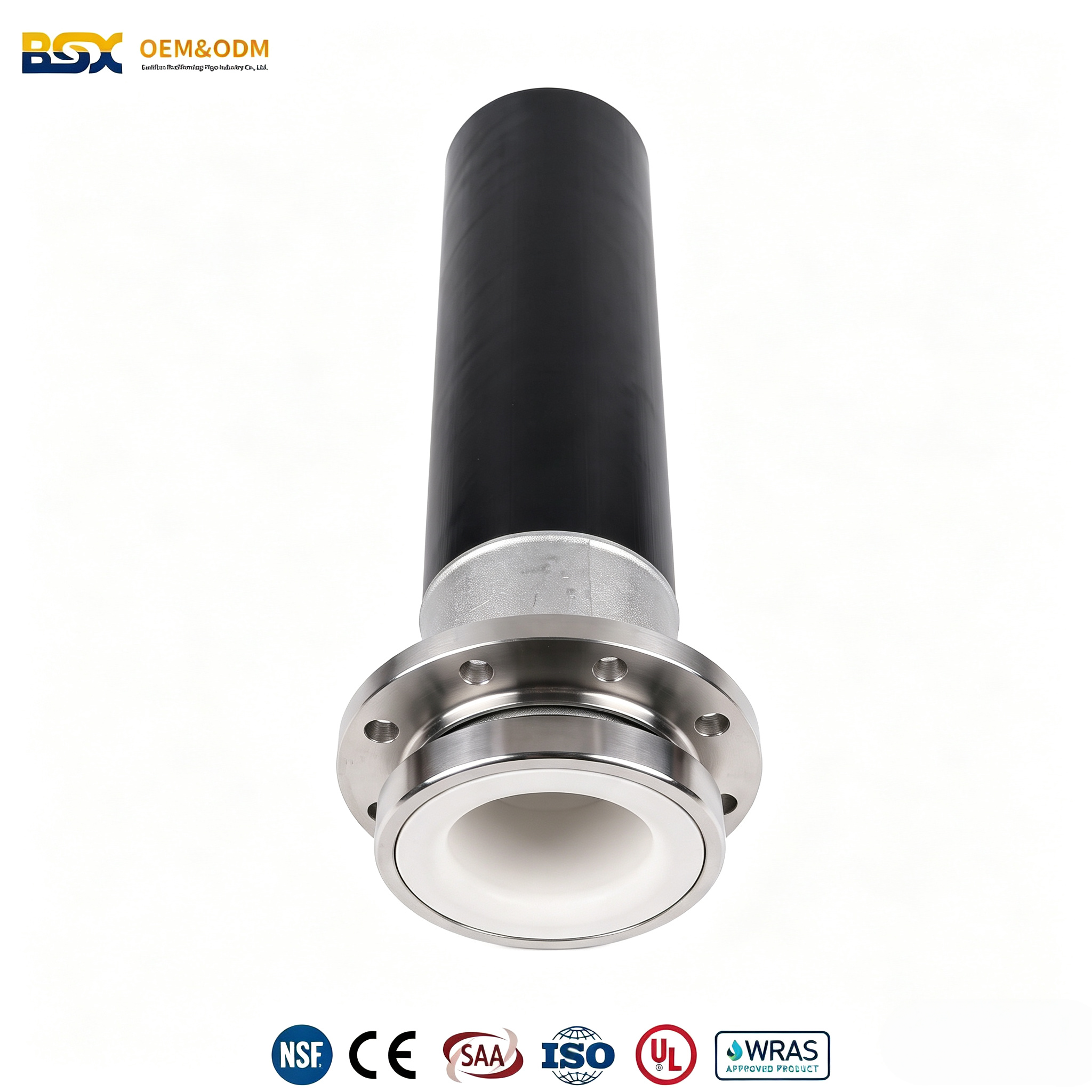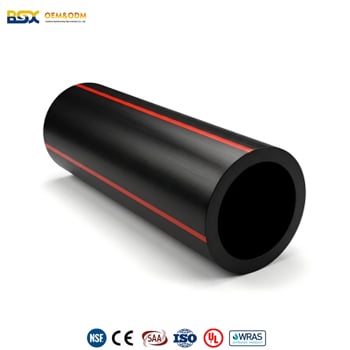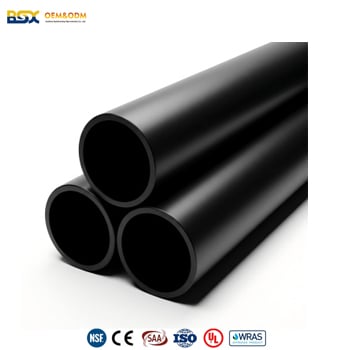
Core Features:
Antistatic and Flame Retardant Compliance
Mine-use HDPE pipes require the addition of antistatic and flame retardant agents to meet underground coal mine safety requirements: volume resistivity ≤1×10¹¹ Ω·m, flame retardant performance with an oxygen index ≥32%, and self-extinguishing within 3 seconds after the source of fire is removed, preventing static accumulation that could trigger gas explosions.
Ultra-high Wear and Impact Resistance
The inner wall is smooth with a friction coefficient only 1/5 that of steel pipes. When transporting slurry containing coal gangue or sand, wear resistance is 3-5 times that of steel pipes. Excellent low-temperature impact resistance: drop hammer impact test at -20°C has a pass rate ≥90%, capable of withstanding crushing by mining vehicles and rock impacts.
Strong Corrosion Resistance
Does not react with mine water (containing sulfur, chlorine, and minerals), acidic or alkaline waste liquids, eliminating the need for anti-corrosion coatings. The service life in buried or water-sprayed environments can exceed 30 years, significantly reducing mining pipeline maintenance costs.
Flexibility and Easy Installation
Elongation at break ≥400%, able to adapt to underground tunnel settlement and ground deformation without cracking. Weight is only 1/8 that of steel pipes, allowing coiled transport and installation in narrow underground spaces without large lifting equipment, improving installation efficiency by over 50%.
Reliable Connection and Sealing
Fusion-welded joints integrate with the pipe body with no leakage risk, capable of withstanding fluctuations in high and low mine pressures, preventing slurry and wastewater leaks that could pollute the underground environment.
 EN
EN