EN
EN
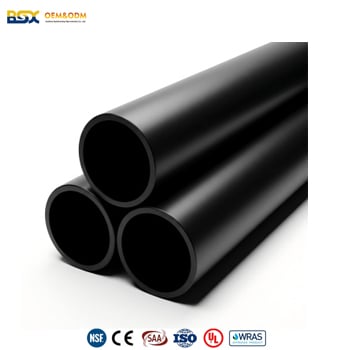
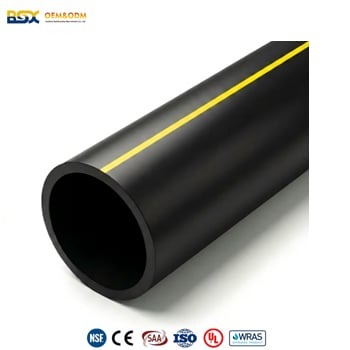
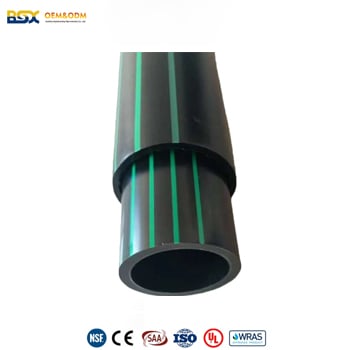
Black HDPE Pipe for Mining
Black HDPE Pipe for Mining
Raw materials: PE100, PE100RC
Standard: ISO4437/EN 1555
Diameter: 20mm-630mm
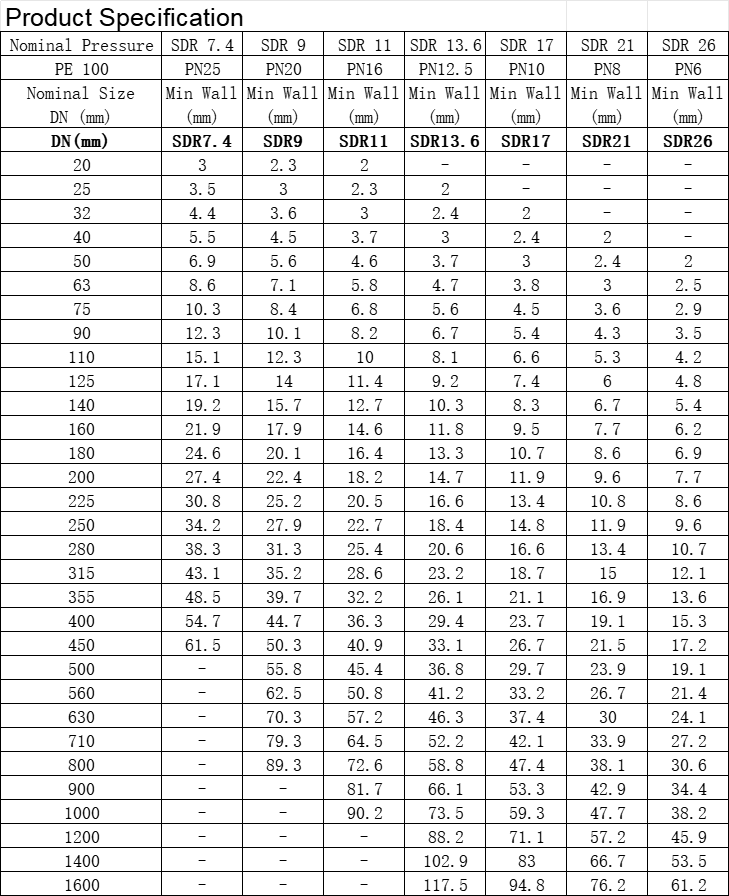
Pressure level: SDR17, SDR11
Certification: UL, WRAS, NSF, ISO, CE, EN 1555
Length: 5.8 meters (20 feet), 11.8-12 meters/L40 feet
Color: Black.
- Overview
- Recommended Products
 Product Overview
Baishunxing Pipe Industry Black HDPE Pipe for Mining is a high-performance piping solution specifically engineered for the rigorous conditions of underground and open-pit mining operations. Manufactured from premium high-density polyethylene resin, these pipes are designed to provide exceptional reliability for water supply, drainage, slurry transport, and ventilation systems in diverse mining environments.
Key Features
Superior Abrasion Resistance:HDPE possesses a high resistance to abrasion, making it ideal for transporting abrasive slurries and tailings. Its wear resistance is significantly higher than that of steel or concrete.
Chemical & Corrosion Resistance: Resistant to a wide range of chemicals, acids, and alkalis found in mine water and process fluids. It does not rust, rot, or corrode, even in acidic mine drainage.
High Flexibility & Impact Strength: The flexible nature of HDPE allows the pipe to withstand surges, water hammer, and ground movement. It remains durable even at low temperatures, withstanding accidental impacts during installation or operation.
Smooth Inner Wall:The low friction coefficient minimizes flow resistance, preventing the buildup of scale or slime, and reducing the energy required for pumping.
Major Advantages
Lightweight & Easy Handling: Baishunxing HDPE pipes are significantly lighter than steel or ductile iron, making them easier and safer to handle, transport, and install, especially in restricted underground spaces.
Leak-Free Joints:Utilizing heat fusion or electrofusion technologies, the pipes create a monolithic system with joints that are as strong as or stronger than the pipe itself, ensuring a leak-proof performance.
Long Service Life: Designed for a service life exceeding 50 years under standard mining conditions, reducing the frequency of replacement and overall operational costs.
Cost-Effective Installation:Fewer joints are required due to the availability of long pipe lengths, and the lightweight nature reduces the need for heavy lifting equipment and extensive labor.
Typical Applications
Mine Dewatering & Drainage: Handling high-volume water discharge from deep mines.
Slurry & Tailings Transport: Reliable transport of abrasive mining by-products.
Ventilation Systems:Providing fresh air supply and gas extraction for underground safety.
Dust Suppression:Water transport for high-pressure dust control in mining sites.
FAQ
1. What is HDPE pipe used for in mining?
HDPE pipe is used to move slurry, tailings, process water, dewatering flow, and sometimes air or chemicals across mine sites. It's chosen because it's lightweight, corrosion-free, and holds up well to rough handling on rough terrain.
2. Why is mining HDPE pipe usually black?
Black HDPE contains carbon black, an additive that protects the pipe from UV/sunlight damage. Since mining pipe often runs above ground and stays exposed for years, UV resistance matters much more than in buried gas or water lines — that's why black is the standard color for this application.
3. Can HDPE pipe handle abrasive slurry without wearing out?
Yes, better than many alternatives — HDPE has a smooth inner wall and natural abrasion resistance that slows wear from sand, tailings, and mineral particles. For very high-abrasion duty (like coarse tailings or aggressive ore slurry), some projects also use HDPE pipe with a wear-resistant lining for extended service life.
4. What pressure can HDPE mining pipe handle?
It depends on the pipe's SDR (wall thickness ratio) — a thicker wall (lower SDR) means a higher pressure rating. Mining pipe is available in a wide range of SDRs, so the right one depends on your pump pressure and line design, not the material alone.
5. Is HDPE pipe good for above-ground mine layouts?
Yes — this is actually where HDPE mining pipe is most commonly used. Unlike gas pipe (usually buried), mining lines are often laid on the surface, moved around as pits expand, and re-deployed elsewhere. HDPE's flexibility and light weight make it easy to relocate compared to steel pipe.
6. How are HDPE mining pipes joined together?
The standard method is butt fusion — heating and pressing pipe ends together to form a solid, permanent joint. For pipe that needs to be disconnected and moved frequently, flanged connections or quick-connect couplings are also common in mining setups.
7. Can HDPE pipe handle chemicals used in mining (acids, reagents)?
Generally yes — HDPE resists a wide range of acids, alkalis, and mining reagents better than metal pipe, which is one reason it's popular for process and tailings lines. Always check chemical resistance against the specific reagent and concentration used at your site, since resistance can vary by chemical.
8. Does HDPE pipe handle vacuum and negative pressure (like dewatering lines)?
Yes, HDPE pipe can be used in vacuum/suction applications such as dewatering, but wall thickness (SDR) needs to be selected correctly to prevent the pipe from collapsing under negative pressure — this is different from sizing for positive pressure alone.
9. How long does HDPE pipe last on a mine site?
In ideal conditions, HDPE pipe is rated for decades of service, but mining use is harsher than typical buried infrastructure — abrasion, UV exposure, temperature swings, and mechanical handling all affect real-world lifespan more than they would in a buried gas or water line. Expect shorter working life in high-abrasion duty than the pipe's theoretical rating.
10. How do I choose the right HDPE pipe size and wall thickness for a mining project?
It depends on flow rate, pump pressure, abrasion level of the material being moved, and whether the line runs under positive or negative (vacuum) pressure. Because these factors interact, sizing should be confirmed by an engineer or the pipe supplier's technical team rather than estimated from diameter alone.
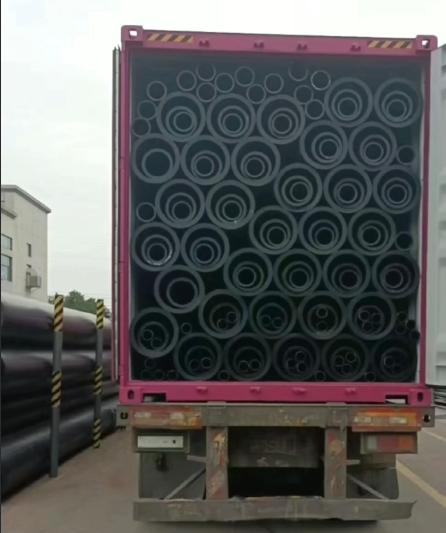
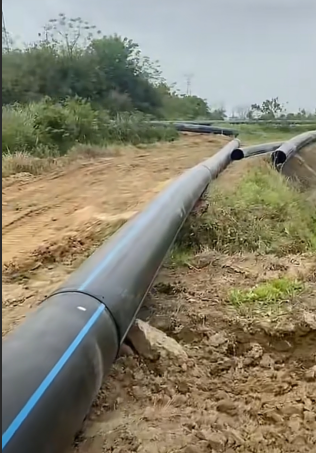
Case
Product: Black HDPE Pipe for Mining
Item : DN 150/200/500mm SDR15.1
Location: Kazakhstan