EN
EN

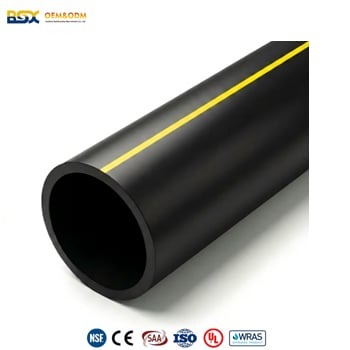
HDPE PE100 Natural Gas Pipes
HDPE PE100 Natural Gas Pipes
Raw material: PE100
Standard: ISO4437/BS EN 1555
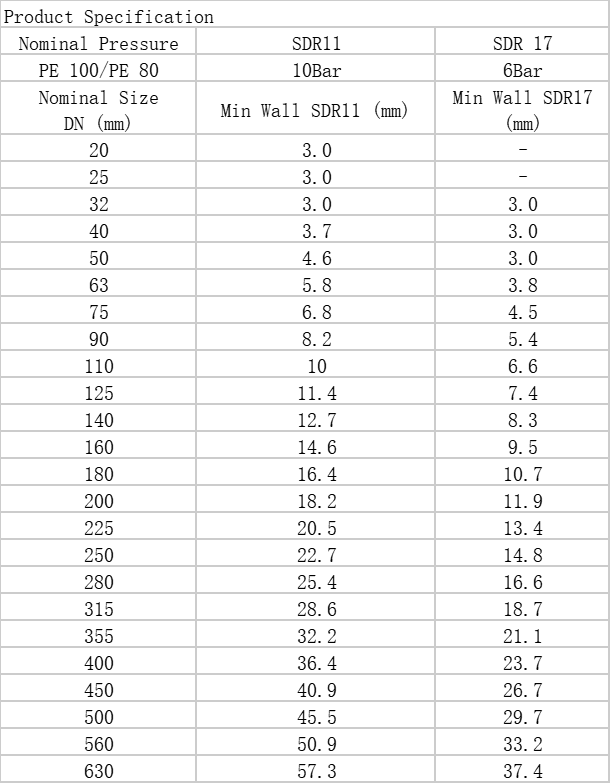
Diameter: 20mm-630mm
Pressure level: SDR17, SDR11
Certification: UL, WRAS, NSF, ISO, CE
Length: 5.8 meters (20 feet), 11.8-12 meters/L40 feet
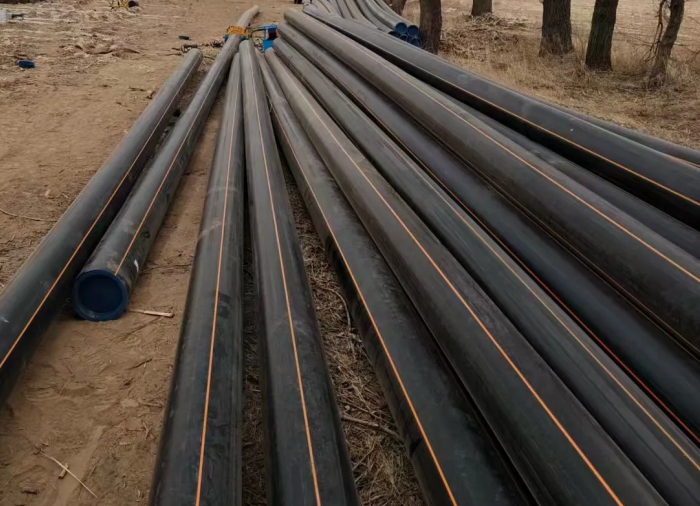
Color: Black with yellow/orange stripes.
- Overview
- Recommended Products
 Product Overview
Baishunxing Pipe Industry HDPE PE100 Natural Gas Pipes are manufactured from high quality High-Density Polyethylene (PE100 grade) and are specifically designed for urban low-to-medium pressure gas distribution systems. Featuring superior Slow Crack Growth (SCG) and Rapid Crack Propagation (RCP) resistance, these pipes ensure maximum safety for gas transport. They are typically black with distinct yellow stripes or solid yellow.
Key Features
Exceptional Crack Resistance: Engineered to gas industry standards, providing high stress-crack resistance to withstand damages in complex buried environments.
Excellent Corrosion Resistance:Highly resistant to various chemical media such as acids, alkalis, and salts; non-rusting and scale-free, requiring no external anti-corrosion treatments.
Smooth Inner Wall & High Capacity:The extremely low hydraulic coefficient minimizes pressure loss during gas transport, enhancing the efficiency of long-distance gas supply.
High Flexibility:The pipe can endure ground settlement and seismic activity without fracturing, and supports trenchless construction methods (HDD).
Major Advantages
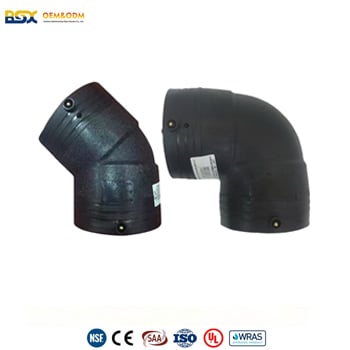
Zero-Leakage Joint Assurance:Primarily joined by Electrofusion or heat fusion, achieving molecular integration at the joints. The joint strength exceeds the pipe itself, eliminating any risk of gas leakage.
Extra Long Service Life: Under standard operating pressures and temperatures, Baishunxing gas pipes are designed for a service life of over 50 years, significantly reducing long-term operational costs.
High Visibility: Distinct yellow stripes (or solid yellow body) provide clear identification, preventing accidental damage during future underground construction.
Eco-Friendly & Non-polluting:The material is non-toxic, non-scaling, and does not harbor bacteria, meeting high environmental standards.
Typical Applications
Municipal Natural Gas Distribution:(Urban low-to-medium pressure gas mains and branch lines.
Industrial and residential LPG distribution systems.
Coal Gas Network Renovation:Replacing old cast iron or steel pipes in older urban areas.
FAQ
1. What is PE100 pipe?
PE100 is a high-strength grade of polyethylene pipe used for gas and water systems. The "100" refers to its strength rating (MRS 10.0 MPa) under ISO 12162. It's made to gas standards like ISO 4437 or EN 1555.
2. Is PE100 pipe safe for natural gas?
Yes. It's widely used in gas networks worldwide. It won't rust, handles ground movement well, and forms leak-free joints when fused correctly by a trained installer.
3. PE100 vs PE80 — what's the difference?
PE100 is stronger than PE80, so it can use a thinner wall for the same pressure, or handle higher pressure at the same wall thickness. It's often chosen for higher-pressure mains or where a lighter pipe is preferred. Check your local gas code to confirm which grade your project requires.
4. What pressure can PE100 pipe handle?
It depends on the SDR (wall thickness ratio), not the material alone. A lower SDR means a thicker wall and a higher pressure rating. Always check the exact rating against your local standard (ISO 4437, EN 1555, or ASTM D2513).
5. Why is PE100 gas pipe yellow?
Yellow (or black with a yellow stripe) is just a safety color code. It tells excavators "this is a gas line" so they avoid digging into it. It doesn't affect the pipe's performance.
6. How long does PE100 pipe last?
With correct installation, PE100 gas pipe is typically rated for 50+ years of service life. Real-world lifespan depends on installation quality and staying within the rated pressure.
7. Can PE100 pipe connect to steel gas pipe?
Yes, using a PE-to-steel transition fitting — not glue, not direct threading. This fitting gives a proper leak-tight connection between the two materials.
8. Can I glue PE100 pipe joints?
No. PE resists most solvents, so glue won't bond it. Joints are made by heat fusion — either butt fusion or electrofusion — done by a trained technician.
9. Can PE100 pipe be used above ground?
Not usually. It's designed for burial. Sunlight (UV) breaks it down over time, so above-ground gas lines are normally transitioned to metal pipe instead.
10. How do I pick the right PE100 pipe size?
It depends on your gas flow needs, operating pressure, and pipe run length. This should be confirmed by a qualified gas engineer, not estimated alone.
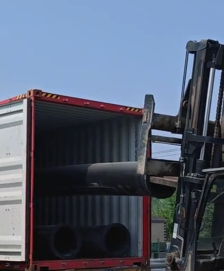
Case
Product: HDPE gas Pipe
Item : DN 225mm SDR 17
Location: Afghanistan