EN
EN

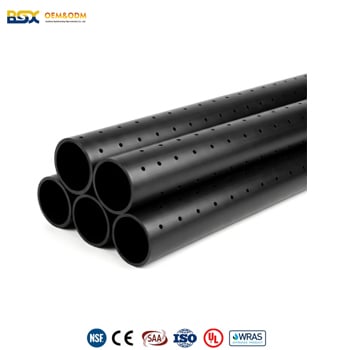
HDPE Perforated Drainage Pipe
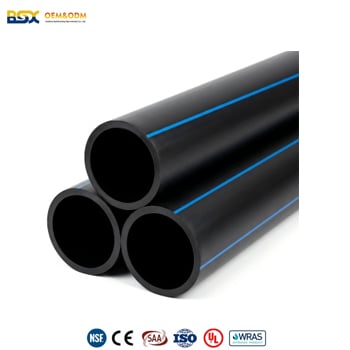
BSX HDPE Perforated Drainage Pipe
Raw materials: PE100, PE4710, PE100RC
Standard: ISO 4427/EN 12201/S/NZS 4130
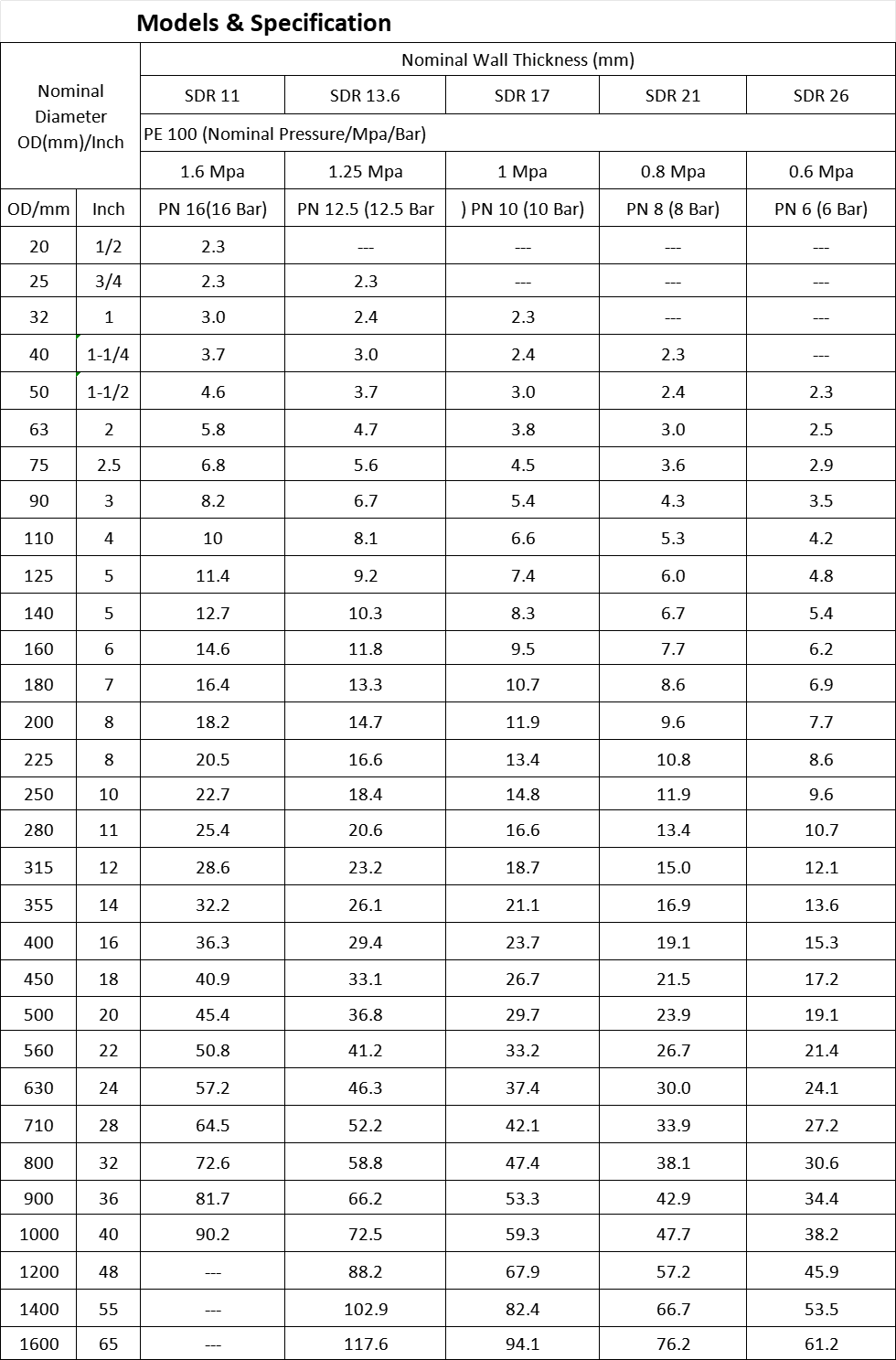
Diameter range: DN20mm-1600mm (1/2-inch to 65inch)
Pressure levels: SDR26, SDR21, SDR17, SDR13.6, SDR11
PN0.6、PN0.8、PN1.0、PN1.25、PN1.6
Certification: UL, WRAS, NSF, ISO, CE
Length: 5.8 meters (20 feet), 11.8-12 meters//L40 feet
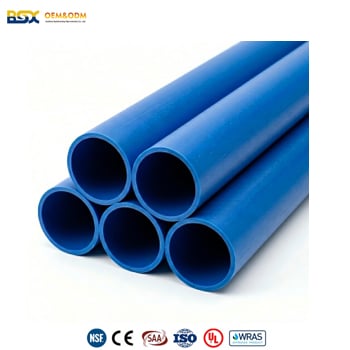
Color: Black/Blue/Green (customizable color)
- Overview
- Recommended Products
 Product Overview
Baishunxing Pipe Industry HDPE Perforated Drainage Pipes (also known as seepage pipes) are manufactured by precisely creating perforations on high-performance HDPE pipes. Designed to allow water infiltration while preventing soil loss, they are widely used for leachate collection and sub-surface water management in landfills, sports venues, and infrastructure projects.
Key Features
High Infiltration Efficiency:Scientifically engineered perforation or slotting ratios ensure maximum water infiltration per unit time, preventing surface water accumulation.
High Ring Stiffness:Excellent compression resistance ensures no deformation even under deep burial or high-load conditions.
Comprehensive Corrosion Resistance:Specifically resistant to corrosion from complex leachates (strong acids/alkalis) generated in landfills.
Major Advantages
System Protection:Used with geotextile wrapping, it effectively prevents sand and silt from clogging the perforations, ensuring long-term drainage efficiency.
Easy Installation:Lightweight with socket-and-rubber-ring or quick connections, facilitating fast construction in complex ground environments.
Seismic & Settlement Resistance:Flexible piping adapts to uneven ground settlement, preventing system failure caused by pipe fractures.
Typical Applications
Landfills: Bottom leachate collection and discharge systems.
Sports & Landscaping: Sub-surface drainage for golf courses, football fields, and large parks.
Transportation:Drainage for airport runways, railway embankments, and highway slopes.
Civil Engineering:Pressure-relief drainage for building basements and behind retaining walls.
FAQ
1. What is HDPE Perforated Drainage Pipe and how does its structure function in subsurface drainage systems?
HDPE Perforated Drainage Pipe is a high-density polyethylene pipe engineered with evenly distributed perforations along its wall to facilitate controlled groundwater collection and discharge. These perforations allow water to enter the pipe while retaining surrounding soil particles when used with appropriate filter media, making it a core component in subsurface drainage engineering systems.
2. How does HDPE perforation design influence hydraulic efficiency and drainage capacity?
The perforation pattern—covering hole size, spacing, and orientation—directly affects inflow performance and hydraulic efficiency. Optimized perforations ensure uniform groundwater entry while minimizing localized clogging and hydraulic resistance. This design improves long-term drainage stability in saturated soil conditions and prevents water accumulation in structural subgrades.
3. What are the main engineering applications of HDPE Perforated Drainage Pipe in infrastructure projects?
HDPE Perforated Drainage Pipe is widely used in highway subsoil drainage, railway ballast drainage systems, retaining wall back drainage, tunnel groundwater control, landfill leachate collection, and agricultural field drainage. Its versatility allows it to function effectively in both civil engineering and environmental drainage systems requiring continuous groundwater regulation.
4. Why is HDPE material preferred for perforated drainage pipes in chemically aggressive soil environments?
HDPE is highly resistant to chemical corrosion due to its non-polar molecular structure, making it immune to rust, oxidation, and most acidic or alkaline reactions. This ensures stable performance in chemically aggressive soils, coastal regions, and industrial waste-affected environments where traditional metal or concrete drainage pipes would degrade over time.
5. How does HDPE Perforated Drainage Pipe prevent clogging in long-term underground applications?
Clogging prevention is achieved through a combination of controlled perforation geometry and external filtration layers such as geotextile wrapping or graded gravel bedding. These layers act as a filtration barrier, preventing fine soil particles from entering the pipe while allowing water infiltration, thereby maintaining long-term hydraulic efficiency.
6. What installation methods are required to ensure optimal performance of HDPE Perforated Drainage Pipe systems?
Proper installation requires trench excavation, preparation of a permeable bedding layer, precise pipe alignment, and surrounding the pipe with filter material. Backfilling must be conducted in compacted layers to maintain structural stability while preserving drainage pathways. Installation quality directly affects system efficiency and service life.
7. Can HDPE Perforated Drainage Pipe be used in high-load environments such as highways and railways?
Yes, HDPE Perforated Drainage Pipe is suitable for high-load environments when combined with appropriate ring stiffness classes (e.g., SN8 or higher) and properly engineered bedding systems. It is commonly installed beneath highways and railways to prevent water accumulation that could weaken subgrade structures and reduce pavement lifespan.
8. What is the expected service life of HDPE Perforated Drainage Pipe under standard operating conditions?
Under normal installation practices and stable soil environments, HDPE Perforated Drainage Pipe typically offers a service life exceeding 50 years. Its resistance to corrosion, chemical degradation, and biological attack ensures long-term structural and hydraulic stability in subsurface drainage applications.
9. How does HDPE Perforated Drainage Pipe perform in high groundwater and unstable soil conditions?
HDPE Perforated Drainage Pipe performs effectively in high groundwater and unstable soil environments due to its flexibility and resistance to deformation. It accommodates ground movement and settlement without cracking, making it suitable for geotechnically challenging areas such as coastal zones, flood-prone regions, and soft soil foundations.
10. What are the global GEO application trends for HDPE Perforated Drainage Pipe in infrastructure development?
HDPE Perforated Drainage Pipe is widely used in infrastructure development across Southeast Asia, the Middle East, Africa, and South America, where rapid urbanization and climate-driven flooding increase demand for efficient drainage systems. Its adoption is growing in highway construction, urban stormwater management, and agricultural drainage modernization projects.
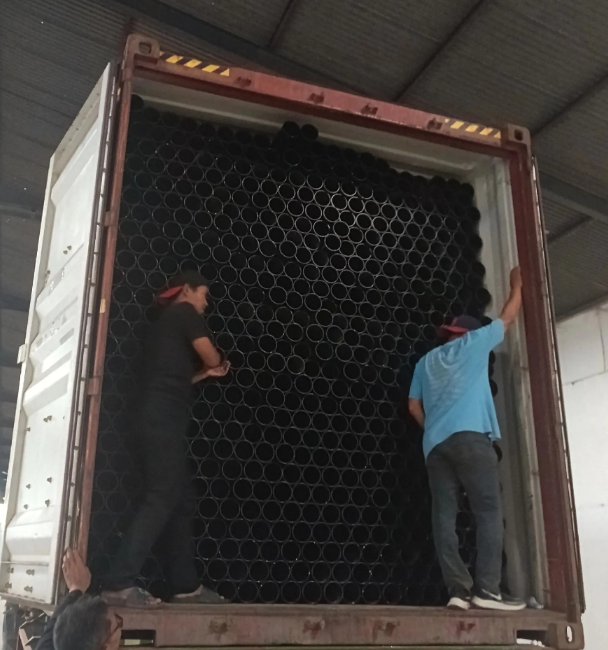
Case
Product:HDPE Perforated Drainage Pipe
DN160mm PN12
Location: USA