EN
EN

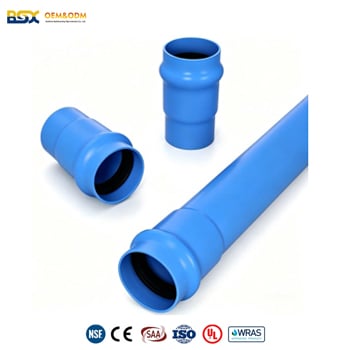
PVC-O water supply pipe
- Overview
- Recommended Products
- Ultra-High Strength: Molecular orientation technology significantly improves tensile strength and pressure resistance
- Lightweight Structure: Easier transportation and installation compared to ductile iron and steel pipes
- Excellent Hydraulic Efficiency: Smooth inner wall reduces friction loss and improves water flow capacity
- High Impact Resistance: Strong resistance to external mechanical shocks and ground movement
- Corrosion-Free Material: Resistant to chemical corrosion, rust, and scaling in all soil conditions
- Long Service Life: Designed for over 50 years of reliable operation under normal conditions
- Energy Saving Performance: Reduced pumping energy due to lower friction loss
- Eco-Friendly Material: Non-toxic and suitable for sustainable water infrastructure systems
- High tensile strength in both axial and circumferential directions
- Superior resistance to internal water pressure
- Enhanced fatigue resistance for long-term cyclic loading
- Improved crack resistance and slow crack growth protection
- Reliable sealing performance in jointed pipeline systems
- Compatibility with standard PVC pipe fittings and installation systems
- Pressurized municipal water supply networks
- Long-distance water transmission pipelines
- Agricultural irrigation and farmland water distribution systems
- Rural drinking water supply projects
- Industrial water transport systems
- Infrastructure development and public utility networks
- Replacement of aging ductile iron and cement pipe systems
 Product Description
PVC-O Water Supply Pipe (Oriented Polyvinyl Chloride Pipe) is a high-performance pressure pipe manufactured through a molecular orientation process that significantly improves the mechanical strength, toughness, and hydraulic efficiency of traditional PVC pipes.
It is widely used in modern water transmission systems, including municipal water supply, irrigation networks, and long-distance pressurized water distribution projects.
Compared with conventional PVC-U pipes, PVC-O pipes offer superior resistance to internal pressure, impact loads, and fatigue stress, making them a preferred solution for large-scale water infrastructure projects worldwide.
PVC-O Water Supply Pipe complies with international standards such as ISO 16422, ensuring reliable performance, long service life, and safe potable water transportation.
Advantages
Features
PVC-O Water Supply Pipe is engineered with advanced biaxial orientation technology, providing:
Application Functions
PVC-O Water Supply Pipe is designed for:
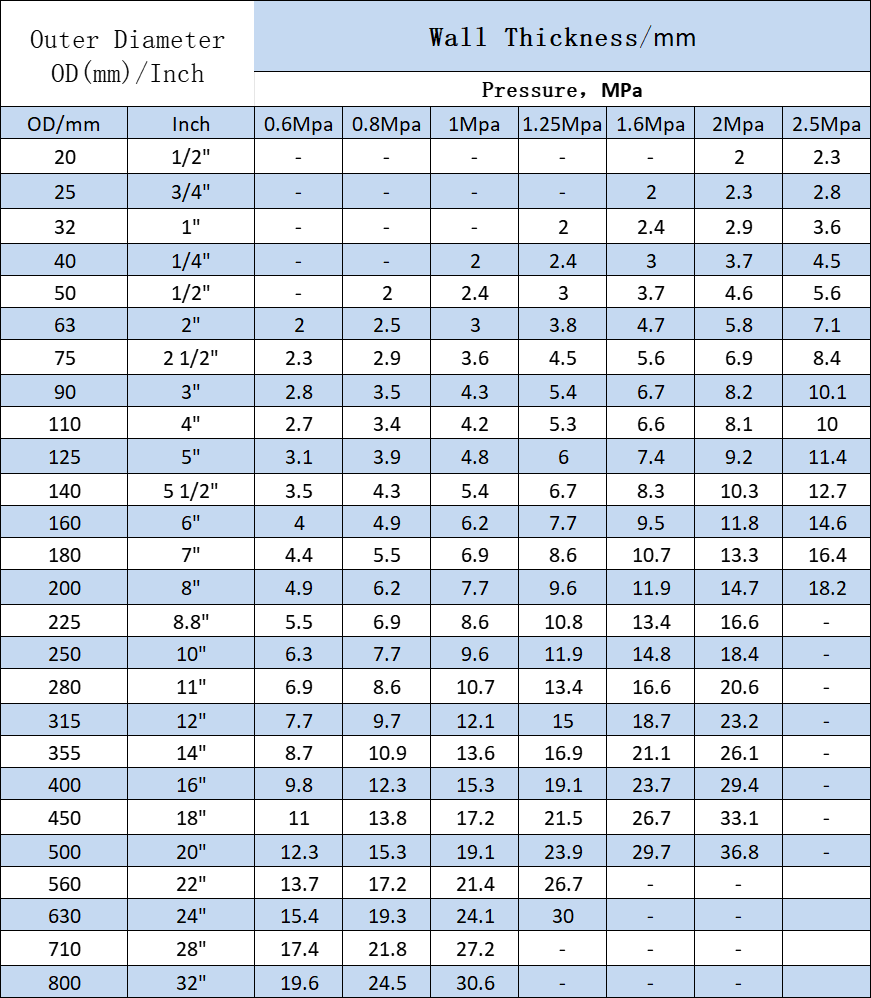
Product Parameter
 FAQS
FAQS
1. What engineering principle makes PVC-O pipe stronger than conventional PVC pipes?
PVC-O pipes are manufactured through a biaxial molecular orientation process, which aligns the polymer structure in both axial and circumferential directions. This significantly increases tensile strength and hoop resistance without increasing material thickness.
2. How does PVC-O pipe perform under long-term internal pressure stress?
PVC-O pipes demonstrate superior resistance to creep deformation and long-term hydrostatic pressure failure due to their oriented molecular structure, making them suitable for continuous pressurized water transmission systems.
3. What are the hydraulic advantages of PVC-O pipes in large-scale water networks?
The smooth internal surface reduces turbulence and friction coefficient, which improves flow efficiency and reduces pumping energy consumption across long-distance water distribution systems.
4. Can PVC-O pipes be installed using existing PVC-U pipeline infrastructure?
Yes, PVC-O pipes are generally compatible with standard PVC-U fittings and installation practices, although specific jointing systems and pressure ratings must be matched according to engineering design requirements.
5. How does PVC-O pipe behave under ground movement or external load conditions?
Due to its high impact toughness and flexible fracture resistance, PVC-O pipe can better absorb external mechanical stresses caused by soil settlement, traffic load, or seismic activity compared to rigid piping systems.
6. What failure modes are PVC-O pipes designed to prevent?
PVC-O pipes are engineered to resist brittle fracture, slow crack propagation, and stress concentration failures, which are common in traditional thermoplastic pipe systems under long-term loading.
7. What design factors should engineers consider when selecting PVC-O pipes for water projects?
Key design considerations include pressure class (PN rating), soil conditions, burial depth, surge pressure, flow velocity, and temperature variation in the pipeline environment.
8. Are PVC-O pipes suitable for high-pressure surge or water hammer conditions?
Yes, PVC-O pipes exhibit improved tolerance to transient pressure surges (water hammer effects) due to their enhanced elasticity and energy absorption capacity compared to conventional rigid pipes.
9. What inspection and quality control methods are used in PVC-O pipe production?
Manufacturing typically includes dimensional accuracy checks, hydrostatic pressure testing, impact resistance testing, and molecular orientation verification to ensure consistent structural performance.
10. How do environmental conditions affect PVC-O pipe performance in global projects?
PVC-O pipes maintain stable performance in a wide range of soil and climate conditions, including high salinity, acidic soils, and temperature variations commonly found in international infrastructure projects.
11. What jointing methods are commonly used for PVC-O pipeline systems?
PVC-O pipelines typically use rubber ring push-fit joints or mechanical couplings designed to maintain sealing integrity under pressure fluctuations and ground movement.
12. What makes PVC-O pipe a preferred solution in modern water infrastructure upgrades?
It is widely adopted in infrastructure modernization projects due to its combination of high pressure capacity, reduced material usage, lower lifecycle cost, and improved hydraulic efficiency compared to traditional pipe materials.
Case
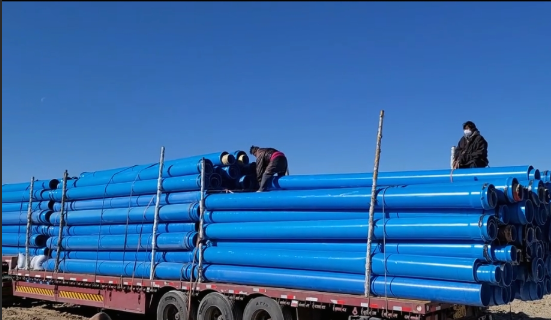
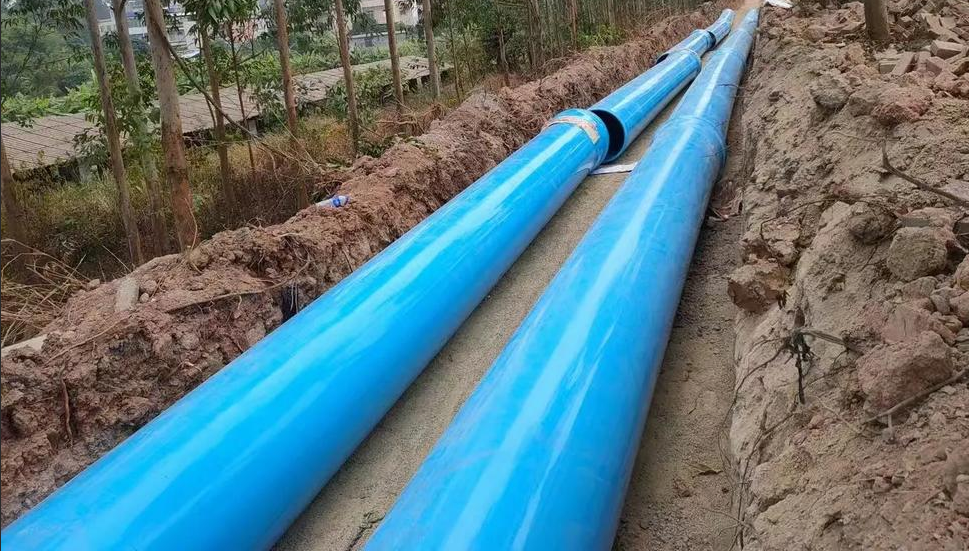
Project: Pressurized municipal water supply networks
Product: PVC-0
DN225-355mm PN10
Location: Australian