EN
EN
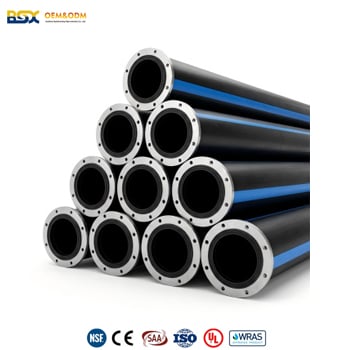
HDPE Floating Dredging Pipeline
HDPE Floating Dredging Pipeline
Raw materials: PE100, PE4710, PE100RC
Standard: ISO 4427/EN 12201/S/NZS 4130
Diameter range: DN50mm-DN1000mm
Pressure levels: SDR17, SDR13.6, SDR11, SDR9
PN10、PN12.5、PN16、PN20
Certification: UL, WRAS, NSF, ISO, CE
Length: 5.8 meters (20 feet), 11.8-12 meters//L40 feet
Color: Black background with blue stripes (customizable color)
- Overview
- Recommended Products
 Product Overview
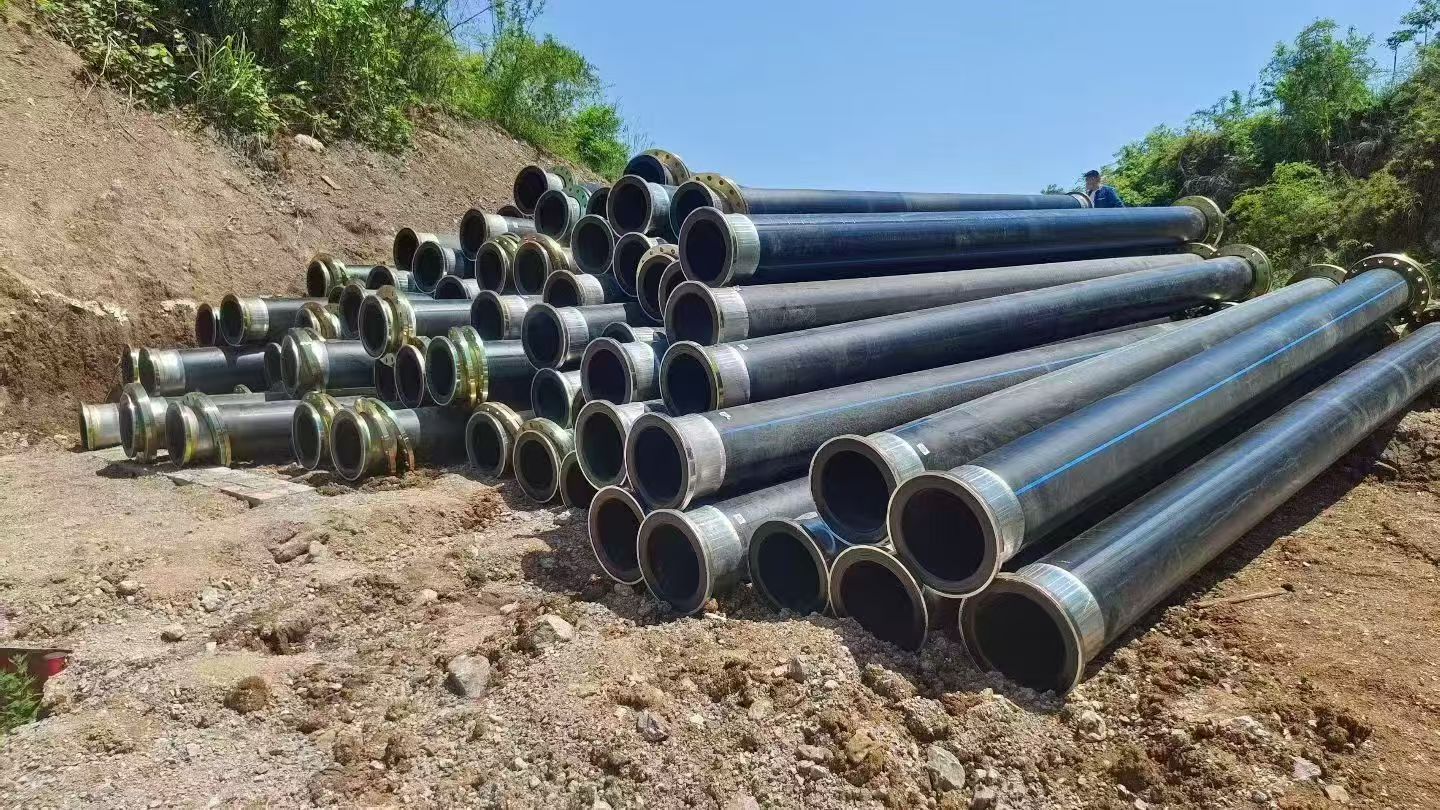
Baishunxing Pipe Industry HDPE Floating Dredging Pipelineare manufactured from high-grade High-Density Polyethylene (PE100), featuring lightweight, high strength, wear resistance, and corrosion resistance. These pipes are typically used with steel backing flanges (Stub Ends) and floats to form a complete floating or underwater transport system. They are widely applied in river dredging, port desilting, land reclamation, and tailings transport.
Key Features
Superior Wear Resistance:The wear resistance is 4 to 8 times that of steel pipes, effectively resisting the long-distance, high-speed erosion of abrasive media such as sand, gravel, and shells.
Excellent Impact Resistance:Excellent toughness allows it to withstand wave impact, dragging stress, and sudden internal pressure waves without brittle fracturing.
Lightweight & Good Buoyancy: The weight is only 1/8 that of steel pipes. When paired with shell-type floats, the piping system floats easily on the water, greatly simplifying surface operations.
Corrosion & Weather Resistance: Superior resistance to seawater, strong acids/alkalis, and intense UV rays; it will not rust and maintains stable performance during long-term outdoor exposure in extreme environments.
Major Advantages
Extremely Easy Installation:Both ends are typically fitted with welded Stub Ends and steel backing rings. This sectional connection method allows for rapid assembly on ships or water and is easy to disassemble.
Minimal Maintenance Costs:The smooth inner wall offers low flow resistance and is resistant to scaling. Due to its exceptional resistance to physical damage, frequent maintenance and replacement are virtually unnecessary throughout its service cycle.
High Flexibility to Adapt to Deformation:The pipes possess a degree of flexibility, allowing them to adapt to surface oscillations caused by waves and undulating riverbeds, effectively preventing leakage or fractures.
Extra Long Service Life:Compared to steel pipes that rust and perforate frequently, HDPE dredging pipes have a design life of up to 50 years, significantly enhancing the return on investment for projects.
Typical Applications
Port & River Dredging:Mud transport for channel silting clearance and port deepening.
Land Reclamation: Long-distance pumping of undersea sand and silt to reclamation areas.
Tailings & Slurry Transport: Long-distance discharge of slurry and slag containing hard particles in minAes.
Offshore Pipeline Laying:Temporary offshore cross-regional water supply or liquid transport.
FAQ
1. What is HDPE floating dredging pipeline?
It's HDPE pipe fitted with floats (pontoons) so it can carry dredged slurry across the surface of water instead of needing a fixed support structure. It's commonly used to move sand, mud, or sediment from a dredger to shore or a disposal site.
2. How does the pipe stay afloat with heavy slurry inside?
Floats (usually HDPE or polyurethane pontoons) are mounted along the pipe at set intervals, sized to support the pipe's weight plus the slurry inside it. Float spacing and buoyancy are calculated based on pipe diameter, wall thickness, and expected slurry density — not just the pipe's own weight.
3. Does the pipe wear out fast from sand and abrasive slurry?
It wears over time, but HDPE holds up well against abrasion compared to many alternatives, and thicker-wall pipe (lower SDR) is often chosen for dredging duty specifically to extend wear life. High-abrasion projects sometimes rotate pipe sections periodically to even out wear.
4. Is floating pipeline affected by waves and currents?
Yes — pipeline in open or choppy water needs to be rated and configured (float spacing, joint flexibility, anchoring) for the specific wave and current conditions at the site. Calmer inland water or protected channels need less reinforcement than open coastal dredging.
5. How are floating pipeline sections connected?
Sections are typically joined with flanged connections or quick-release couplings rather than permanent butt fusion, since floating strings need to be assembled, extended, and disassembled on the water as the dredge moves. Flexible joints are also used at some connections to handle wave motion.
6. Does floating pipe need to be UV-resistant?
Yes — floating pipeline sits exposed to direct sunlight for its entire working life, so it should be black, UV-stabilized HDPE rather than standard uncoated pipe. Non-UV-rated pipe will degrade much faster in this application than buried pipe would.
7. How is floating pipeline anchored in place?
Anchoring depends on the site — options include mooring lines to shore or fixed points, anchor buoys, or simply relying on the pipeline's own flexibility and the dredger's positioning in calmer water. Anchoring design should account for current, wind, and vessel traffic in the area.
8. How long can a floating pipeline string be?
There's no fixed limit — floating strings are built by joining multiple pipe sections and can extend hundreds of meters to several kilometers depending on the project, pump capacity, and site layout. Length is usually driven by how far material needs to travel from dredge to discharge point.
9. Can floating pipe also be used on land or submerged?
Yes — the same pipe can transition from floating sections to shore-based (land) pipe or sink to a submerged section where needed, using the appropriate fittings for each transition. Projects often mix floating, land, and submerged HDPE sections in a single pipeline route.
10. How long does floating dredging pipeline last?
Service life depends heavily on slurry abrasiveness, UV exposure, and wave/mechanical stress — all harsher than typical buried pipe use. Expect shorter practical life than a buried HDPE line, with wear-prone sections often needing earlier replacement or rotation.
Case
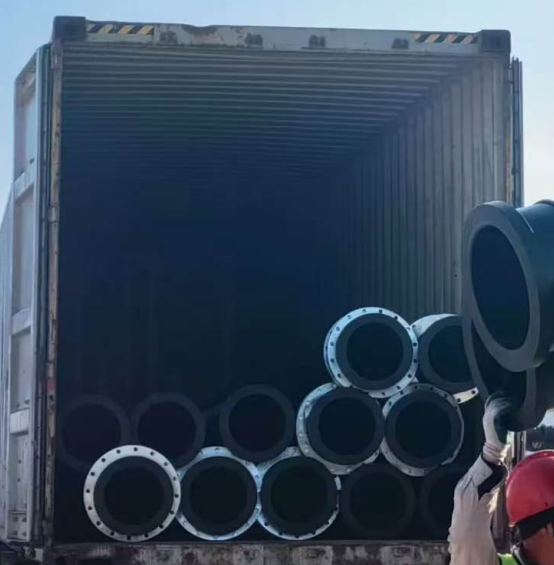
Product: HDPE Floating Dredging Pipeline
DN800mm SDR17, SDR13.6
Location: Indonesia