EN
EN
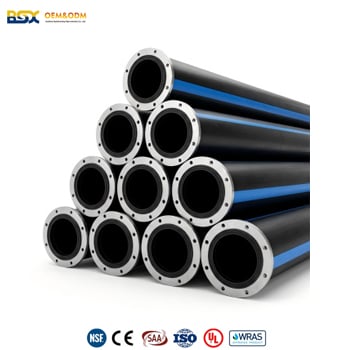
HDPE Slotted Pipe
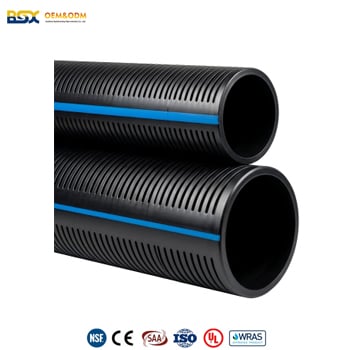
HDPE Slotted Pipe
Raw materials: PE100, PE4710, PE100RC
Standard: ISO 4427/EN 12201/S/NZS 4130
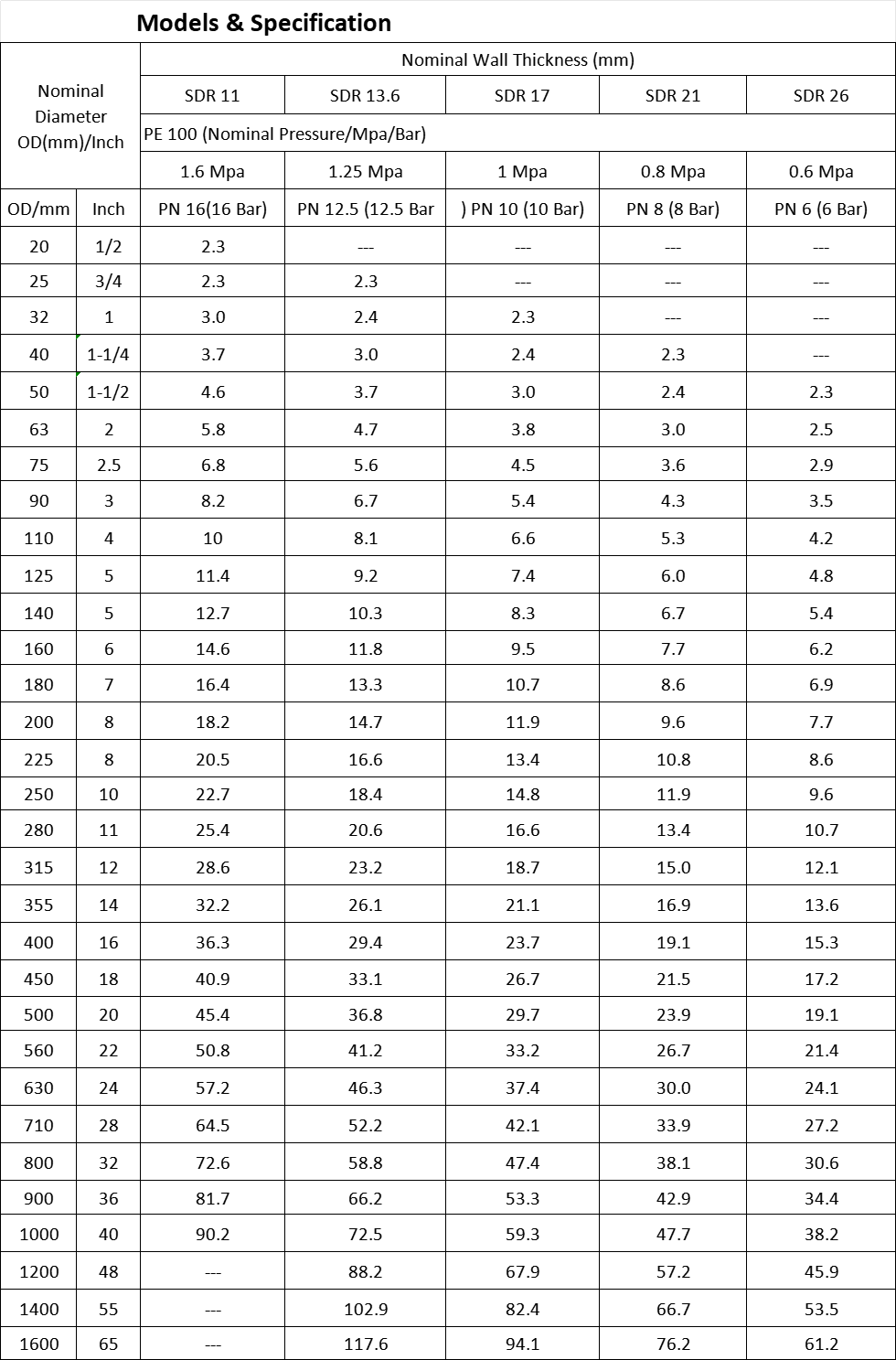
Diameter range: DN20mm-1600mm (1/2-inch to 65inch)
Pressure levels: SDR26, SDR21, SDR17, SDR13.6, SDR11
PN0.6、PN0.8、PN1.0、PN1.25、PN1.6
Certification: UL, WRAS, NSF, ISO, CE
Length: 5.8 meters (20 feet), 11.8-12 meters//L40 feet
Color: Black/Blue/Green (customizable color)
- Overview
- Recommended Products
 Product Overview
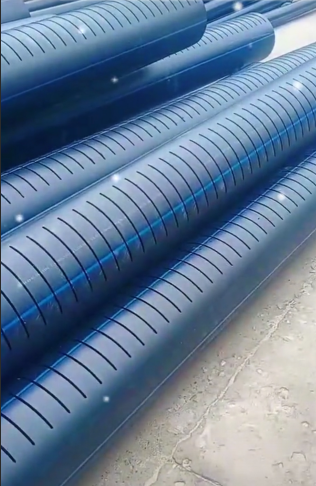
Baishunxing Pipe Industry HDPE Slotted Pipes are manufactured by processing high-performance HDPE solid-wall or reinforced pipes through precision CNC slotting technology. Compared to traditional perforated pipes with round holes, slotted pipes utilize longitudinal or transverse narrow slits to allow water infiltration. This design more effectively controls particle entry while maintaining high seepage efficiency. These pipes are core components for landfill leachate collection, groundwater level control, and complex drainage projects.
Key Features
Precision Slotting Design:The slit width can be customized (typically 0.5mm∼3.0mm) according to engineering requirements, ensuring water permeability while preventing soil entry and siltation.
Superior Physical Properties:Inheriting the high ring stiffness (SN4-SN16) and excellent toughness of HDPE, these pipes maintain their shape and unobstructed seepage channels even under deep burial or ground movement.
Excellent Corrosion Resistance: Capable of resisting long-term erosion from high-concentration leachates (strong acids, alkalis, and various organic solvents) in landfills; non-rusting and non-degradable.
Low Hydraulic Resistance:The smooth inner wall ensures that the liquid entering the pipe can be discharged quickly, improving the overall drainage efficiency of the system.
Major Advantages
High Infiltration Efficiency:Scientifically engineered slit arrangements increase the effective opening area of the pipe, significantly enhancing water collection capacity per unit length.
Superior Anti-clogging Performance:The narrow slit structure, combined with geotextile wrapping, is harder to be fully blocked by sand and stone particles compared to round holes, extending the maintenance cycle of the drainage system.
Easy Installation & Maintenance:Lightweight and supporting heat fusion, electrofusion, or socket connections, these pipes offer fast installation and extremely low maintenance costs due to their durability.
Broad Environmental Adaptability:Capable of long-term operation in temperatures ranging from −60∘C−60∘C to 60∘C60∘C, with outstanding resistance to seismic activity and uneven ground settlement.
Typical Applications
Landfill Engineering: (Used for leachate collection and discharge systems at the bottom and side slopes.)
Mining Gas & Fluid Collection:Gas drainage pipelines and water recovery for tailings dams.
Municipal & Transport Drainage:Sub-surface pressure-relief drainage for highway and railway embankments and airport runways.
Agriculture & Sports Venues:Saline-alkali land reclamation and sub-surface seepage networks for golf courses and stadiums.
FAQ
1. What is HDPE Slotted Pipe and how does its structure function in subsurface drainage systems?
HDPE Slotted Pipe is a high-density polyethylene drainage pipe engineered with precision-cut longitudinal or circumferential slots that allow controlled groundwater infiltration. These slots act as hydraulic inlets while preventing soil intrusion when combined with geotextile or filter media. The pipe is widely used in subsurface drainage systems where efficient groundwater collection and transport are required without compromising structural integrity.
2. How does HDPE Slotted Pipe improve groundwater drainage efficiency compared to conventional perforated pipes?
Unlike traditional perforated pipes that rely on drilled holes, HDPE Slotted Pipe utilizes continuous slot geometry that provides more uniform hydraulic entry distribution. This reduces clogging risk, improves inflow capacity, and enhances long-term permeability performance. The slot design also minimizes stress concentration points, increasing structural durability under soil loads.
3. What engineering applications are most suitable for HDPE Slotted Pipe in civil infrastructure projects?
HDPE Slotted Pipe is commonly applied in highway subdrain systems, railway ballast drainage, landfill leachate collection, agricultural field drainage, retaining wall relief systems, and tunnel groundwater control. Its high hydraulic efficiency and chemical resistance make it suitable for both municipal and heavy-duty geotechnical drainage environments.
4. Why is HDPE material preferred for slotted drainage pipe systems in aggressive soil and chemical environments?
HDPE provides exceptional resistance to acidic, alkaline, and saline soil conditions due to its non-polar molecular structure. It does not corrode, rust, or degrade under electrochemical reactions, making it superior to metal or concrete drainage alternatives. This ensures long-term performance in contaminated soils, coastal zones, and industrial waste-affected areas.
5. How do slot design parameters affect hydraulic performance and clogging resistance?
Slot width, spacing, and orientation directly influence hydraulic conductivity and filtration efficiency. Narrow slots improve soil retention when combined with geotextile wrapping, while wider spacing increases flow entry capacity. Optimized slot geometry balances infiltration rate and anti-clogging performance, ensuring stable long-term drainage efficiency in varying soil particle distributions.
6. What installation practices are required to ensure optimal performance of HDPE Slotted Pipe systems?
Proper installation involves trench preparation with graded filter bedding, precise pipe alignment, and surrounding the pipe with appropriate filter media such as gravel or geotextile fabric. Backfilling must be compacted in layers to prevent deformation while maintaining hydraulic pathways. Incorrect installation can significantly reduce drainage efficiency regardless of pipe quality.
7. Can HDPE Slotted Pipe be used in high-load environments such as highways and railways?
Yes, HDPE Slotted Pipe can be engineered for high-load applications when selected with appropriate ring stiffness (e.g., SN8 or higher) and installed within properly designed structural bedding systems. It is widely used beneath highways and railways for subgrade water control, preventing pavement failure caused by water accumulation and soil weakening.
8. What is the expected service life of HDPE Slotted Pipe in subsurface drainage applications?
Under standard installation conditions and normal soil environments, HDPE Slotted Pipe typically has a service life exceeding 50 years. Its resistance to chemical degradation, microbial attack, and abrasion contributes to long-term hydraulic stability, even in continuously saturated soil conditions.
9. How does HDPE Slotted Pipe perform in landfill leachate and environmental engineering systems?
In landfill applications, HDPE Slotted Pipe is highly effective for leachate collection due to its chemical resistance and anti-clogging slot design. It maintains structural stability under aggressive chemical exposure and heavy overburden loads, making it suitable for long-term environmental containment and groundwater protection systems.
10. What are the global GEO applications and market demand trends for HDPE Slotted Pipe?
HDPE Slotted Pipe is widely used in infrastructure projects across Southeast Asia, the Middle East, Africa, and Europe, particularly in regions facing high groundwater tables or seasonal flooding. Demand is increasing in urban drainage expansion, highway construction, and agricultural modernization projects, driven by the need for durable and low-maintenance subsurface drainage solutions.
Case
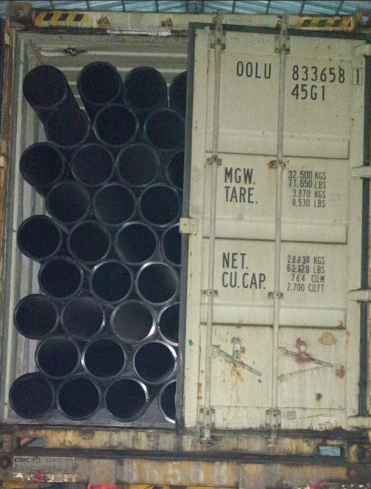
Product: HDPE Slotted Pipe
DN225mm SDR17 PN11.8
Location:Australian