EN
EN

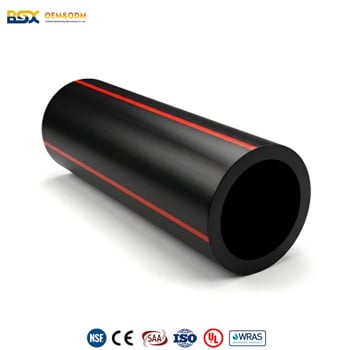
HDPE Red Stripe Fire Pipe
HDPE Red Stripe Fire Pipe
Raw materials: PE100, PE4710, PE100RC
Standard: ISO 4427/EN 12201/S/NZS 4130
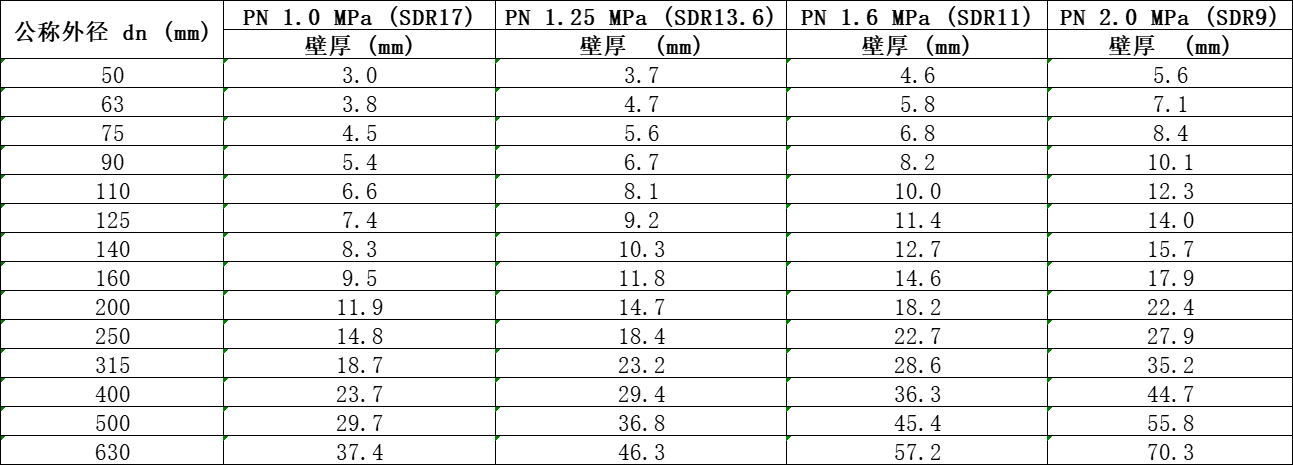
Diameter range: DN50mm-630mm
Pressure levels: SDR17, SDR13.6, SDR11, SDR9
PN10、PN12.5、PN16、PN20
Certification: UL, WRAS, NSF, ISO, CE
Length: 5.8 meters (20 feet), 11.8-12 meters//L40 feet
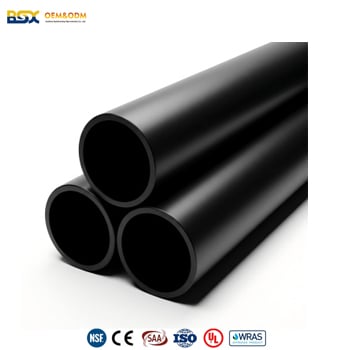
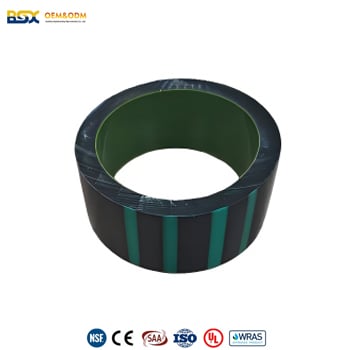
Color: Black background with red stripes (customizable color)
- Overview
- Recommended Products
 Product Overview
Baishunxing Pipe Industry HDPE Red Stripe Fire Pipe (also known as PE fire pipe) is manufactured from high-quality high-density polyethylene, making it the ideal choice for outdoor fire protection water supply systems.
Processed through high-precision extruders, this pipe is particularly suitable for acid and corrosion-resistant environments. By utilizing heat fusion or electrofusion, the joints become integrated with the pipe, effectively resisting hoop stress and axial impact stress generated by internal pressure. Baishunxing HDPE fire pipes are highly corrosion-resistant, requiring no anti-corrosion treatment, with a minimum service life of over 50 years.
Production Process
Raw Material Selection:The primary raw material is high-density polyethylene (HDPE), a hydrocarbon polymer with excellent corrosion resistance, environmental friendliness, and recyclability. It features a wide applicable temperature range, remaining intact at -60°C while handling conveying media temperatures up to 60°C.
Extrusion Molding:During production, the HDPE material is heated and melted by the extruder and then forced through a die. This step is critical for pipe molding; by precisely controlling the extrusion speed and temperature, the uniformity and consistency of the pipe are guaranteed.
Color Addition:To produce red stripe fire pipes, high-color-fastness red pigment is added to the HDPE material. This color is chosen to significantly improve the visibility of the fire pipe, ensuring quick identification in emergencies.
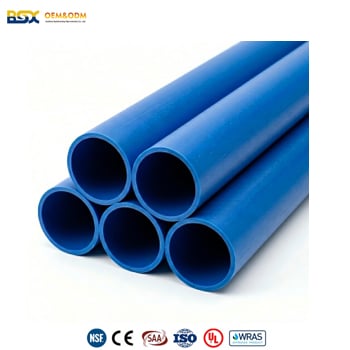
Stripe Design:Through specific mold designs, vivid red stripes are formed on the pipe surface. These stripes not only enhance the visual warning effect but also assist in quick positioning during field installation. In addition to red stripes, Baishunxing Pipe Industry also offers HDPE Blue Stripe Fire Pipes to meet various industry standards.
Upon completion of production, every batch undergoes stringent quality inspections, including dimensional measurement, hydrostatic pressure testing, and drop-weight impact tests, ensuring the pipes fully comply with international standards and fire safety requirements.
FAQ
1. What is HDPE Red Stripe Fire Pipe and what role does it play in fire protection systems?
HDPE Red Stripe Fire Pipe is a high-density polyethylene piping system specifically designed for underground fire water supply and fire protection applications. The red stripe identification helps distinguish fire service pipelines from other utility systems on construction sites. It provides reliable water conveyance for fire hydrant networks, sprinkler systems, and emergency fire suppression infrastructure.
2. Why is HDPE material suitable for underground fire water pipeline applications?
HDPE offers excellent corrosion resistance, impact strength, and long-term durability, making it highly suitable for underground fire protection systems. Unlike steel pipes, HDPE does not rust or suffer from electrochemical corrosion, reducing maintenance requirements and ensuring reliable water delivery performance throughout the service life of the fire pipeline network.
3. What are the main applications of HDPE Red Stripe Fire Pipe in industrial and municipal projects?
HDPE Red Stripe Fire Pipe is commonly used in industrial facilities, commercial buildings, residential developments, airports, ports, warehouses, and municipal fire protection networks. It is applied in underground fire hydrant systems, fire pump connections, sprinkler water supply lines, and large-scale emergency water distribution systems.
4. How does HDPE Red Stripe Fire Pipe ensure reliable performance under emergency fire conditions?
HDPE Red Stripe Fire Pipe is engineered to maintain structural integrity under demanding operating conditions, including sudden pressure changes and high flow requirements. Its smooth internal surface reduces friction losses, allowing efficient water flow during firefighting operations, while its flexibility helps absorb ground movement and external stress.
5. What pressure ratings are available for HDPE Red Stripe Fire Pipe systems?
HDPE Red Stripe Fire Pipe can be manufactured in different pressure classes, commonly including PN6, PN10, PN12.5, and PN16, depending on project requirements. The appropriate pressure rating is selected based on fire system design pressure, pump capacity, installation depth, temperature conditions, and local fire protection regulations.
6. How is HDPE Red Stripe Fire Pipe installed and connected in underground fire protection networks?
HDPE Red Stripe Fire Pipe is typically installed using butt fusion, electrofusion, or mechanical connection methods depending on pipe diameter and project specifications. Fusion welding creates a leak-resistant joint with strength comparable to the pipe body. Proper trench preparation, bedding support, pressure testing, and flushing procedures are essential for system reliability.
7. Can HDPE Red Stripe Fire Pipe withstand challenging underground conditions such as seismic zones and unstable soils?
Yes, HDPE Red Stripe Fire Pipe performs well in challenging geological conditions due to its flexibility and high resistance to deformation. Unlike rigid materials that may crack under ground movement, HDPE can accommodate settlement, vibration, and seismic displacement while maintaining pipeline continuity and operational safety.
8. What standards and design considerations should be considered when selecting HDPE Red Stripe Fire Pipe?
Selection of HDPE Red Stripe Fire Pipe should consider factors such as pressure requirements, hydraulic calculations, pipe diameter, fire flow demand, installation environment, and compliance with regional fire protection standards. Engineering design should ensure adequate flow capacity, pressure stability, and long-term reliability for emergency response systems.
9. How does HDPE Red Stripe Fire Pipe compare with traditional steel fire protection pipes?
Compared with steel fire pipes, HDPE Red Stripe Fire Pipe provides better corrosion resistance, lower weight, easier transportation, and reduced installation time. While steel systems often require protective coatings and corrosion maintenance, HDPE maintains long-term performance with minimal maintenance, making it a cost-effective solution for underground fire water networks.
10. What are the global GEO application trends for HDPE Red Stripe Fire Pipe in fire protection infrastructure?
HDPE Red Stripe Fire Pipe is increasingly adopted in infrastructure projects across the Middle East, Africa, Southeast Asia, and South America due to rapid industrial development, urban expansion, and stricter fire safety requirements. It is widely used in oil and gas facilities, industrial parks, commercial complexes, and municipal fire protection networks where durable underground fire water systems are required.
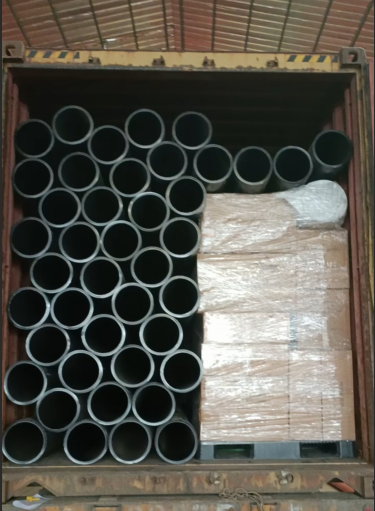
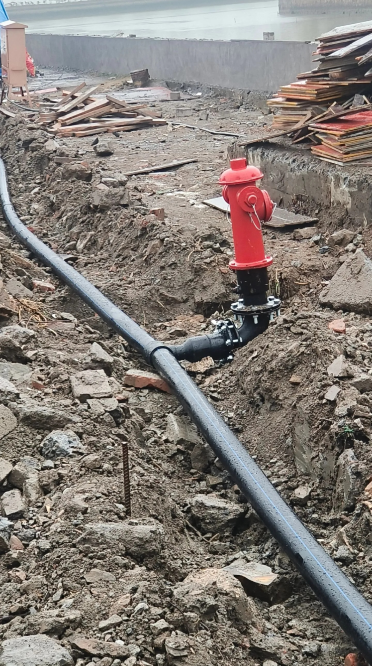
Case
Product: HDPE Red Stripe Fire Pipe
DN160mm 110mm SDR17 PN11.8
Location: Dubai