EN
EN

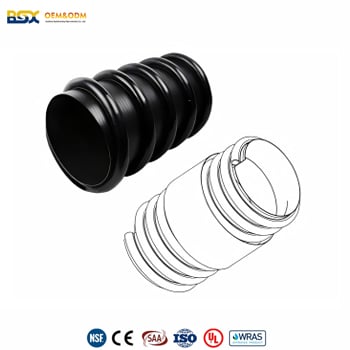
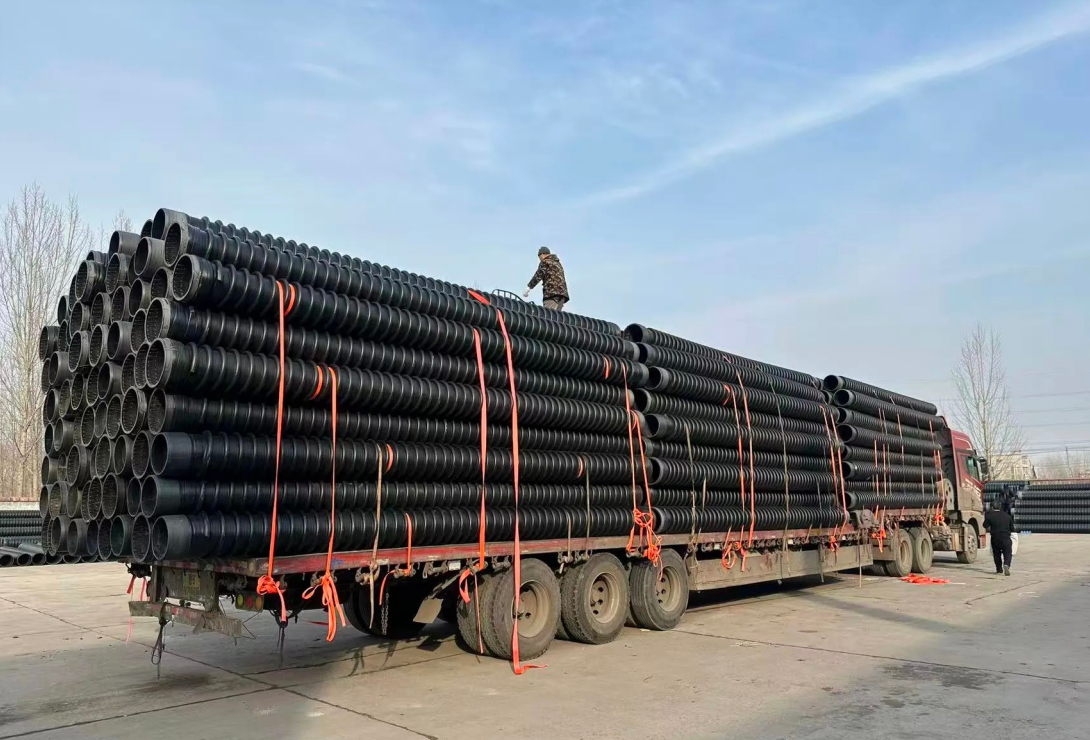
HDPE Krah Pipe
Raw material: HDPE
Standard: Executive Standard/Standard: GB/T 19472.2/DIN 16961
Diameter range: DN300mm-3000mm
Ring stiffness: SN8, SN10, SN12.5, SN16 (supports higher level customization)
Certification: DIN, WRAS, ISO, CE
Length: 5.8 meters (20 feet)
Color: Black/(customizable color)
- Overview
- Recommended Products
 Product Overview
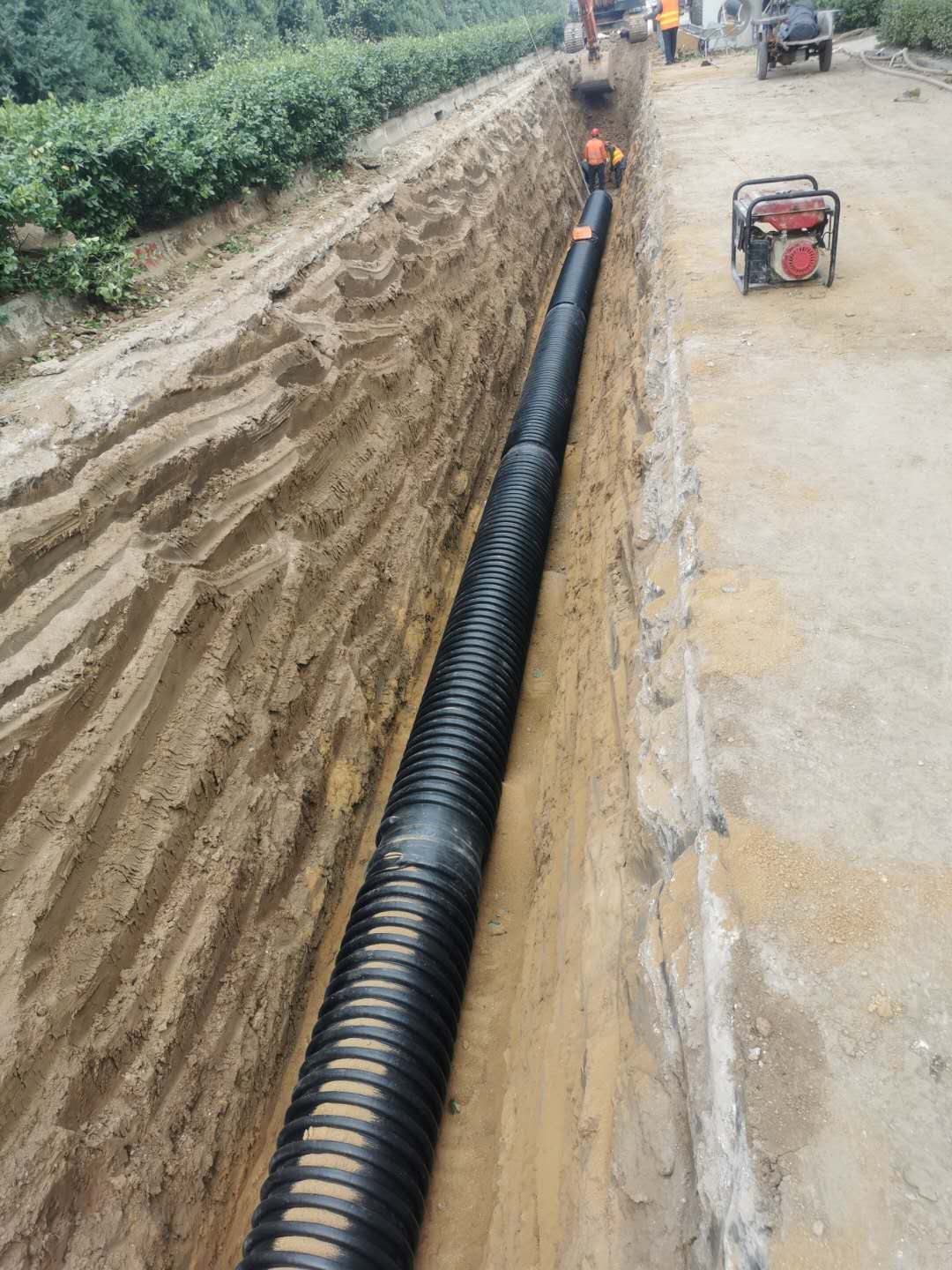
Baishunxing Pipe Industry HDPE Krah Pipe, technically known as "High-Density Polyethylene Structural Wall Winding Pipe (Type B)," is a high-performance drainage pipe manufactured using a hot winding process. Originally developed from German Krah technology, it is formed by winding HDPE resin in a molten state followed by rolling cooling. Its most distinctive feature is the Electrofusion Socket Joint, which achieves complete fusion between the joint and the pipe, making it one of the most secure piping solutions for large-diameter municipal drainage and sewage projects.
Key Features
Hot Winding Process:The pipe is produced by continuous winding in a molten state, with synchronous cooling of the inner and outer walls, effectively eliminating internal stress. Compared to cold-formed pipes, its structure is more stable with superior resistance to deformation.
Profile B Structural Wall Design:The outer wall features a reinforced rib structure while the inner wall remains smooth. This design provides exceptionally high ring stiffness while maintaining a lightweight profile.
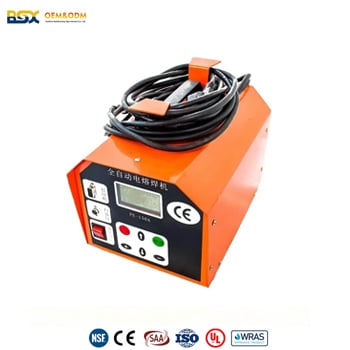
Electrofusion Socket Joint:One end of the pipe is a socket with embedded heating coils, and the other is a spigot. Only electrification is needed for fusion during construction, ensuring the joint strength exceeds the pipe body itself.
Excellent Hydraulic Performance:The mirror-smooth inner wall offers an extremely low friction coefficient, providing superior flow capacity and resistance to scaling.
Major Advantages
Absolute Zero Leakage:The electrofusion joint realizes a monolithic piping system, completely eliminating the risk of joint leakage and protecting groundwater resources from pollution.
Superior Seismic & Impact Resistance:Its excellent flexibility allows the pipe to deform without fracturing during uneven ground settlement or seismic activities.
Large Diameter & High Ring Stiffness:Available in ultra-large diameters from DN300mm to D3000mm, with ring stiffness up to SN16 or higher, meeting the requirements for deep burial and heavy traffic loads.
Broad Construction Adaptability:Capable of construction in wet conditions. The electrofusion joint is unaffected by rainy seasons or humid environments, greatly enhancing construction flexibility.
Typical Applications
Municipal Water & Drainage:Urban stormwater and sewage mains, large cross-regional water transport projects.
Deep Burial Drainage:Heavy-duty drainage for landfills, large factories, and high-fill areas.
Industrial Corrosive Drainage:Wastewater discharge containing corrosive media from chemical, pharmaceutical, and mining plants.
Trenchless Pipe Rehabilitation:Used as a liner pipe for the rehabilitation and renewal of old urban pipe networks.
FAQ
1. What is HDPE Krah Pipe and how is its structure different from conventional HDPE pipes?
HDPE Krah Pipe is a structured wall pipe manufactured from high-density polyethylene (HDPE) using a spiral winding (Krah) technology. Unlike solid wall HDPE pipes, it features a profiled wall structure that significantly improves stiffness-to-weight ratio. The hollow or profiled ribs in the wall allow engineers to optimize ring stiffness according to project requirements while reducing material consumption, making it suitable for large-diameter drainage and sewer applications.
2. How does the structured wall design of HDPE Krah Pipe improve its mechanical performance?
The structured wall design enhances mechanical performance by distributing loads more efficiently through geometric reinforcement rather than material thickness alone. The profile geometry increases the moment of inertia, resulting in higher ring stiffness under soil and traffic loads. This allows HDPE Krah Pipes to maintain structural integrity in deep burial conditions while keeping the pipe lightweight compared to solid-wall alternatives.
3. What are the primary engineering applications of HDPE Krah Pipe in municipal and industrial systems?
HDPE Krah Pipe is widely used in gravity-based and low-pressure conveyance systems such as municipal stormwater drainage, sanitary sewer networks, industrial wastewater discharge, and large-scale culvert systems. It is also applied in infrastructure projects requiring corrosion resistance, such as coastal drainage systems, land reclamation projects, and chemically aggressive effluent transport.
4. Why is HDPE Krah Pipe considered suitable for chemically aggressive environments?
HDPE material inherently provides high resistance to a wide range of chemical agents, including acids, alkalis, and saline solutions. The pipe’s non-polar molecular structure prevents electrochemical corrosion, making it highly stable in environments where concrete or metal pipes would degrade. This makes it particularly suitable for industrial effluent systems and marine or coastal infrastructure projects.
5. What ring stiffness classes are available for HDPE Krah Pipe, and how are they selected?
HDPE Krah Pipes are typically manufactured in ring stiffness classes such as SN2, SN4, SN8, and SN16, depending on project load requirements. Selection is based on factors including burial depth, soil conditions, traffic load, and groundwater pressure. Engineers perform structural calculations according to standards such as ISO 9969 or EN 13476 to determine the appropriate stiffness class for safe long-term performance.
6. How is HDPE Krah Pipe joined on-site, and what ensures joint integrity?
HDPE Krah Pipes are commonly joined using extrusion welding, electrofusion welding, or butt fusion methods depending on pipe diameter and project specifications. These welding techniques create a homogeneous joint with mechanical properties comparable to the pipe body itself. Proper surface preparation, temperature control, and welding parameters are critical to ensure a fully sealed and structurally continuous pipeline system.
7. Can HDPE Krah Pipe be used in high groundwater or unstable soil conditions?
Yes, HDPE Krah Pipe is well-suited for high groundwater and geotechnically unstable areas due to its flexibility and buoyancy resistance when properly designed with anchoring systems. Its ability to deform slightly under load without cracking allows it to perform well in differential settlement conditions where rigid pipes would typically fail.
8. What is the expected service life of HDPE Krah Pipe under standard operating conditions?
Under normal installation and operating conditions, HDPE Krah Pipe is designed for a service life exceeding 50 years. The material’s resistance to corrosion, abrasion, and chemical degradation contributes to long-term durability. Actual lifespan may extend further depending on soil conditions, load distribution, and maintenance practices.
9. How does HDPE Krah Pipe compare to reinforced concrete pipe in lifecycle cost analysis?
From a lifecycle cost perspective, HDPE Krah Pipe typically offers lower total cost due to reduced installation weight, faster installation times, and minimal maintenance requirements. Although initial material cost may vary, savings in transportation, machinery usage, and long-term corrosion-related repairs often make HDPE Krah Pipe more economical than reinforced concrete pipes in large infrastructure projects.
10. Is HDPE Krah Pipe suitable for large-diameter infrastructure projects, and what is its manufacturing range?
Yes, HDPE Krah Pipe is specifically designed for large-diameter applications. It can be manufactured in diameters typically ranging from DN300 up to DN4000 and beyond, depending on project requirements and production capabilities. This makes it suitable for major infrastructure systems such as trunk sewers, stormwater tunnels, and industrial discharge pipelines where high flow capacity is required.
Case
HDPE Krah Pipe
Product: HDPE pipe
DN1200mm SDR17 PN11.9
Location: Indonesia