EN
UPVC Well Casing & Slotted Screen Pipes Shipped to Gabon in a 40HQ Container
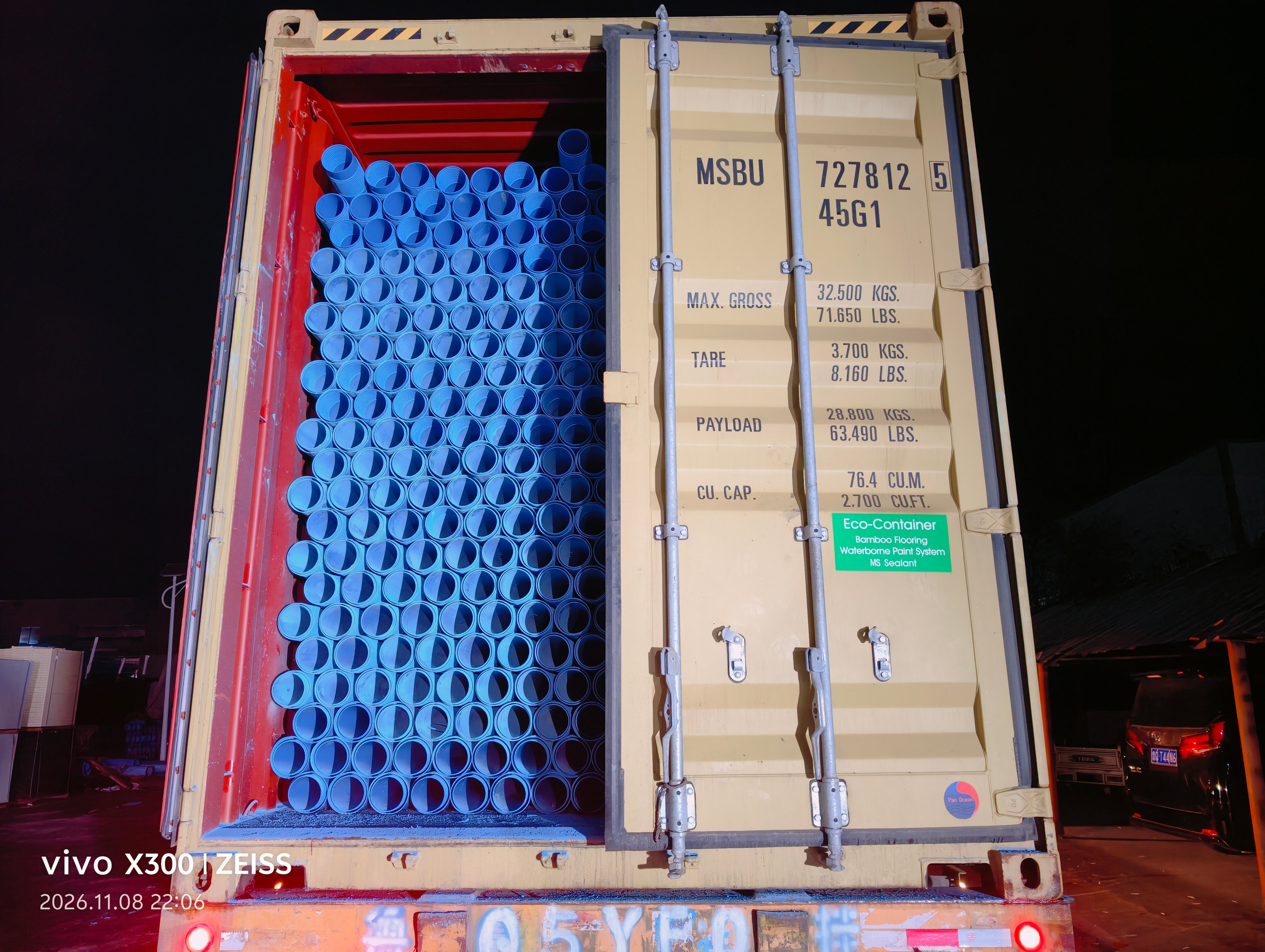
On 9 November 2026 a 40HQ container of UPVC borewell casing pipe and 1.0 mm slotted screen pipe left Qingdao for Gabon: 2,580 lengths, 7,482 metres in total, for a Middle East-based drilling contractor running an irrigation well cluster. The wells run 80–150 m through sand and gravel, the same ground in which the contractor’s earlier steel casing had proved difficult to work with on site. The order followed an audit of the BSX factory by the customer’s own team, and the customer has told BSX that its next order will be placed directly.
Shipment quick facts
|
Item |
Detail |
|
Destination |
Gabon, Central Africa |
|
Customer |
Water well drilling contractor based in the Middle East |
|
Project |
Irrigation well cluster, 80–150 m depth, sand and gravel aquifer |
|
Products |
UPVC borewell casing pipe; UPVC borewell slotted screen pipe |
|
Dimensions |
OD 132 mm × 6.0 mm wall (ID 120 mm); OD 118 mm × 5.8 mm wall (ID 106.4 mm) |
|
Length per piece |
2.9 m, threaded ends |
|
Quantity |
2,064 casing + 516 screen = 2,580 pieces (7,482 m) |
|
Screen slot |
1.0 mm |
|
Container |
1 × 40HQ, nested loading with gaps packed |
|
Loading method |
Conveyor-belt loading, 08:00–22:00 |
|
Port of loading |
Qingdao, Shandong, China |
|
Sailing date |
9 November 2026 |
|
Standard |
Schedule 80 (ASTM F480) |
|
Certification |
Factory: ISO 9001, ISO 14001 · Product: CE |
|
Before the order |
Customer team audited the BSX factory |
|
Next order |
Customer plans to order again directly |
Project overview
The customer is a water well drilling contractor headquartered in the Middle East, currently running an irrigation well programme in Gabon. The project is a cluster of irrigation wells drilled to between 80 m and 150 m, through sand and gravel formations. That profile puts two requirements on the string at the same time: enough ring stiffness to hold the borehole open through loose overburden, and a screen slot suited to the formation so that sand is kept out of the pump.
The contractor had run steel casing on earlier wells in the same programme and found it hard to work with on site. Weight, corrosion and joint handling are the three issues that usually sit behind that kind of problem with steel casing.
Before placing this order, the customer sent a team to audit the BSX factory in China. The visit covered the extrusion line, the slotting process and a witnessed pressure test. The delegation was hosted by Sales Managers Juan Yang and Sandy Zheng.
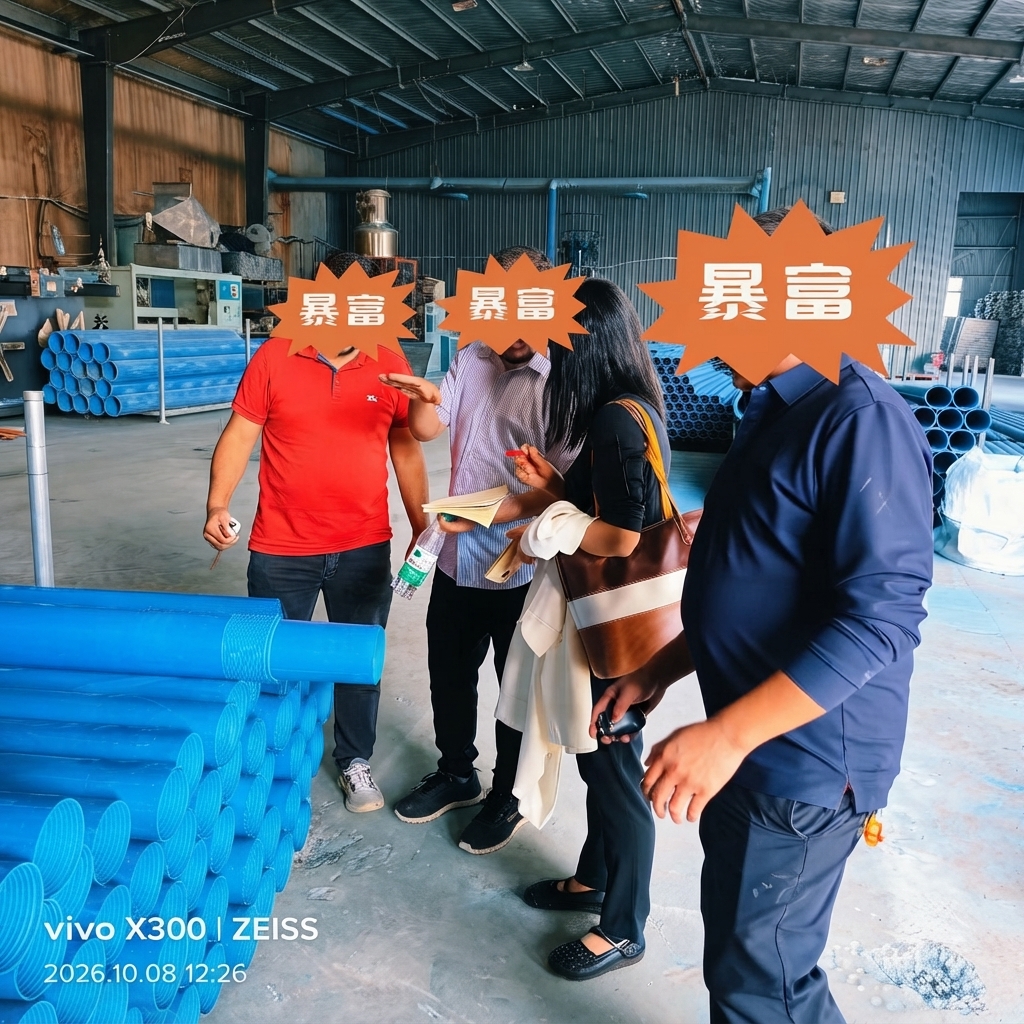
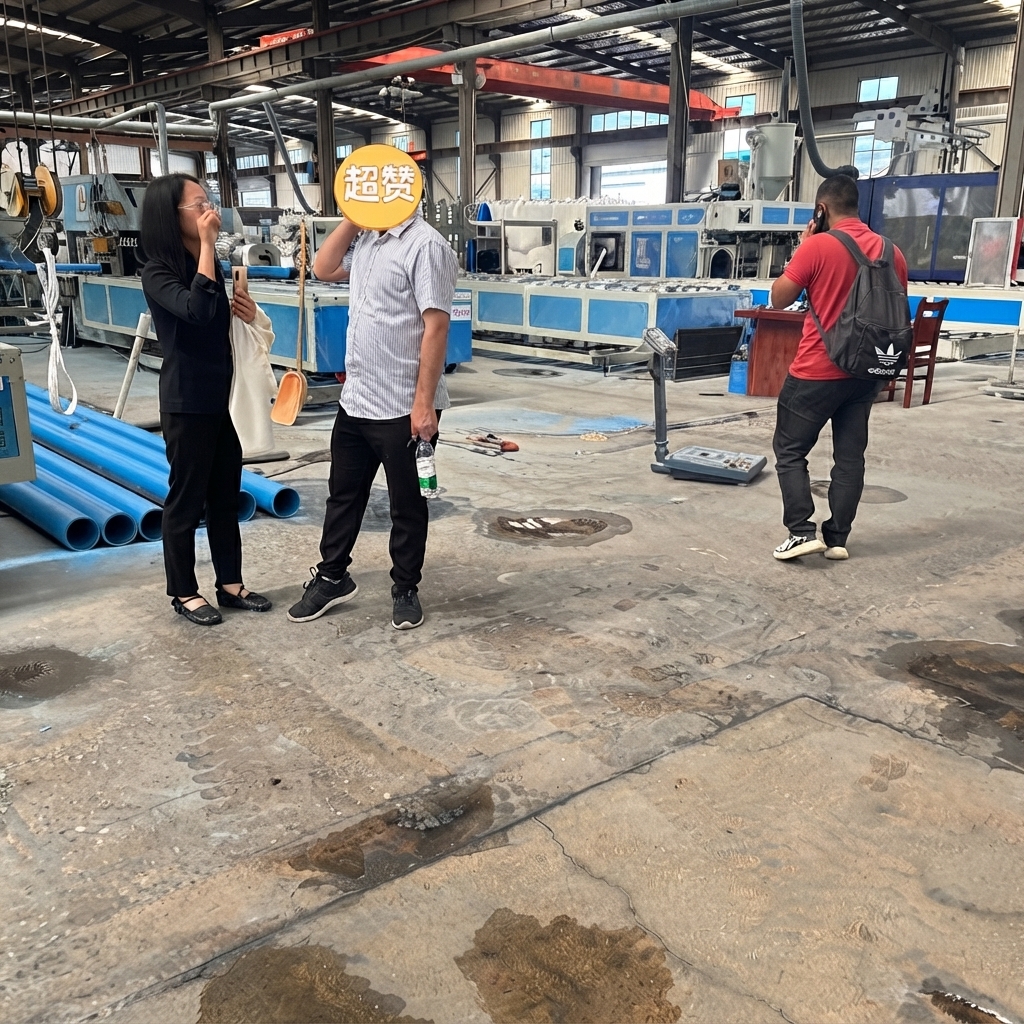
After the audit the customer placed this order, and has told BSX that it will place its next order directly.
At the customer’s request, BSX does not publish the company name, the receiving site or the commercial terms of this shipment. The specification, quantities and loading details below are published with their permission.
Product specifications
|
Product |
OD |
ID |
Wall |
Length |
Slot |
Quantity |
|
UPVC borewell casing pipe |
132 mm |
120 mm |
6.0 mm |
2.9 m |
— |
1,032 pcs |
|
UPVC borewell casing pipe |
118 mm |
106.4 mm |
5.8 mm |
2.9 m |
— |
1,032 pcs |
|
UPVC borewell slotted screen pipe |
132 mm |
120 mm |
6.0 mm |
2.9 m |
1.0 mm |
258 pcs |
|
UPVC borewell slotted screen pipe |
118 mm |
106.4 mm |
5.8 mm |
2.9 m |
1.0 mm |
258 pcs |
All four lines are produced to the Schedule 80 standard (ASTM F480 basis). The factory is certified to ISO 9001 and ISO 14001, and the product carries CE certification. The casing carries the borehole wall; the slotted sections sit opposite the production zone and admit water while holding back the formation. The trade-off between wall classes is covered in Series 8 vs Schedule 80: which is better for deep-well construction .
What 80–150 m asks of the string
Wall thickness and collapse. At this depth the limiting factor for UPVC casing is collapse resistance, which depends on the ratio of wall thickness to diameter, not on diameter alone. The 6.0 mm and 5.8 mm walls here were specified by the contractor for this programme. Whether a given wall suits a given well should be checked against the pipe’s collapse rating, with the casing kept filled with water during installation and the annulus gravel-packed or grouted as the well design requires.
Slot width and gravel pack. A 1.0 mm slot is fairly coarse. In sand and gravel it is normally used together with a gravel pack sized to the formation, so that the pack holds back the finer fraction while the slot passes water. The slot and gravel design for each well is the drilling contractor’s decision.
Why UPVC instead of steel casing
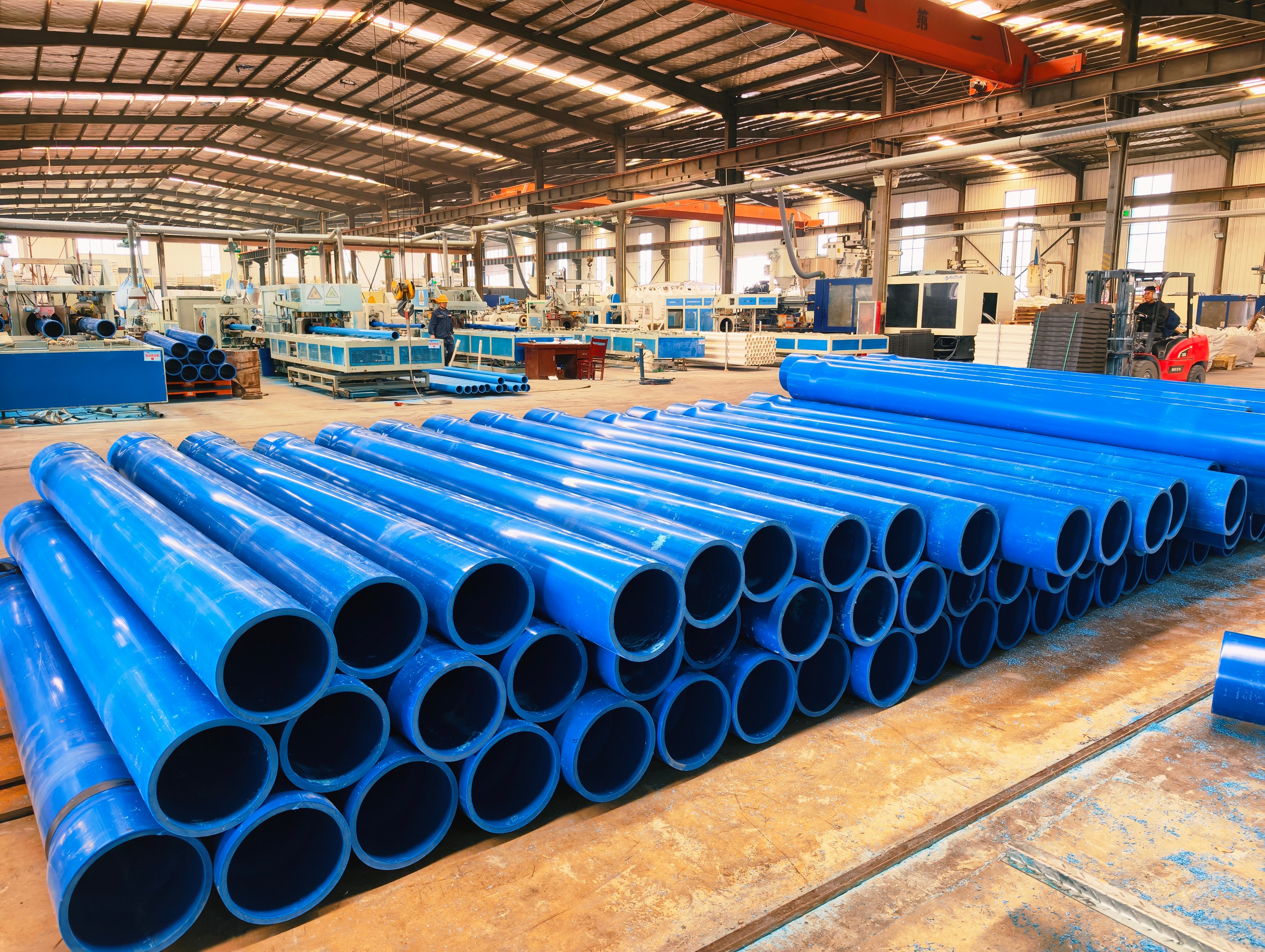
The contractor’s experience with steel casing on earlier wells was the starting point. Four reasons usually sit behind a change like this.
Corrosion. Steel casing in groundwater rusts, scales and loses bore diameter over time. PVC-U does not corrode, does not scale, and does not release metal into the water column — which matters when the well feeds irrigation for food crops.
Handling on site. PVC-U is roughly one-fifth the density of steel. On a remote well site with no crane on standby, that difference shows up as fewer people per joint, faster running and less lifting equipment.
Slot control. UPVC screen is slotted to a specified width in the factory, so the opening is set by the design rather than by cutting in the field.
Lifecycle cost. No welding, no coating renewal, no replacement string after a corrosion cycle. The comparison below is the one BSX publishes for the product line.
|
Feature |
PVC-U |
Steel |
|
Corrosion resistance |
Excellent |
Poor, requires coating |
|
Strength |
Moderate |
Very high |
|
Weight |
Lightweight |
Heavy |
|
Material and installation cost |
Low |
High |
|
Installation |
Simple, no welding |
Heavy equipment required |
|
Service life in aggressive water |
Long |
Reduced without protection |
Loading: conveyor belt, 14 hours, nested loading
Loading ran from 08:00 to 22:00 in a single window. Pipe moved into the container on a conveyor belt rather than by crane or hand-carry: one operator fed the belt, one stacked inside, and the stack was built to a fixed pattern with the pipe ends aligned toward the door. A 38-second video of the conveyor loading is available on request.
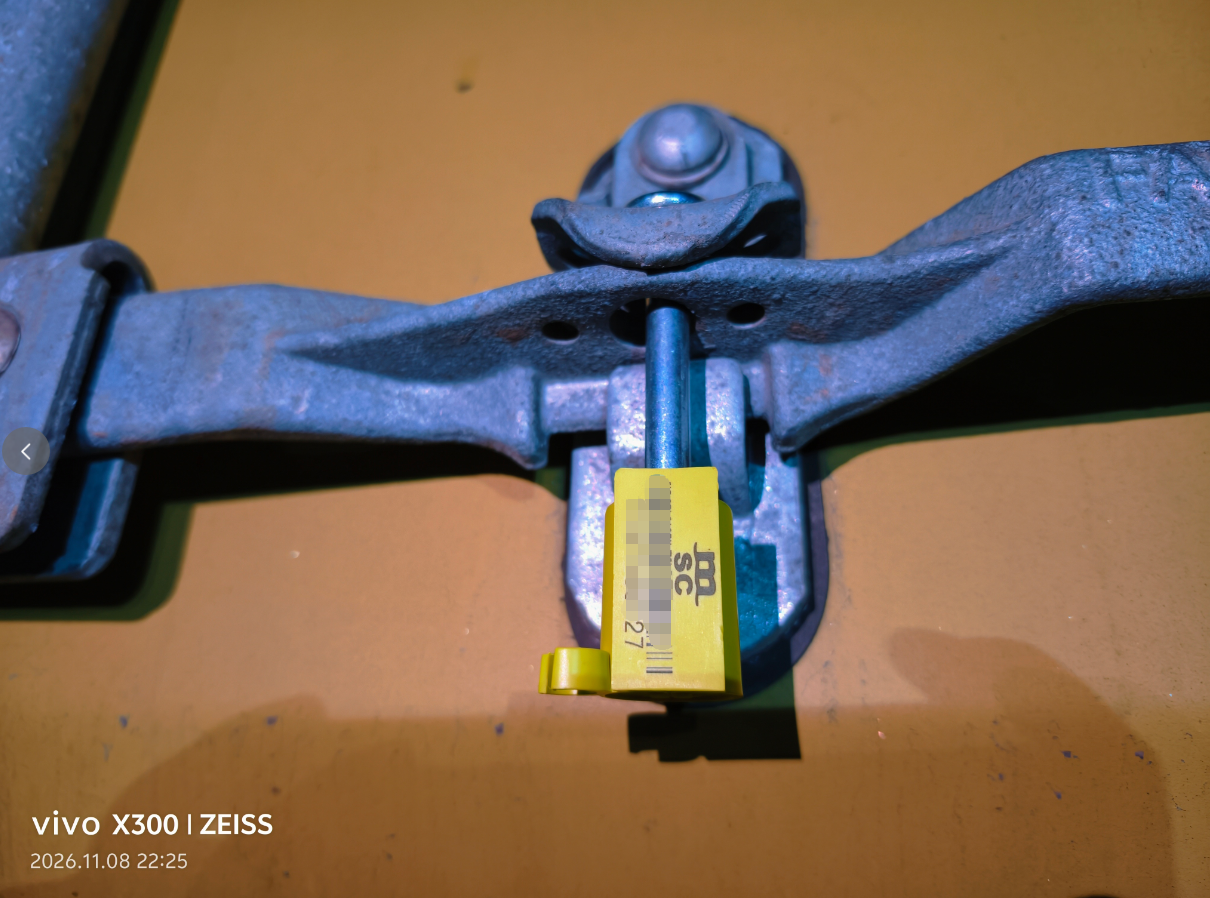
The 118 mm pipes were nested inside the 132 mm pipes — the smaller outside diameter sits within the larger pipe’s 120 mm bore — which is how 2,580 lengths fit one 40HQ. The remaining gaps were packed so the load cannot shift in transit, and the exposed ends at the door were protected before the doors closed.
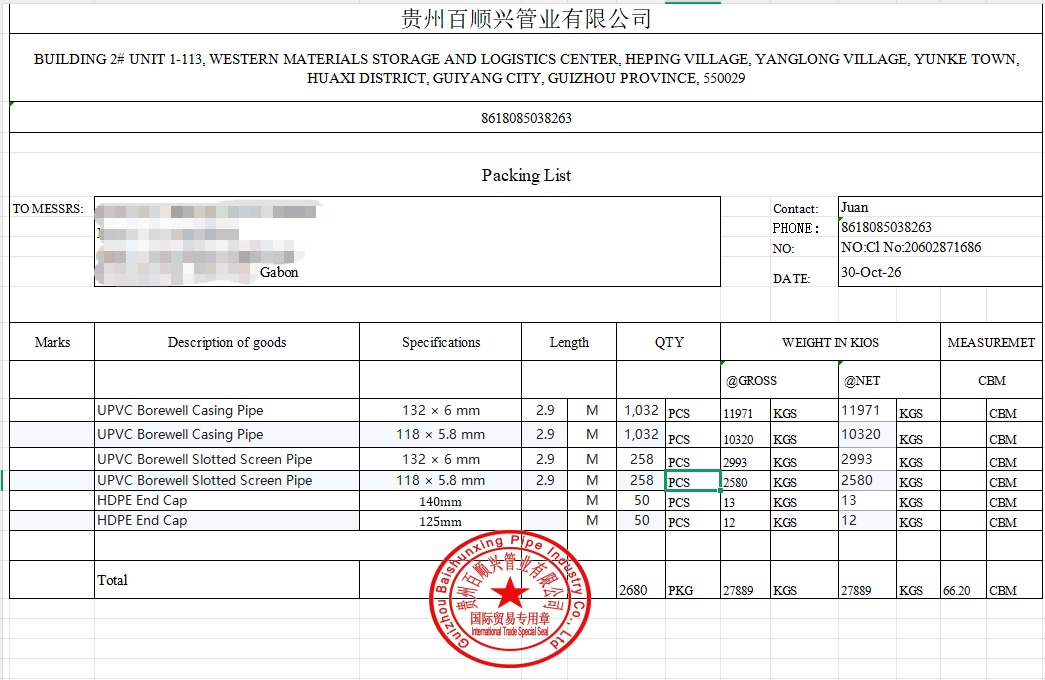
Loading a 40HQ with 2.9 m lengths is a planning exercise before it is a handling one: four lengths fit along the 12 m floor, which fixes the depth of every row, and the stacking pattern above that determines how much of the 2.35 m width and 2.69 m height is actually used.
Inspection before the doors closed
Before the container was sealed, the team checked, line by line:
- piece count against the order specification for all four sizes
- outside diameter, wall thickness and inside diameter
- slot width and slot spacing on the screen sections
- end finish and thread quality
- nesting, stacking stability and packing
Export documentation for the shipment covers the ISO 9001 and ISO 14001 certificates, the CE certificate, and the cargo tracking note required for Gabon-bound cargo.
Why loading discipline matters
Three failures follow a badly loaded container of well casing, and all three land on the buyer.
Damaged threaded ends. A knocked thread will not seat. The joint leaks, the annulus can fill with sand, and the well has to be re-worked.
Scored pipe walls. Impact damage creates a stress concentration in a material that is strong in hoop but not in point load. A scored casing is a future split.
Shifting cargo. Pipe that can move in transit arrives damaged and becomes a claim. Tight nested loading removes the room to move.
What this means for irrigation wells in Gabon
Irrigation wells in sand and gravel formations are often drilled at sites with limited road access and no crane. In that setting the case for UPVC is as much about logistics as about the pipe: light loads move by pickup, threaded joints go together without welding equipment, and a spare length can ride on the same truck as the pump. For an 80–150 m cluster, the specification that matters is the pair: casing wall for borehole stability, and slot width for the grain size of the formation. For a deeper example, see UPVC casing and riser pipes for 300 m wells in the Philippines .
FAQ
What was in this shipment?
2,580 pieces of UPVC borewell pipe in two diameters, in one 40HQ container: 2,064 lengths of casing (OD 132 mm and OD 118 mm) and 516 lengths of 1.0 mm slotted screen pipe matching the same two diameters, all 2.9 m long — 7,482 metres in total.
Why a 1.0 mm screen slot?
Slot width is set by the grain size of the formation, not by preference. A 1.0 mm slot is fairly coarse, so in sand and gravel it is normally paired with a gravel pack sized to the formation. The slot and gravel design for each well is the drilling contractor’s decision; the method is set out in how to choose the right slot size .
Can UPVC casing be used in 80–150 m wells?
Yes, provided the wall thickness is chosen for the depth and the string is installed correctly. In this project the 6.0 mm and 5.8 mm walls were specified for 80–150 m wells in sand and gravel. At depth the limiting factors are collapse resistance and joint integrity, so each well should be checked against the pipe’s collapse rating, with the casing kept filled with water and the annulus gravel-packed or grouted as the design requires.
How much pipe fits in a 40HQ container?
This shipment loaded 2,580 pieces of 2.9 m pipe in one 40HQ using nested loading: the 118 mm pipes sit inside the 132 mm pipes, and the gaps are packed so the load cannot shift. The 2.9 m length also helps, because four lengths fit along the container floor, so the stack builds in a predictable grid instead of leaving dead space at the doors.
What documents are needed to ship well casing to Gabon?
Commercial invoice, packing list, bill of lading and certificate of origin, plus the cargo tracking note required for Gabon-bound cargo. Confirm the exact requirements with your forwarder before booking. The ISO 9001, ISO 14001 and CE certificates travel with the shipment.
Is this specification available for repeat orders?
Yes. The two diameters, two wall thicknesses and 1.0 mm slot are held as a repeatable specification, so the customer’s next order can be produced without re-engineering. To repeat or adapt it, request a quotation for the same configuration .
Request a quotation
Send the well depth, borehole diameter, formation type and target yield, and BSX will return a casing and screen specification with pricing and lead time. Product data: PVC-U well casing and slotted screen pipe . System design: drilling engineering solutions .
Email: [email protected]
WhatsApp: +86 180 8503 8263