 EN
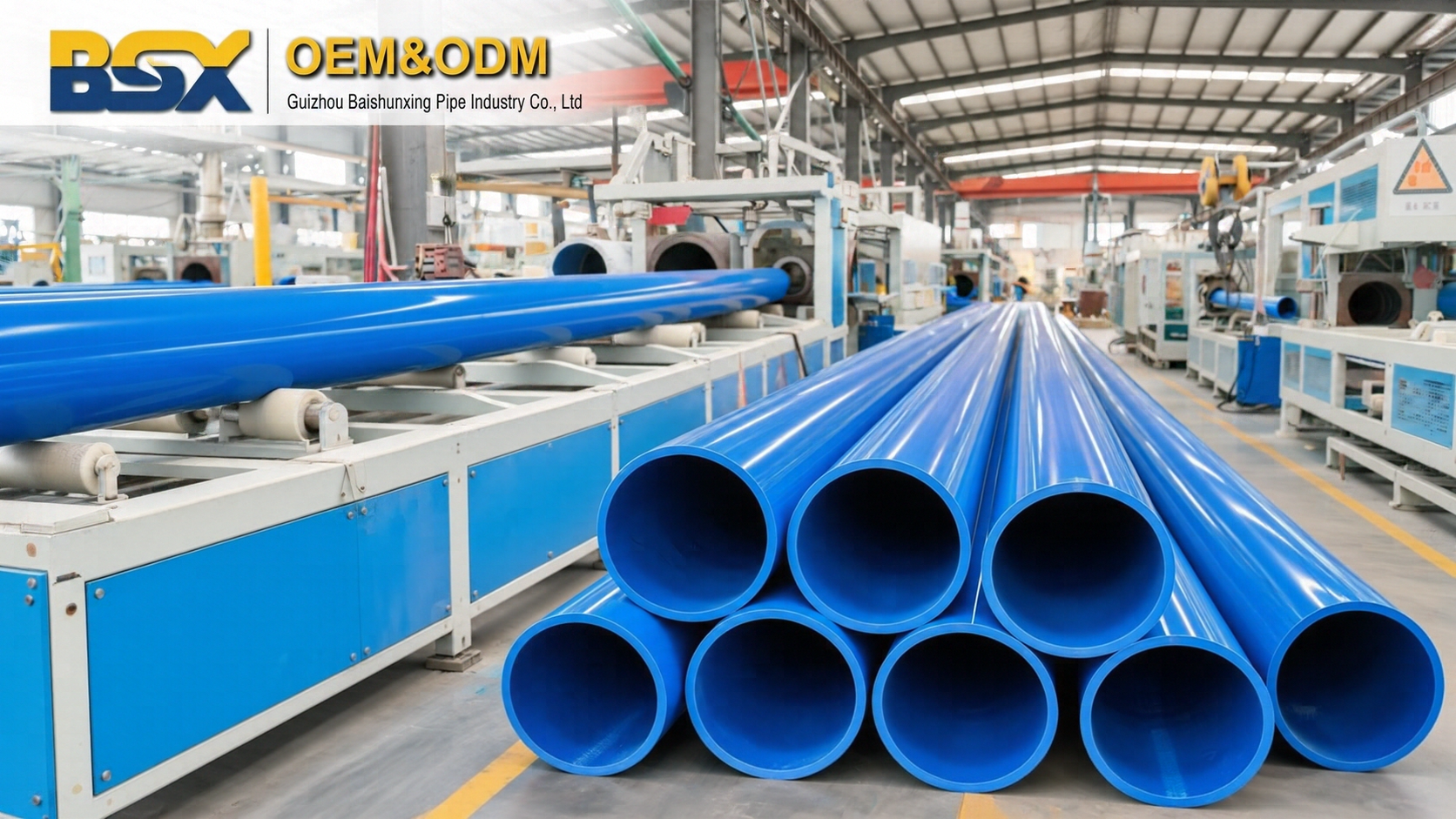
Choosing the right casing pipe is an important part of deep well construction. The casing
supports the borehole, helps prevent surrounding soil from entering the well, and provides a stable passage for groundwater extraction equipment.
PVC casing pipes are widely used in water well projects because they are lightweight, corrosion-resistant, and relatively easy to install. However, selecting the correct pipe classification is essential for long-term performance.
Two classifications buyers may encounter are Series 8 and Schedule 80. Although both
describe pipe dimensions, they belong to different classification systems. Their wall thickness, internal diameter, and mechanical characteristics must be evaluated before choosing one for a deep well.
So, which is better for deep wells? The answer depends on installation depth, external pressure, pipe dimensions, joint strength, and applicable well construction standards.
What Is Series 8 PVC Pipe?
Series 8 is a dimensional classification used in certain metric plastic piping systems. Under commonly used ISO-based dimensional conventions, Series 8 is associated with an SDR of approximately 17.
SDR stands for Standard Dimension Ratio. It describes the relationship between a pipe's outside diameter and its wall thickness.
The formula is:
SDR = Outside Diameter ÷ Wall Thickness
For example, a pipe with a 170 mm outside diameter and a 10 mm wall thickness has an SDR of 17.
A lower SDR generally indicates a thicker wall relative to the pipe's outside diameter.
Series 8 pipes are associated with specific pressure classifications under applicable material and design standards. However, the actual pressure rating must be confirmed through the manufacturer's technical datasheet.
For deep well applications, buyers should also verify whether the particular Series 8 product is manufactured and tested for well casing use. A metric pressure pipe is not automatically
suitable for every borehole installation.
What Is Schedule 80 PVC Pipe?
Schedule 80 is a recognized dimensional classification commonly used in industrial, commercial, and pressure-piping applications.
Compared with Schedule 40 PVC pipe of the same nominal size, Schedule 80 has a thicker wall. This generally provides greater resistance to certain mechanical and internal pressure loads while reducing the available internal diameter.
Schedule 80 dimensions are defined by applicable pipe dimensional standards. The actual wall thickness and inside diameter vary according to nominal pipe size.
For water well construction, ASTM F480 is an important specification covering thermoplastic well casing pipes and couplings, including applicable Schedule 80 configurations.
ASTM D1785 covers PVC Schedule 40, 80, and 120 pressure pipe dimensions. However, an ordinary industrial Schedule 80 pipe should not automatically be considered certified well
casing. Buyers should verify that the specific product meets the requirements of its intended application.
TheASTM F480 official standard explains the scope and testing requirements for thermoplastic well casing pipes and couplings.
Series 8 vs Schedule 80: Key Differences
The main difference is that Series 8 and Schedule 80 follow separate dimensional systems.
Comparison Factor Series 8 PVC Schedule 80 PVC
Classification Metric series-based Schedule-based
|
Dimensional reference |
Commonly associated with SDR17 |
Schedule 80 dimensions |
|
Wall thickness |
Based on outside diameter and SDR |
Defined by nominal size and schedule |
|
Internal diameter |
Depends on OD and wall thickness |
Depends on nominal size and wall thickness |
|
Pressure |
Depends on material and |
Depends on size, material, and |
|
performance |
standard |
temperature |
|
Well casing suitability |
Requires verification |
Requires verification |
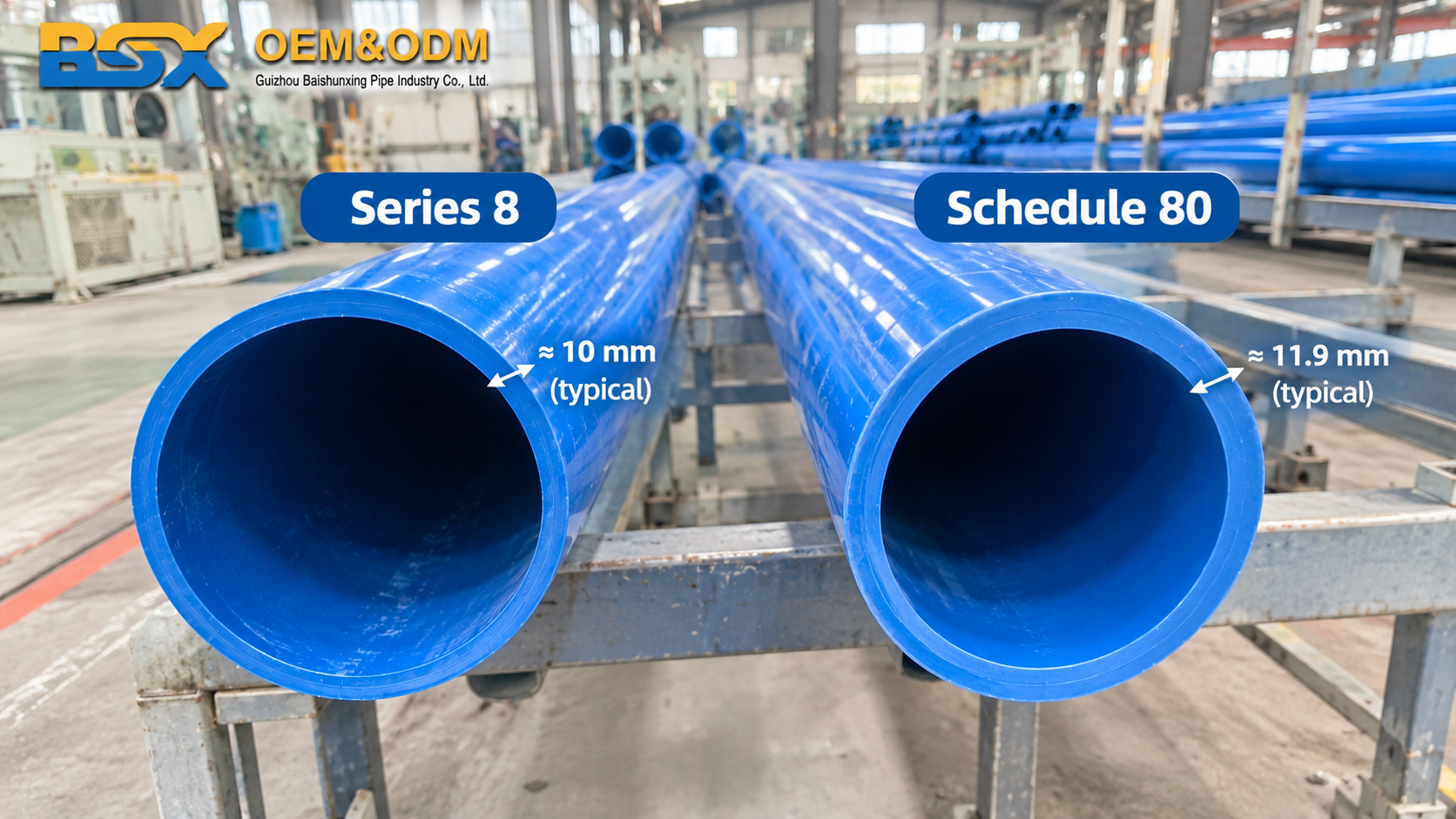
A direct comparison should always use actual outside diameter, minimum wall thickness, material properties, and mechanical performance data.
Series 8 is not automatically weaker than Schedule 80. Similarly, Schedule 80 is not automatically the better option for every deep well.
Which PVC Casing Pipe Is Better for Deep Wells?
Selecting between the two requires evaluating the operating and installation conditions of the well.
Installation Depth and External Pressure
As well depth increases, the casing may experience different external loading conditions.
External pressure can come from groundwater, drilling fluids, surrounding soil, and grout
placement. If the pressure outside the casing becomes significantly greater than the pressure inside, the pipe may be exposed to collapse risk.
This makes collapse resistance an important consideration in deep well construction.
An internal pressure rating alone cannot establish whether a pipe is suitable for underground casing. Engineers should review the expected pressure difference, groundwater conditions, installation method, and manufacturer's collapse-resistance data.
The US Environmental Protection Agency explains how well casing helps maintain the well
opening and prevent unwanted water and contaminants from entering through the surrounding formation. See theEPA guide to private water wells .
Wall Thickness and Internal Diameter
Wall thickness affects both structural performance and the available internal space.
A thicker wall may improve resistance to certain loads, but it also reduces the internal diameter when the outside diameter remains unchanged.
This is important because deep wells often contain submersible pumps, electrical cables, and other equipment.
Before selecting a casing pipe, compare:
● Nominal outside diameter.
● Minimum wall thickness.
● Actual internal diameter.
● Dimensional tolerances.
● Pipe stiffness and collapse resistance.
These measurements help determine whether the casing can accommodate the required equipment while meeting structural requirements.
Joint Strength and Connection Design
Individual casing sections must be connected securely to create a continuous casing string.
These connections may experience handling loads, installation stresses, and long-term service loads.
Common connection configurations include threaded joints, socket connections, and manufacturer-designed mechanical systems.
Buyers should check thread dimensions, engagement length, coupling design, joint strength, and installation instructions.
A strong pipe body cannot compensate for an unsuitable connection. Both components must be suitable for the intended well conditions.
Groundwater and Soil Conditions
Ground conditions also influence pipe selection.
Loose soil, unstable formations, changing groundwater levels, and drilling fluid pressure may create additional loads during installation.
PVC-U offers an advantage in many groundwater environments because it does not rust like conventional steel casing. It can also reduce corrosion-related maintenance concerns.
However, chemical compatibility should still be checked when groundwater contains unusual chemical concentrations or when cleaning chemicals are used during well maintenance.
Applicable Standards and Local Regulations
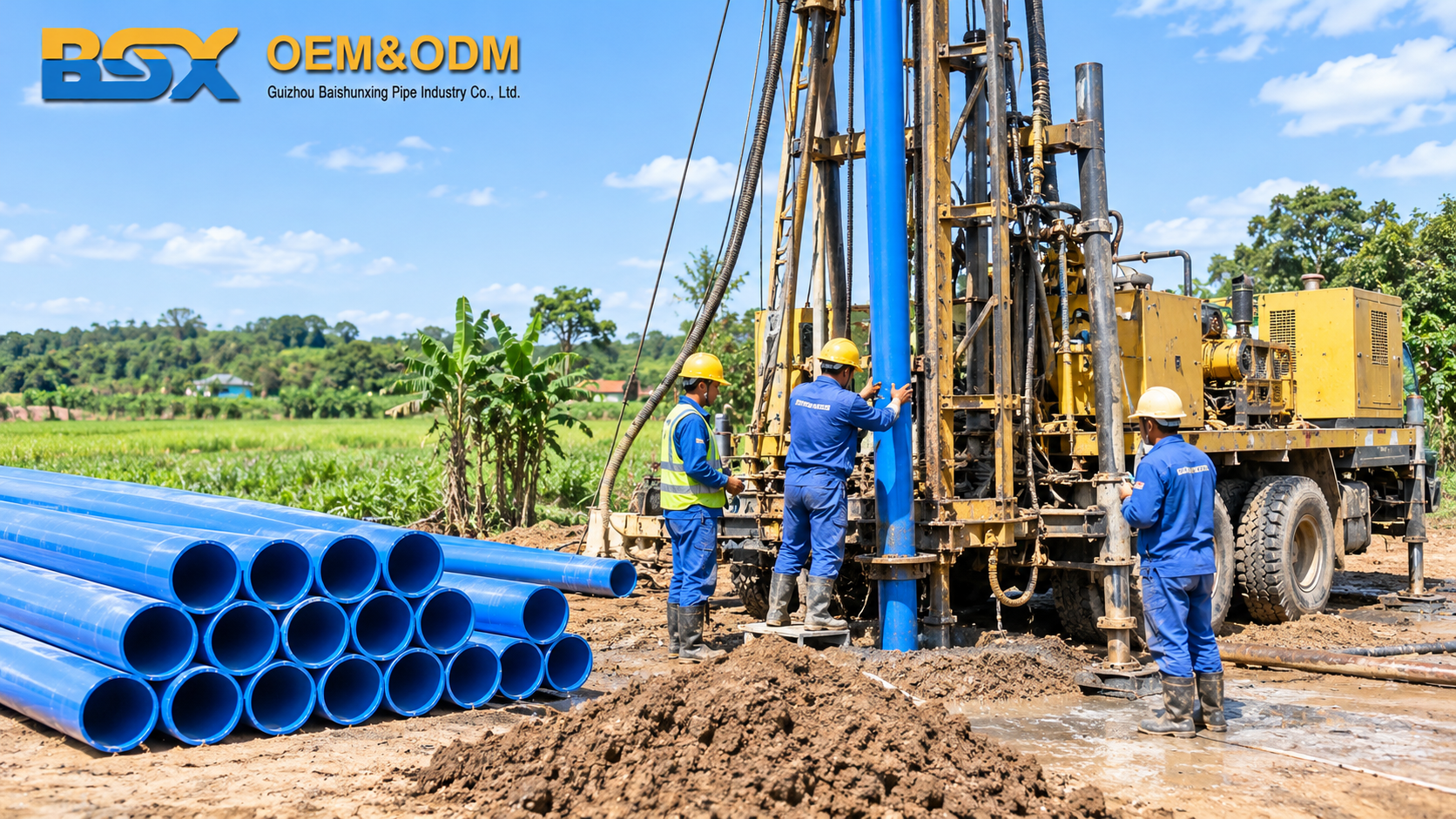
Product standards should be checked before ordering.
For US water well projects, ASTM F480 is an important reference for thermoplastic well casing pipes and couplings. It covers applicable dimensions and performance testing, including pipe stiffness, impact resistance, threads, and joint strength.
However, state and local well construction regulations may impose additional requirements. Buyers and drilling contractors should confirm the applicable rules before selecting a pipe classification.
Practical Checklist Before Selecting PVC Well Casing
Before choosing Series 8 or Schedule 80, review these points with the manufacturer or project engineer:
Confirm dimensions: Check outside diameter, minimum wall thickness, and internal diameter.
Verify material: Confirm the PVC-U material specification and relevant manufacturing information.
Request collapse-resistance data: Review documented performance under expected external pressure conditions.
Check joint specifications: Confirm that the connection type and joint strength are appropriate for installation.
Verify standards: Request documentation showing compliance with applicable well casing requirements.
Check pump compatibility: Ensure there is enough internal clearance for the selected submersible pump and associated equipment.
Inspect the pipe: Check for cracks, damaged ends, deformation, and visible surface defects before installation.
These checks help prevent selection problems caused by relying only on nominal pressure ratings or classification names.
Choosing a PVC Well Casing Pipe Supplier
A suitable supplier should provide accurate product dimensions, material information, connection details, and technical documentation.
BSX Pipe supplies PVC-U well casing and screen pipe products for groundwater extraction, agricultural irrigation, municipal water supply, and other water-related applications.
Buyers can explore theBSX PVC-U Well Casing and Screen Pipe range for available product information.
The company also offersPVC-U Snap Lock Well Casing Pipe for projects where connection configuration is an important selection factor.
When requesting a quotation, provide the required diameter, well depth, installation conditions, connection preference, and applicable project standards. This information helps the supplier assess the project requirements and identify suitable options.
Conclusion
Choosing between Series 8 and Schedule 80 PVC casing pipe requires more than comparing classification names.
Series 8 follows a metric dimensional system, while Schedule 80 uses a separate
schedule-based system. Their suitability for deep wells depends on actual wall thickness, outside diameter, material properties, joint strength, and external pressure resistance.
For deep well construction, collapse resistance, connection reliability, and pump compatibility deserve particular attention. Buyers should also verify applicable ASTM requirements and local well construction regulations.
Ultimately, the best pipe is the one that meets the project's structural, dimensional, and
regulatory requirements. Reviewing technical datasheets and consulting the supplier before ordering can help avoid costly selection and installation problems.
Frequently Asked Questions
Is Series 8 PVC pipe suitable for deep wells?
It may be suitable for certain applications, but the Series 8 classification alone does not confirm suitability for deep well casing. Buyers should verify collapse resistance, joint performance, and applicable well construction requirements.
Is Schedule 80 PVC stronger than Series 8?
Not necessarily. The two classifications use different dimensional systems. Their relative
performance depends on actual dimensions, material properties, and mechanical test results.
What is the difference between Series 8 and SDR 17?
Under commonly used ISO-based dimensional conventions, Series 8 corresponds to SDR 17. Both describe the relationship between outside diameter and wall thickness.
Does ASTM F480 cover Schedule 80 PVC well casing?
Yes. ASTM F480 covers thermoplastic well casing pipes and couplings, including applicable Schedule 80 configurations, with relevant dimensional and performance requirements.
Is thicker PVC casing always better for deep wells?
No. A thicker wall may improve resistance to certain loads, but it also reduces internal diameter. The final selection should consider external pressure, pump clearance, installation conditions, and the complete well design.
Table of Contents
- What Is Series 8 PVC Pipe?
- SDR = Outside Diameter ÷ Wall Thickness
- What Is Schedule 80 PVC Pipe?
- Series 8 vs Schedule 80: Key Differences
- Which PVC Casing Pipe Is Better for Deep Wells?
- Installation Depth and External Pressure
- Wall Thickness and Internal Diameter
- Joint Strength and Connection Design
- Groundwater and Soil Conditions
- Applicable Standards and Local Regulations
- Practical Checklist Before Selecting PVC Well Casing
- Choosing a PVC Well Casing Pipe Supplier
- Conclusion