 EN
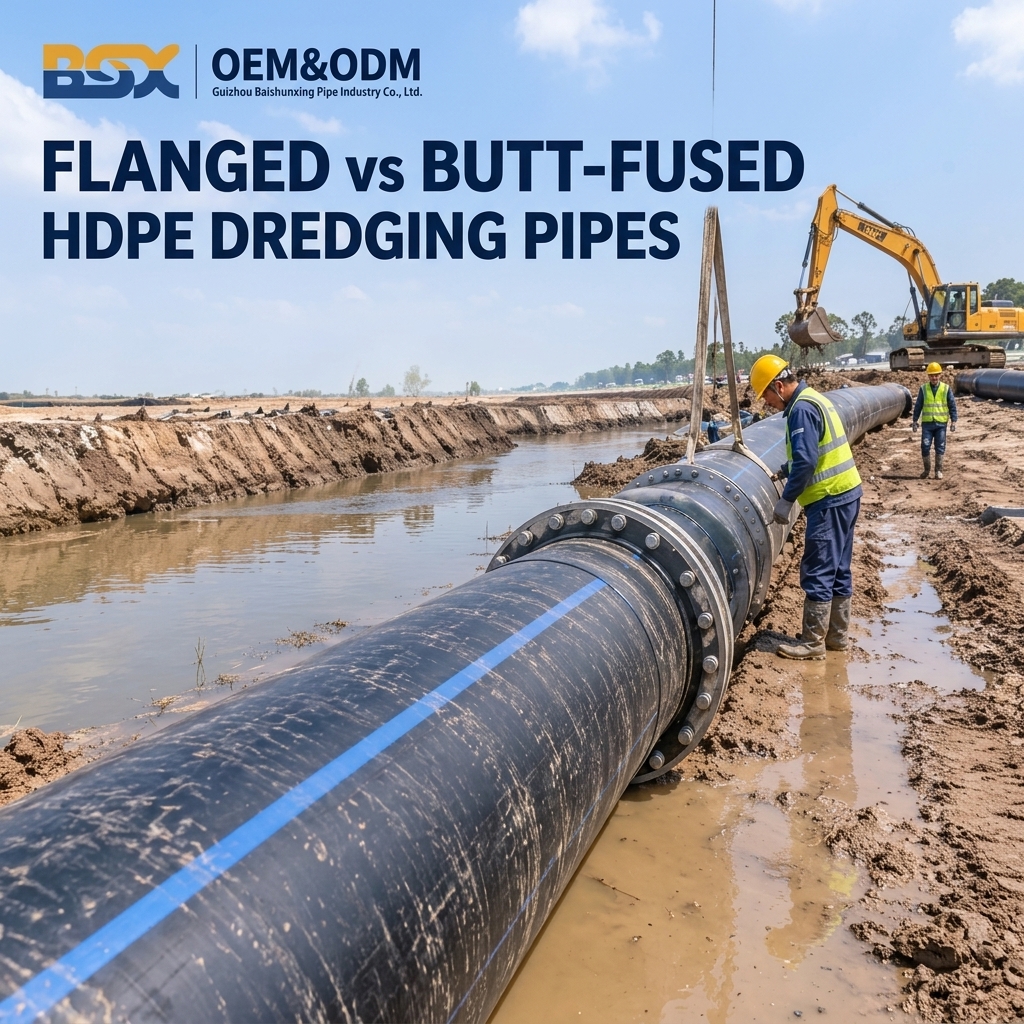
Flanged vs Butt-Fused HDPE Dredging Pipes for Slurry Transport
For a dredging pipeline, it's unlikely that it will remain stationary during a project. Sections can be a follow-up for a moving dredger, cross a shoreline, pass by a booster pump or end at a reclamation ground. Those sections don't necessarily need to be connected the same way. The assembly, maintenance, pressure integrity and ease of route changes become a variable for the contractor with abrasive sediment when considering flanged HDPE dredging pipes or butt-fused PE pipelines.
The question is not which joint is "the best"? or "the most cost-efficient"? It's where Breakdown is useful, it's where Continuity is vital, and it's how the whole line performs when transporting slurry. It is important that the buyer understand that it is possible to implement both approaches and to choose the most difficult competitive equipment before ordering.
What Is a Flanged HDPE Dredging Pipe Connection?
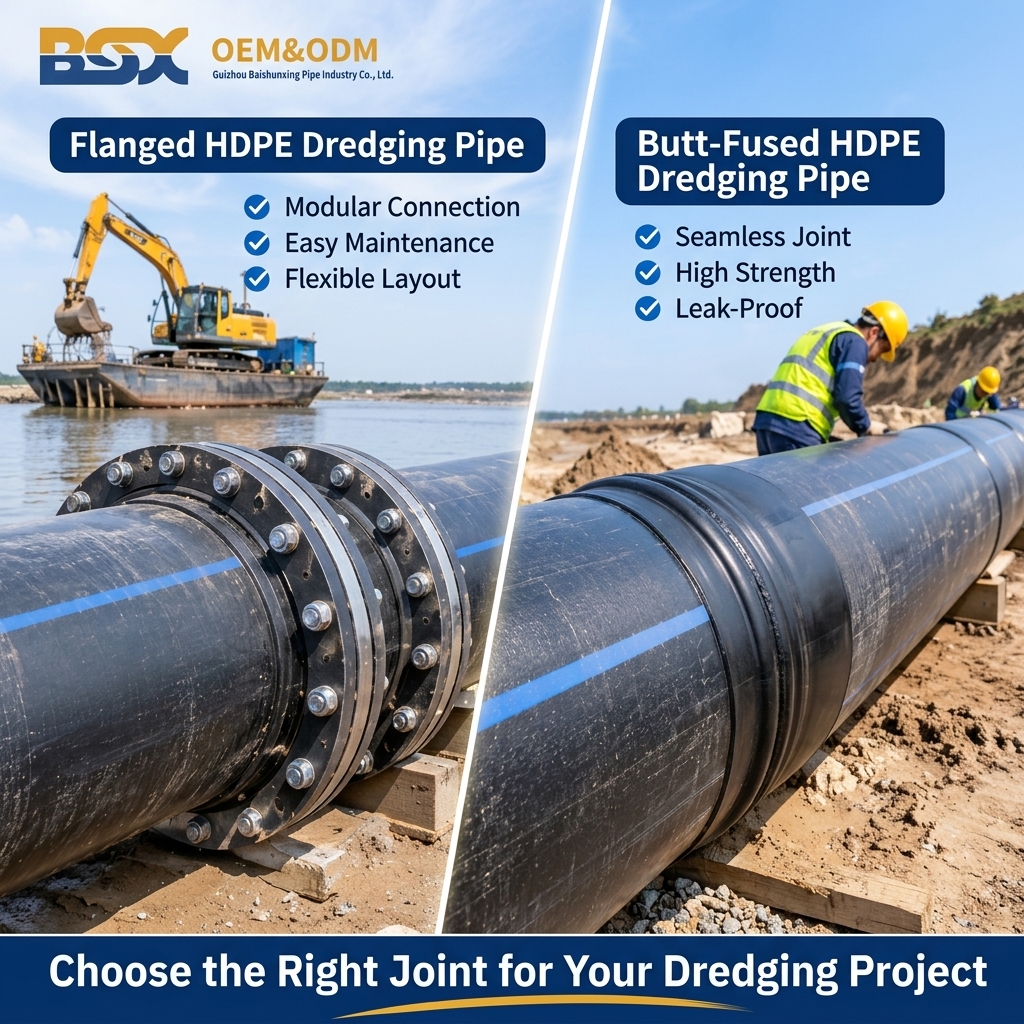
One of the most common modular assemblies is composed of rigid HDPE pipe, PE stub end or flange adapter (compatible), Steel backing ring and fasteners. Matching flanges are typically bolted together, and the PE is fused to the pipe. Depending on the type of joint, the gasket type should be used, and joint construction should be used.
The bolted connection is open for crews to add sections, remove a damaged section, or adjust the route without cutting a pipeline that has been fused. The popularity of dredging pipe designs that are equipped with flanges for port desilting and temporary slurry transfer is explained. But there are bolts, mating surfaces and alignment needs that need to be checked when dealing with modularity.
The purpose of PE flanges, stub ends and metal backing rings is described in the Plastics Pipe Institute's flange-adapter guidance. It is helpful to refer to for joint configuration when it's time to talk to a manufacturer about the product. Still, it is not meant to be a substitute for the assembly instructions that are included with the product.
Where Do Flanged Joints Offer the Most Value?
Think of a dredger slowly progressing through a harbor entrance. It may be necessary to lengthen, shorten, and move the floating discharge line as sediment is removed. These are more easily planned when using flanged modules. The same applies to a coastal reclamation project with an HDPE pipeline where points of discharge vary during filling.
Flanged pieces may also help make the replacement of an elbow joint that is used for a lot of abrasion or has suffered damage during handling easier. Removable joints might present a convenient maintenance boundary where a floating route meets an onshore pipe. These benefits are most important when the work crews employ a coordinated process and safety and access arrangements are in place.
Flanges should be protected from harmful movements even after installation. A fixed metal joint should not be expected to take an infinite amount of wave and turn action or bending. Some flexible sections, moorings and other engineered elements may be needed at transition points.
How Should Flanged Joints Be Installed?
Check for compatibility of pipe ends, backing rings, bolts and sealing surfaces. Both patterns for bolts and flange pressure classes have to match the corresponding equipment. Wipe off the joint faces and inspect for dents, scratches or dirt that might interfere with sealing. Misaligned flanges should not be forced together by tightening bolts.
Bolts must be tightened to the specified torque by the manufacturer, and in the recommended sequence. A compromise can be a problem or lead to leaks. Do not support the adjacent pipe, as it may create unwanted bending forces on the joint. If there are manufacturer's recommendations for inspection and retightening, follow them.
So a dredging pipe equipped with a flange joint is only reusable if the parts are in good working condition. Good records should be made to show which gaskets, rings or bolts require replacement at reassembly.
What Does Butt Fusion Do Differently?
Butt fusion joins prepared ends of compatible polyethylene pipes through a controlled heat-and-pressure process. After cooling, the joint forms a continuous connection without a detachable bolted interface. It can be particularly useful in an HDPE pipe for an onshore dredge discharge line, where the route is stable and dismantling is infrequent.
Fused joints can reduce the number of mechanical interfaces that need routine inspection. They also avoid projecting flange hardware at every pipe-length connection—however, a permanent joint changes maintenance planning. Removing one pipe length may require cutting and then fitting a replacement under an approved repair procedure.
Butt fusion is not simply pressing two heated pipes together. Suitable materials, wall thicknesses, equipment, and procedures have to be checked. The Plastics Pipe Institute's butt-fusion guidance identifies ASTM F2620 and industry joining practices as references for properly controlled work.
What Makes a Reliable Butt-Fused Joint?
The operator first secures the pipe, cleans and faces the ends, and confirms alignment. Controlled heating prepares the mating surfaces, which are then brought together under the specified joining pressure. The joint must cool without disturbance before equipment is removed or the pipe is loaded.
Exact times, temperatures, and pressures should come from the approved procedure for the materials and equipment, rather than an improvised field rule. Dust, moisture, worn facing tools, poor alignment, or early movement can undermine joint quality. Inspection and operator training should be part of the installation budget.
For an HDPE pipe butt fusion for dredging booster pipeline application, planners also need space for the fusion machine, pipe supports, safe access, and welding equipment near the pump station. A theoretically suitable joint can become an impractical choice if there is no workable location to make it.
Compare Connections Across a Mixed Pipeline
Visualize a reclamation project involving an offshore dredger, floating pipe to shore and a long fixed pipe to the fill area. Removable flange modules and butt-fused connections could be a reasonable design, with the floating section and the protected land section connected. The shore transition would then require careful review for the movement, support and pressure changes of the shore.
This is just one example but not a universal design. Certain submerged lines or specially-designed floating lines have different requirements. Before deciding on either approach, the engineer should be mindful of the route of the pipe, the environmental loading, the pump pressure within the system, the characteristics of the slurry, whether it will be able to fit with other units, and any opportunities for maintenance.
There are no joints that can overcome an unspecified pipe wall or an overly abrasive operating regime. Regardless of the joining method, loading at bends, unsupported spans and poorly supported transitions may be significant for the reliability of the system.
Joints to be checked in an inspection plan should be determined by the most vulnerable joints to vibration, strain and repeated handling. Record the condition of bolts in documents on flanged sections and sealing surface damage on permanent sections; record the fusion parameters and record the examinations of joints on permanent sections. This information is useful to the next work crew so they can be aware of what they are looking for when they are inspecting for failures without having to guess how the pipeline was done.
Consider Total Cost, Not Only Joint Price
A flange assembly is similar, but provides additional hardware and installation checks, which may be beneficial when disassembly will be performed every time. However, butt fusion needs trained personnel and the right equipment, and can minimize detachable joints in long permanent connections. The lowest price for the purchase, however, can thus result in a higher total operating cost.
Make a best guess as to the number of moves, horses, closure periods, spare parts, and accessibility for repairs. In projects in Southeast Asian ports or on waterways of Africa, it may be a very practical matter for import times and the availability of experienced installers. The above should be evaluated on a site-by-site basis, not through geography. A real cost comparison requires both planned adjustments to the route as well as the actual repairs while slurry pumping.
Questions Project Teams Ask
Which connection is better for a floating dredging pipeline?
Often a flanged section is helpful when the floating route needs to be switched often. Separate design checks still need to be carried out for buoyancy, movement, mooring and joint support.
Can a project combine flanged and butt-fused HDPE pipe?
Yes, as long as the system is designed to be installed, moved, and pressure resistant in a compatible manner. Different sections may have different maintenance requirements.
Does butt fusion eliminate the possibility of leaks?
No. While a well-designed joint may allow a continuous connection, the joint's artistry, material compatibility, operating conditions, and damage later in service are important considerations.
Choose the Joint That Matches the Work
A real-life example of a specification for an HDPE dredging pipe, to help determine which parts will move, which parts remain stationary, and which require rapid access for repairs. Flanged PE slurry transport assemblies and other connection and piping options are known as BSX Pipe's marine dredging solutions. Then use that to get project-specific drawings, fittings that are compatible with your system and instructions on how to install before ordering!
Table of Contents
- Flanged vs Butt-Fused HDPE Dredging Pipes for Slurry Transport
- What Is a Flanged HDPE Dredging Pipe Connection?
- Where Do Flanged Joints Offer the Most Value?
- How Should Flanged Joints Be Installed?
- What Does Butt Fusion Do Differently?
- What Makes a Reliable Butt-Fused Joint?
- Compare Connections Across a Mixed Pipeline
- Consider Total Cost, Not Only Joint Price
- Questions Project Teams Ask
- Which connection is better for a floating dredging pipeline?
- Can a project combine flanged and butt-fused HDPE pipe?
- Does butt fusion eliminate the possibility of leaks?
- Choose the Joint That Matches the Work