 EN
How to Choose HDPE Dredging Pipes for River and Port Projects
When a dredging project's discharge pipeline clogs, leaks or wears out prematurely, it can waste valuable operating time for the project. The conveyance of sand, silt and water is entirely different from the conveyance of clean water. Particles are constantly impacting the pipe walls in the mixture, pumps create pressure changes, and the pipeline might have to be relocated during dredging operations. A proper selection of the HDPE dredging pipe starts with the work itself and does not directly begin with a diameter from a supplier price list.
Rigid, high-density polyethylene (HDPE) pipe is corrosion resistant, easily handled and easily connected for use with contractors on port maintenance, reservoir clearing or coastal landscaping and reclamation tasks. The performance relies on the performance of the slurry, operating conditions and the complete pipeline design. The following are points to consider when outlining a project team's system definition.
Understand What the Dredging Pipeline Must Carry
Record the material that is being dug out first. Fine silt is not the same as a mixture of sand and shells or coarse gravel. Write down the desired size of the particles, solids concentration, slurry density, intended flow rate and total transport distance. The same dredging pump may be used on multiple projects in different phases of development, from a silty basin to a sandy channel.
Ensuring that solids do not settle in the slurry, especially in horizontal sections of flow, requires a relatively high velocity. However, accelerating the flow velocity alone is not always enough – higher velocity can result in more abrasion, particularly at bends and discharge areas. Engineers shouldn't presume that one velocity is adequate for all materials – they should evaluate hydraulic losses and probable operating modifications. This information is vital to the pipe supplier before he can make a new recommendation for wall thickness and/or pressure class. If the composition of the sediment varies during the excavation, consider planning for the most difficult credible operating condition, not the easiest initial material.
Select Diameter, Wall Thickness, and SDR Together
Diameter is not the only indicator to use for an HDPE dredging pipeline. The internal bore determines the flow; the wall thickness determines the pressure of operation, and the material thickness determines its ability to resist wear. The ratio of outside diameter to wall thickness of a pipe is called the standard dimension ratio or SDR. The lower the SDR, the thicker the pipe wall for a given OD and material.
BSX Pipe offers PE100 dredging products in a variety of SDR and pressure varieties. The published ranges are provided as a guide and are not to be used as a replacement for the rated pressure of the particular pipe at operating temperature. Inquire about the outside diameter, minimum wall thickness, inside diameter, material grade, and production standard. Add normal pumping pressure, start-up or shutdown surges and rate of each fitting. The worst component can set the limit on the system performance.
There is no absolute truth in the statement that a larger pipe is better. Oversizing can cause transport velocity to drop and can cause settling of solids, while undersizing can increase energy demand and wear. Final diameter should be determined after consulting pump and pipeline calculations.
Design for Abrasion Where It Actually Happens
HDPE is generally resistant to corrosion by seawater or most common waterborne corrosive environments; however, abrasion can be a factor that requires maintenance. A concentrated length of sand will wear a straight length over time, and the impacts are higher over time if a length of sand is used in different flow directions. Special consideration should be given to elbows, pump outlets, reducers and the exposed discharge ends.
When designing, ensure unnecessary sharp changes in direction are minimised, and access is given to areas of high wear. Replaceable parts may be necessary if there is evidence of accelerated material deterioration. Depending on the design of the connection and the contractor's methods, some operators turn over the available pipe sections to ensure they are rotated so that the components get an equal amount of wear.
Don't include a service-life number from a buried water pipeline in a dredging specification. The replacement intervals may vary widely depending on slurry composition, operating hours, velocity and inspection practices. It is not a guarantee that the pipe will not need to be replaced; it is a goal of controlled wear and predictable maintenance.
Choose Floating, Submerged, or Onshore Installation
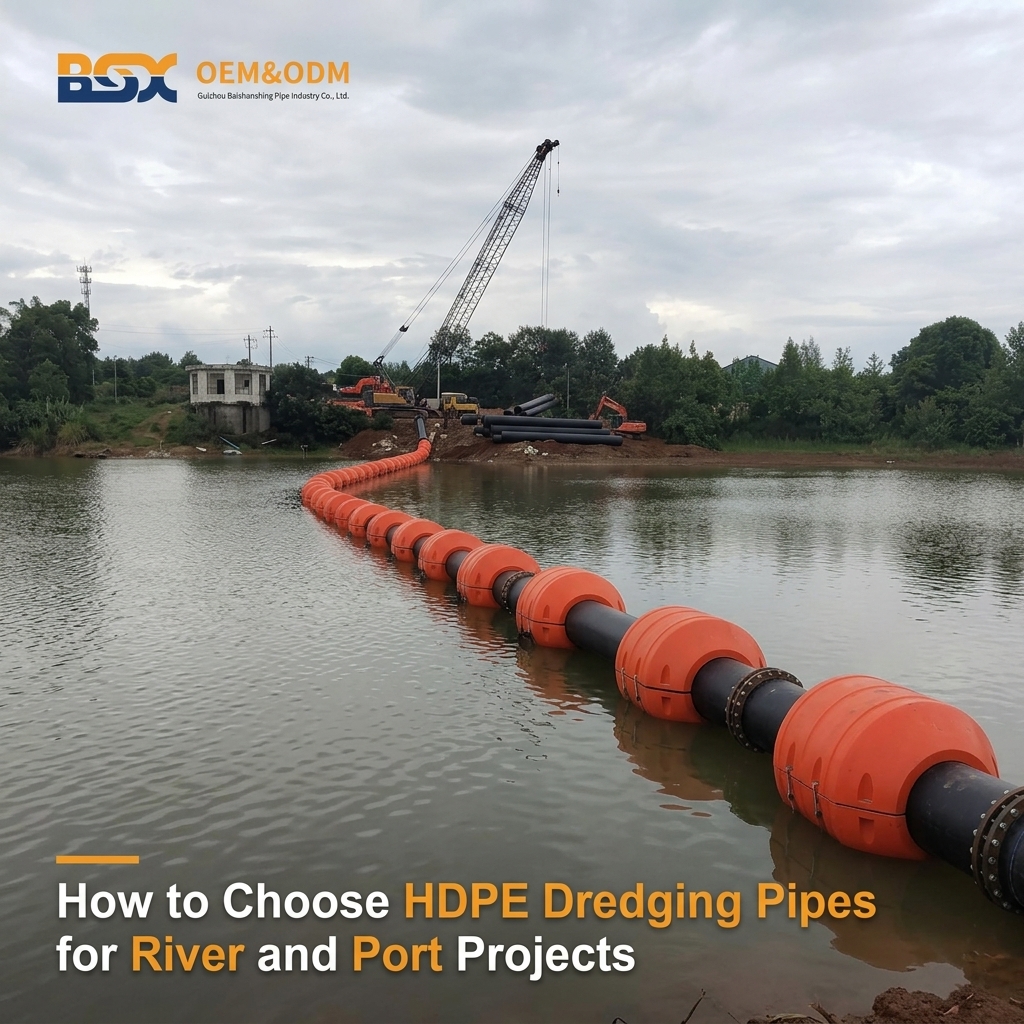
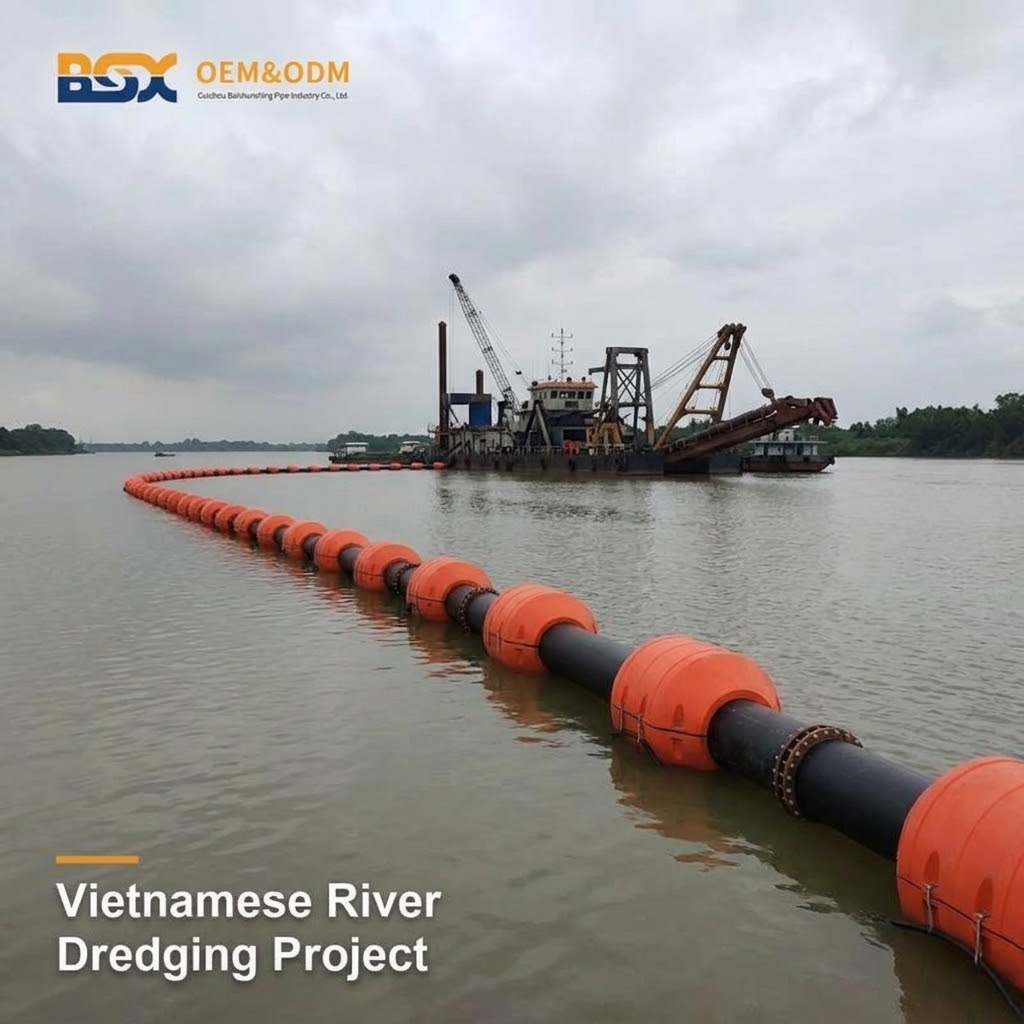
Cherries picked on the route have a significant impact on the choice of pipe. The floating dredging pipeline is positioned behind the dredger across the water, and typically requires purpose-designed floats, mooring and movement control. The weight of the slurry inside the pipe, the joints, the accessories and the pipe itself should all be taken into consideration in the buoyancy calculations. Even if an empty pipe floats properly, the pipeline that will be full will not have sufficient support.
Unsubmerged parts require attention to anchorage, seabed contact, navigation hazards and transitions back to surface. An HDPE pipe for an onshore dredge discharge line, however, should be provided with appropriate ground supports, vehicle crossing protection and restraint where pumping forces are changing direction. All three arrangements can be used in one dredging project.
If designing for coastal or river locations in Southeast Asia or English-speaking markets in Africa, the designers need to take into account seasonal water levels, heavy rainfall, water current, road access and availability of replacement sections. These are variables for the project to be evaluated, not elements to be replicated in each country.
Match the Connection to the Working Method
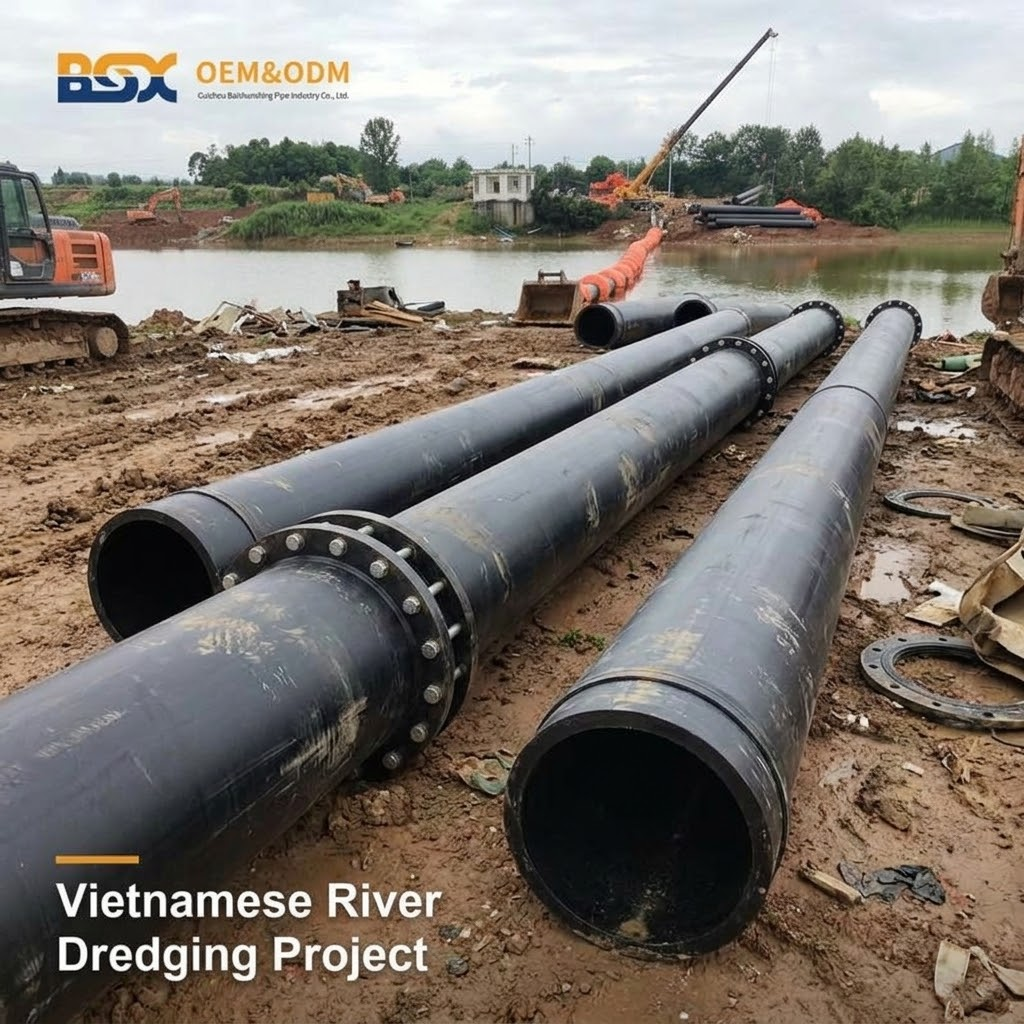
Typically, the modular floating system utilizes steel-backed HDPE stub ends. They permit separation of sections during the movement of the dredging when it is in different locations or with pipeline extensions. It is imperative that flanges are compatible, the bolts are compatible, seals are correct, support is correct, and assembly is correct. Not every flange needs to be leakproof if it is convenient to take it off.
However, butt fusion can be used in longer fixed runs where frequent separations are not necessary. It is capable of joining pre-prepared PE ends under pressure and temperature conditions to form an uninterrupted joint upon cooling. Proper equipment, operator training and procedure control are important, as described in the Plastics Pipe Institute's joining guidance. The point is, unless flanged and fused sections are used together, the transitions must be designed as part of the same pressure system.
Review Standards and Supplier Documents
A good technical query is not satisfied by a catalogue photo. Get a product datasheet with details of grade, dimension, pressure classification, manufacturing standard and relevant testing. Check if any specific standard is applicable to the exact product for which purchase is being made. For instance, ISO 4427 and EN 12201 are mainly for PE piping for water use only and are not in themselves a certification for a complete abrasive slurry system and do not appear on a dredging page.
Note how the fittings are being supplied, the type of flange drilling, whether floats and accessories are included in the quotation and the type of installations that are used. When a material is being bought from a distributor for overseas work, and there is not a lot of opportunity for site personnel to inspect the material before it arrives, documentation is particularly important.
The HDPE dredging pipe range handles products and flanged assemblies made of rigid PE100 by BSX Pipe. Specific sizes and configurations for the projects should be verified directly with the buyer, as availability and technical specifications can vary from line to line.
Plan Installation, Inspection, and Replacement
Prior to pumping, inspect supports, joint alignment, flange fasteners and access around moving equipment. Determine commissioning and leak-checking procedures that are safe for the pressure and layout. Monitor for unusual vibrations, flow changes, visible leakage, floats shifting or excessive bending wear during operation. Record inspections and prioritize recurring areas of problem.
A good maintenance program will also determine which parts of the line can be isolated and non-dismounted for maintenance. Redundant seals, fittings and pipe lengths that are easily available can help minimize downtime. A remote reservoir or coastal location where it is not easy to obtain replacement materials is an appropriate setting for the value of maintenance planning.
Questions Buyers Commonly Ask
Is HDPE suitable for abrasive dredging slurry?
It can be if the type of selected pipe and its unions fit the solids, velocity, pressure and anticipated wear. Rather than cancelling out the need for abrasion inspection because of HDPE's corrosive resistance, this resistance actually makes it more critical.
Do floating dredging pipes support themselves?
Not necessarily. Usually, floats for a Floating Assembly are individually sized to fit a specific site and the weight of the load. Engineering review is needed for float spacing, mooring and joint movement.
What information should be sent to the manufacturer?
Deliver a description of the slurry, the pump duty, the distance, route for drawing, type of installation, target pipe size, pump pressure, preferred joining and delivery destination. This gives you a more beneficial quote than a price for an HDPE pipe.
Build the Specification Around the Site
The most wear-resistant HDPE pipe for port maintenance dredging is the pipe selected for the actual conditions that can be measured, conditions that are realistic for installation, and for a reasonable inspection plan. Contractors can take advantage of BSX Pipe's marine dredging solutions and submit a proposal for the project based on their intended project, rather than allowing a generic pipe description guide to dictate their project for them.
Table of Contents
- How to Choose HDPE Dredging Pipes for River and Port Projects
- Design for Abrasion Where It Actually Happens
- Choose Floating, Submerged, or Onshore Installation
- Match the Connection to the Working Method
- Review Standards and Supplier Documents
- Plan Installation, Inspection, and Replacement
- Questions Buyers Commonly Ask