 EN

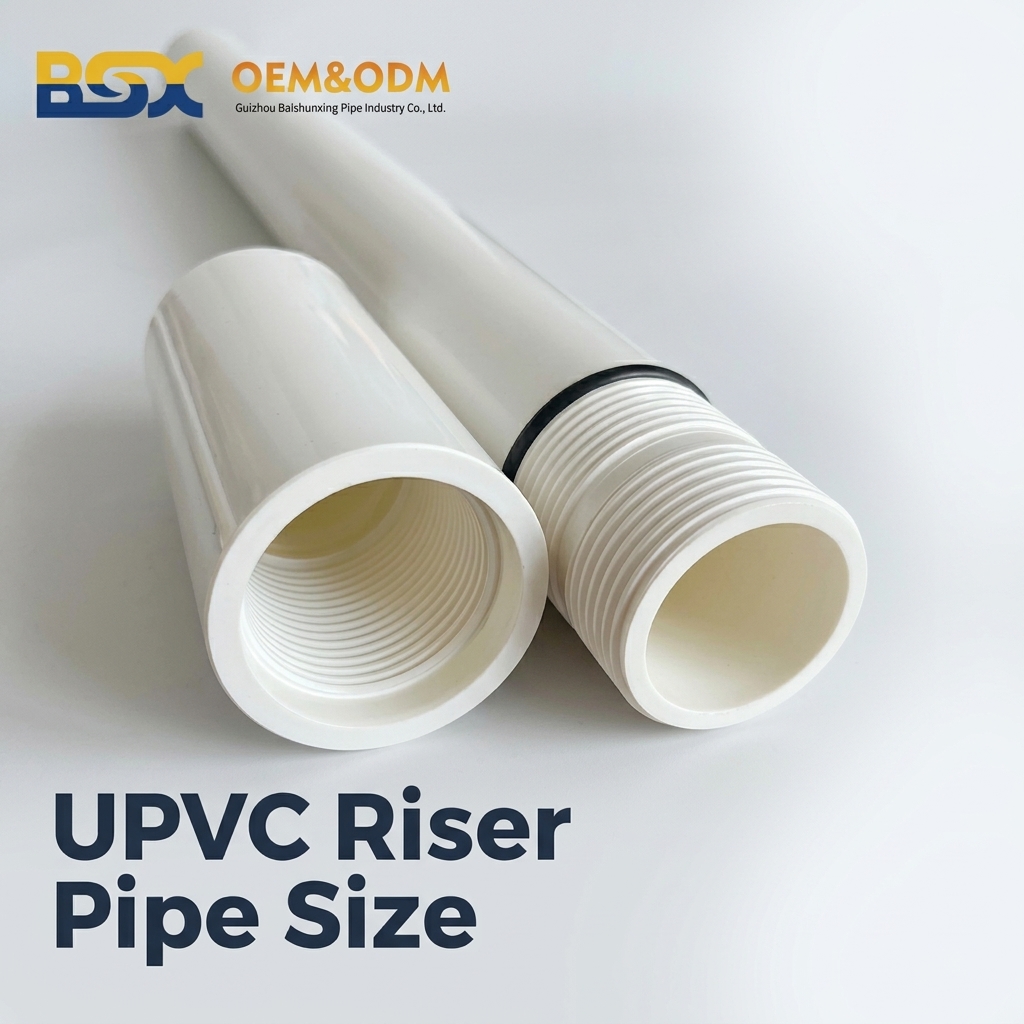
Selecting the correct UPVC riser pipe size is an important part of designing a reliable deep well pumping system. The riser pipe connects the submersible pump to the water outlet at the
surface. It carries groundwater upward while supporting the hydraulic and mechanical demands of the installation.
A pipe that is too small can increase water velocity and friction losses, reducing pumping efficiency. An unnecessarily large pipe may increase material costs, installation weight, and space requirements inside the well casing.
The right size depends on several factors, including pump flow rate, discharge connection, total pumping head, pipe length, and pressure requirements.
This guide explains how to match UPVC riser pipe dimensions to a deep well pump and what buyers should check before selecting a product.
What Is a UPVC Riser Pipe in a Deep Well Pump System?
A UPVC riser pipe is a rigid, unplasticized polyvinyl chloride pipe used to transport water from a submerged pump toward the surface.
It is installed between the pump discharge outlet and the wellhead or surface delivery system. Depending on the installation, the riser may consist of multiple connected pipe sections.
Its main functions include:
● Transporting groundwater from the pump to the surface.
● Withstanding internal water pressure.
● Providing a stable discharge connection.
● Supporting reliable water delivery.
● Resisting corrosion in many groundwater environments.
UPVC is commonly selected for deep well applications because it is lightweight, corrosion-resistant, and has a smooth internal surface.
However, the pipe must be selected according to the pump's operating conditions. Material type alone does not determine whether a riser pipe is suitable.
How to Determine the Correct UPVC Riser Pipe Size
Choosing the right diameter requires more than matching the pipe to the pump outlet. Engineers should consider the following factors.
1. Check the Pump Flow Rate
Flow rate is the amount of water a pump delivers over a specific period. It is commonly measured in gallons per minute (GPM) or liters per second (L/s).
A higher flow rate generally requires a larger pipe diameter to maintain suitable water velocity and avoid excessive friction losses.
For example, a pump delivering 30 GPM has different piping requirements from a system delivering 100 GPM.
However, flow rate alone is not enough to determine the final pipe size. The total pipe length, available pressure, and acceptable friction loss must also be considered.
Start by checking the pump manufacturer's performance curve and identifying the expected operating flow.
2. Consider the Pump Discharge Connection
The pump outlet provides an important starting point for selecting the riser pipe.
Check the discharge connection diameter, thread type, and connection requirements before ordering.
However, the riser pipe does not always need to have exactly the same diameter as the pump outlet. An appropriately designed adapter may be used when hydraulic calculations support a different pipe size.
Any transition should avoid unnecessary restrictions and remain compatible with the pump manufacturer's installation instructions.
Water velocity affects the performance of a deep well pumping system.
An undersized pipe can increase velocity and friction losses. This means the pump must overcome additional resistance to deliver water at the required flow rate.
Engineers commonly use hydraulic calculations, including the Hazen-Williams method for applicable water systems, to estimate friction losses.
The calculation should consider:
● Required flow rate.
● Actual internal pipe diameter.
● Total riser pipe length.
● Pipe material and roughness.
● Fittings, valves, and connection losses.
Grundfos provides pump selection guidance that includes flow rate, total head, and friction losses in itssubmersible pump engineering documentation.
These calculations help determine whether the selected UPVC riser pipe can deliver the required water flow without excessive energy loss.
4. Check the Total Pumping Head and Pressure Rating
The total dynamic head (TDH) represents the total energy the pump must provide to move water through the system.
It includes the vertical lifting requirement, pressure needed at the outlet, and friction losses through pipes and fittings.
As pumping head increases, the discharge system may experience greater pressure requirements.
Therefore, the selected UPVC riser pipe must have an adequate pressure rating for the actual operating conditions.
Consider:
● Pump discharge pressure.
● Vertical lifting height.
● Operating flow rate.
● Starting and stopping pressure changes.
● Water temperature.
● Pressure losses through fittings and valves.
Also consider transient pressure or water hammer where relevant. The pipe, joints, adapters, and fittings must be suitable for the complete system pressure.
Common UPVC Riser Pipe Sizes for Deep Well Pumps
UPVC riser pipes are available in different diameters and wall thicknesses to accommodate different pump capacities and installation requirements.
The following are common nominal pipe connection sizes used in pumping systems:
|
Nominal Size |
Typical Application Consideration |
|
1¼ inch |
Smaller-flow pumping systems |
|
1½ inch |
Small to medium-flow systems |
|
2 inch |
Medium-capacity pumping systems |
|
2½ inch |
Higher-flow applications |
|
3 inch |
Larger-capacity pumping systems |
|
4 inch |
High-capacity water delivery systems |
These are general size categories, not fixed pump-capacity recommendations. The correct
selection must be based on actual internal diameter, flow rate, friction loss, pressure rating, and pump connection specifications.
For example, two pipes with the same nominal size may have different internal diameters because of differences in wall thickness and pressure class.
Buyers should always compare actual product dimensions rather than relying on nominal size alone.
How to Match UPVC Riser Pipe Size to Pump Capacity
A practical selection process helps prevent common sizing errors.
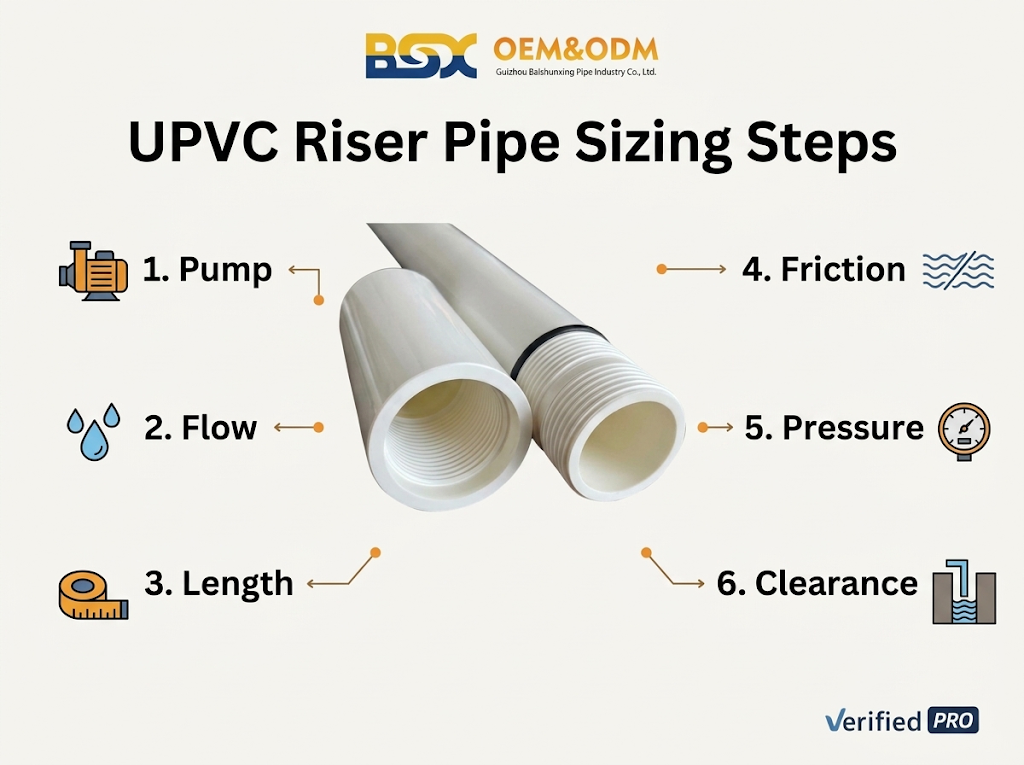
Step 1: Identify the pump model. Check the manufacturer's technical datasheet for discharge outlet size, rated flow, and operating head.
Step 2: Determine the required flow. Identify the water demand of the irrigation, residential, municipal, or industrial system.
Step 3: Measure the riser length. Consider the pump installation depth and the distance to the surface discharge point.
Step 4: Calculate friction losses. Use the actual internal diameter and expected flow to evaluate hydraulic resistance.
Step 5: Confirm pressure requirements. Check whether the pipe's pressure rating is suitable for normal operation and possible pressure surges.
Step 6: Verify installation compatibility. Ensure the pipe fits inside the well casing with enough clearance for the pump, electrical cable, and other components.
Following these steps helps engineers select a riser pipe that balances hydraulic performance, structural requirements, and installation practicality.
Other Factors to Consider When Selecting UPVC Riser Pipes
Pipe Material and Quality
The UPVC material should meet the requirements of the intended water application. Buyers should review the manufacturer's material specifications, dimensional tolerances, and quality documentation.
Joint Strength and Connection Type
Deep well riser pipes may use threaded or other engineered connection systems. Each joint must withstand the loads created during installation and pumping operation.
Check thread compatibility, engagement, sealing arrangements, and manufacturer-recommended tightening procedures.
Pipe Weight and Installation Depth
The complete riser assembly carries its own weight along with the water inside it. Greater
installation depths increase the importance of checking tensile loads, joint strength, and pipe deformation.
For plastic riser systems, engineers should also consider elongation under load where applicable.
Well Casing Clearance
The outside diameter of the riser pipe must fit within the available well casing diameter.
Sufficient clearance is needed for installation, pump removal, cable routing, and maintenance.
The US EPA's guide to private water wells explains the role of well casing and submersible pumps in groundwater systems. Local well construction requirements should also be reviewed.
Choosing a UPVC Riser Pipe Supplier
A reliable supplier should provide clear product specifications, available diameters, pressure ratings, connection details, and technical documentation.
BSX Pipe offersUPVC High Pressure Submersible Water Pump Pipes for deep well pumping, borehole water extraction, irrigation, and water supply applications.
The product information includes different dimensional configurations, pressure options, and threaded connections.
Before requesting a quotation, buyers should provide:
● Required nominal pipe diameter.
● Pump model and discharge connection.
● Expected flow rate.
● Total riser pipe length.
● Required operating pressure.
● Preferred joint configuration.
● Applicable project standards.
For additional information, read BSX Pipe's related guide onPVC Riser Pipe and Deep Well Column Pipe Selection.
Providing these details helps the supplier review the application and identify suitable product options.
Matching UPVC riser pipe size to a deep well pump requires careful consideration of flow rate, pipe diameter, friction losses, total pumping head, and pressure requirements.
The pump outlet size provides a useful starting point, but it should not be the only selection criterion. Engineers must evaluate actual internal diameter, hydraulic performance, joint
strength, and well casing clearance before finalizing the design.
A properly selected UPVC riser pipe can support efficient groundwater delivery, reduce
unnecessary energy losses, and provide reliable operation when installed according to the manufacturer's specifications.
FAQ
How do I choose the correct UPVC riser pipe size for a deep well pump?
Start with the pump's rated flow and discharge connection. Then evaluate pipe length, internal diameter, friction losses, operating pressure, and well casing clearance before selecting the final size.
Should the riser pipe diameter match the pump outlet?
Not always. Matching the outlet is a useful starting point, but hydraulic calculations may support a different diameter using a suitable adapter and connection arrangement.
What happens if a UPVC riser pipe is too small?
An undersized pipe can increase water velocity and friction losses. This may reduce delivery performance and increase the energy required to pump water.
What pressure rating should a deep well UPVC riser pipe have?
The rating should exceed the system's maximum design pressure, accounting for operating conditions, temperature, and relevant pressure surges. The pump and pipe manufacturers' technical data should be checked.
Are UPVC riser pipes suitable for submersible pumps?
Yes. Properly specified UPVC riser pipes are used in submersible pump discharge systems.
Their diameter, pressure class, joint strength, and installation compatibility must match the pump and well design.
Table of Contents
- What Is a UPVC Riser Pipe in a Deep Well Pump System?
- How to Determine the Correct UPVC Riser Pipe Size
- 1. Check the Pump Flow Rate
- 2. Consider the Pump Discharge Connection
- 4. Check the Total Pumping Head and Pressure Rating
- Common UPVC Riser Pipe Sizes for Deep Well Pumps
- How to Match UPVC Riser Pipe Size to Pump Capacity
- Other Factors to Consider When Selecting UPVC Riser Pipes
- Pipe Material and Quality
- Joint Strength and Connection Type
- Pipe Weight and Installation Depth
- Well Casing Clearance
- Choosing a UPVC Riser Pipe Supplier
- FAQ
- How do I choose the correct UPVC riser pipe size for a deep well pump?
- Should the riser pipe diameter match the pump outlet?
- What happens if a UPVC riser pipe is too small?
- What pressure rating should a deep well UPVC riser pipe have?
- Are UPVC riser pipes suitable for submersible pumps?