 EN

Introduction
Selecting the right casing pipe is essential for building a reliable borehole. The pipe must help maintain borehole stability, protect groundwater from external contamination, and provide a suitable passage for water extraction equipment.
A 110mm threaded PVC pipe is one option used in borehole and water well construction. Its threaded connections allow individual sections to be joined without relying on solvent cement. This can make installation and maintenance more convenient when the pipe and joint system are properly designed.
However, choosing a suitable 110mm PVC borehole pipe requires more than checking its nominal diameter. Wall thickness, material quality, thread design, installation depth, and groundwater conditions all influence its performance.
This guide explains the specifications, common applications, connection features, installation considerations, and important selection factors for threaded PVC borehole pipes.
What Is a 110mm Threaded PVC Borehole Pipe?
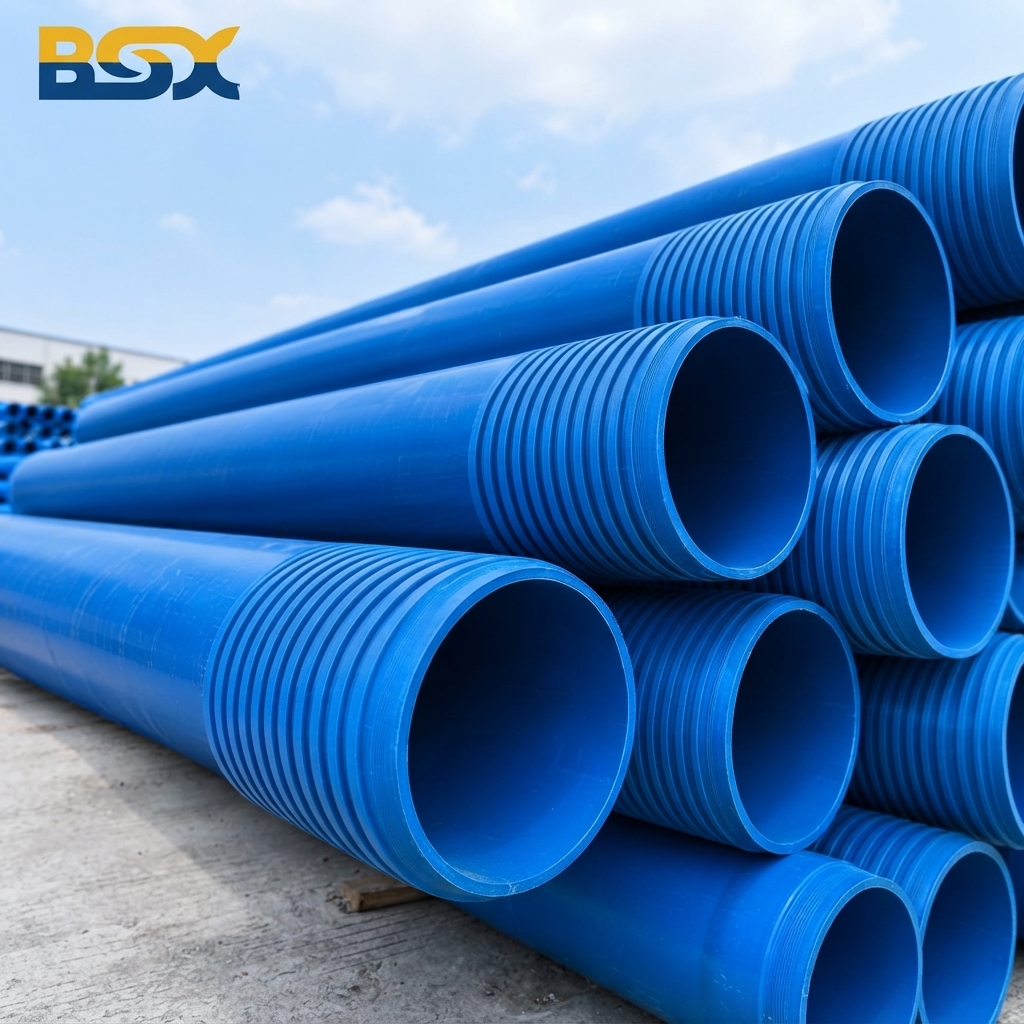
A 110mm threaded PVC borehole pipe is a rigid plastic pipe designed for use in water well and borehole construction. It typically has threaded ends or a compatible threaded coupling that
connects multiple pipe sections.
These pipes are commonly used as well casing, helping support the borehole and separating the well interior from surrounding soil and formations.
Depending on the design, a borehole system may include:
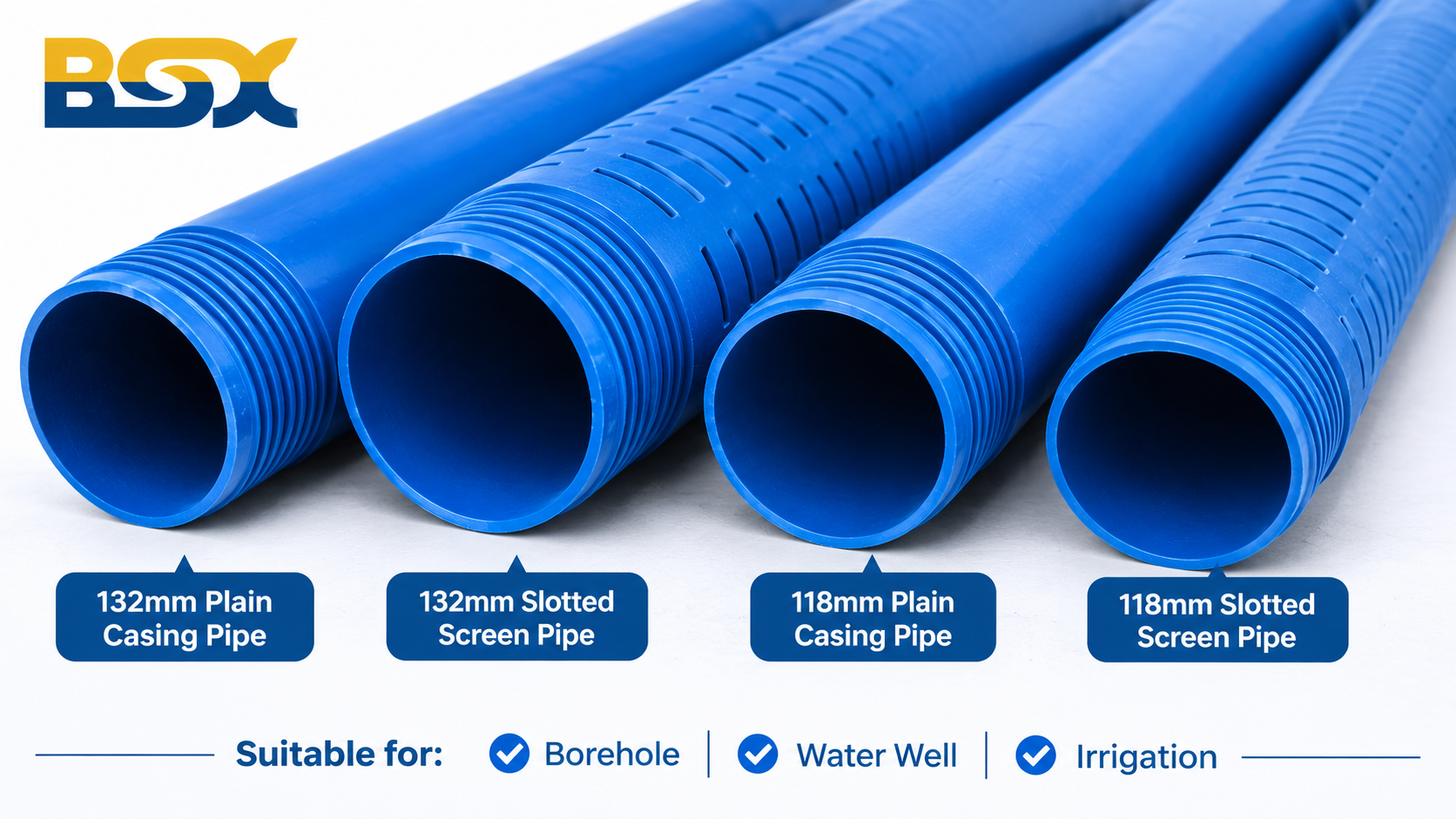
● Plain casing pipes: Provide a protective lining through sections where groundwater is not intended to enter.
● Slotted screen pipes: Allow groundwater to enter while helping control the movement of formation particles.
● Threaded couplings: Connect individual pipe sections to create a continuous casing assembly.
● End caps and accessories: Help complete or protect specific sections of the installation.
An important distinction is that a PVC borehole casing pipe is not automatically a rotating drill string. Unless specifically engineered and approved for drilling operations, it should not be used as a mechanical drilling rod.
110mm Threaded PVC Pipe Specifications
The actual specifications of a 110mm borehole pipe depend on its manufacturer, material formulation, pressure or casing classification, and intended application.
The following table identifies the main specifications buyers should review.
|
Specification |
Details to Check |
|
Nominal diameter |
110mm |
|
Material |
PVC or UPVC/PVC-U |
|
Outside diameter |
Confirm from manufacturer's datasheet |
|
Wall thickness |
Depends on the selected product class |
|
Connection |
Threaded joint or threaded coupling |
|
Pipe length |
Confirm available standard lengths |
|
Pressure rating |
Verify where applicable |
|
Application |
Borehole casing and water well construction |
Pipe Diameter
The 110mm designation identifies the nominal product size in the relevant product system. However, it should not automatically be treated as the actual outside diameter.
Some borewell pipe systems use different dimensional conventions. For example, a nominal 4-inch casing may have an outside diameter around 110–114mm, depending on the applicable standard and product design.
Buyers should confirm the actual outside diameter and internal diameter before ordering. This is particularly important when matching the casing with borehole dimensions, pumps, and other
accessories.
Wall Thickness
Wall thickness influences the pipe's structural capacity and available internal space.
A thicker wall may provide greater resistance to certain mechanical loads, but it also reduces the internal diameter.
For deeper boreholes, selection should consider installation depth, external pressure, soil conditions, handling loads, and the manufacturer's documented performance.
Material Quality
PVC-U is commonly used for water well casing because it is lightweight and resistant to corrosion in many groundwater environments.
However, material quality should be verified through product specifications and relevant testing documentation.
For US water well projects, ASTM F480 is an important reference covering thermoplastic well casing pipes and couplings manufactured in applicable SDR, Schedule 40, and Schedule 80 configurations. It includes requirements for dimensions, impact resistance, pipe stiffness,
threads, and joint strength.
See theASTM F480 official standard for its scope and technical requirements.
Why Choose Threaded Connections for PVC Borehole Pipes?
Threaded connections allow individual casing sections to be joined by engaging compatible male and female threads.
This connection method is widely used in borehole casing systems because it offers several practical advantages.
Secure Mechanical Connection
Properly designed threads provide a mechanical connection between pipe sections. The connection must have sufficient engagement and joint strength for the intended installation conditions.
Easier Installation
Threaded pipes can be assembled without the solvent-cement curing process required by certain socket connections.
This can simplify installation, particularly when multiple sections need to be connected at the borehole site.
Convenient Maintenance
Depending on the connection design and installation arrangement, threaded sections may be easier to inspect or replace than permanently bonded joints.
Reduced Dependence on Adhesives
Threaded connections do not require solvent cement to hold the joint together. However, they must still be assembled according to the manufacturer's instructions to achieve the required connection performance.
Thread design, tightening requirements, and sealing arrangements should never be assumed to be identical across manufacturers.
Common Applications of 110mm Threaded PVC Borehole Pipes
110mm threaded PVC pipes can serve several purposes in groundwater and borehole projects.
Residential Water Wells
They can be used as casing in residential boreholes where the selected diameter is compatible with the well design and required pumping equipment.
Agricultural Irrigation
Groundwater extraction systems for farms and irrigation projects require suitable casing to
support well construction and water access. Properly selected casing helps maintain a stable passage for groundwater collection.
Industrial Water Supply
Factories and industrial facilities may use boreholes to provide water for approved operational applications. Pipe selection should reflect the required well depth, water demand, and operating conditions.
Municipal Water Projects
Water supply projects may use PVC casing systems in groundwater development. The selected pipe must meet the relevant engineering specifications and local regulations.
Groundwater Monitoring
Certain threaded thermoplastic casing systems are also used in monitoring wells. The material, joint configuration, and installation method should be suitable for the monitoring purpose.
Important Factors Before Installing a 110mm PVC Borehole Pipe
Choosing the right pipe is only one part of a successful borehole project. Installation conditions also affect long-term performance.
Borehole diameter: The pipe's outside diameter must be compatible with the drilled hole and allow sufficient space for the specified filter pack or sealing materials.
Installation depth: Confirm that the pipe wall, connection system, and material are suitable for the expected installation loads.
Thread compatibility: Male and female threads must match in diameter, profile, pitch, and engagement requirements.
Groundwater conditions: Evaluate the surrounding formation, groundwater chemistry, and expected sediment conditions.
Pump compatibility: Check the internal diameter and available clearance for the selected pump and associated equipment.
Product inspection: Inspect pipe sections for cracks, damaged threads, deformation, and dee scratches before installation.
Handling and storage: Keep pipe sections on a suitable, level surface and protect threaded ends from impact, dirt, and damage. Proper handling helps preserve connection quality before installation.
The Ontario Government'sguidance on constructing wells and joining PVC casing provides useful information about threaded connections and manufacturer-recommended assembly practices.
US projects should also review theCalifornia Water Boards' water well construction standards and applicable state and local requirements.
Choosing a Reliable 110mm PVC Borehole Pipe Supplier
A reliable supplier should provide accurate product specifications, consistent manufacturing quality, and technical documentation.
BSX Pipe offers PVC piping solutions for different industrial and water infrastructure applications.
Buyers can explore the BSX Pipe PVC product range to review available product information. Before requesting a quotation for a 110mm threaded borehole pipe, provide the supplier with:
● Required nominal and actual pipe diameter.
● Minimum wall thickness.
● Required pipe length.
● Thread type and connection arrangement.
● Intended borehole depth.
● Applicable technical standards.
● Required casing or screen configuration.
It is also useful to request product drawings, dimensional tolerances, and available quality test documentation. These details help buyers compare different products and confirm whether the selected pipe meets project requirements.
A 110mm threaded PVC borehole pipe can be a practical option for water well and groundwater construction when its dimensions, material, and connection system match the project
requirements.
Its threaded joints can simplify assembly, while PVC-U offers useful corrosion resistance and relatively easy handling.
However, nominal diameter alone is not enough to determine suitability. Buyers should verify actual dimensions, wall thickness, thread compatibility, joint strength, and installation
requirements before making a purchase.
Selecting a properly specified pipe and following the manufacturer's installation instructions can help create a more reliable borehole casing system.
FAQ
What is a 110mm threaded PVC borehole pipe used for?
It is commonly used as casing in water wells and boreholes. Depending on its design, it can support the borehole structure, protect the well interior, and accommodate suitable water
extraction equipment.
What is the actual outside diameter of a 110mm PVC borehole pipe?
It depends on the manufacturer's dimensional system. Buyers should check the technical datasheet because nominal diameter and actual outside diameter are not always identical.
Are threaded PVC borehole pipes better than socket-connected pipes?
Neither connection type is universally better. Threaded joints can simplify assembly without
solvent cement, while socket connections may offer other installation advantages. The correct choice depends on joint strength, sealing requirements, and installation conditions.
Can 110mm threaded PVC casing be used in deep wells?
It can be used in suitable applications if the pipe's wall thickness, joint strength, collapse resistance, and installation depth requirements are properly verified.
What should buyers check before purchasing threaded PVC borehole pipes?
Check the actual diameter, wall thickness, material specifications, thread dimensions, pipe length, joint performance, and compliance with relevant well construction standards.
Table of Contents
- Introduction
- What Is a 110mm Threaded PVC Borehole Pipe?
- 110mm Threaded PVC Pipe Specifications
- Why Choose Threaded Connections for PVC Borehole Pipes?
- Common Applications of 110mm Threaded PVC Borehole Pipes
- Important Factors Before Installing a 110mm PVC Borehole Pipe
- Choosing a Reliable 110mm PVC Borehole Pipe Supplier
-
FAQ
- What is a 110mm threaded PVC borehole pipe used for?
- What is the actual outside diameter of a 110mm PVC borehole pipe?
- Are threaded PVC borehole pipes better than socket-connected pipes?
- Can 110mm threaded PVC casing be used in deep wells?
- What should buyers check before purchasing threaded PVC borehole pipes?