 EN

Introduction
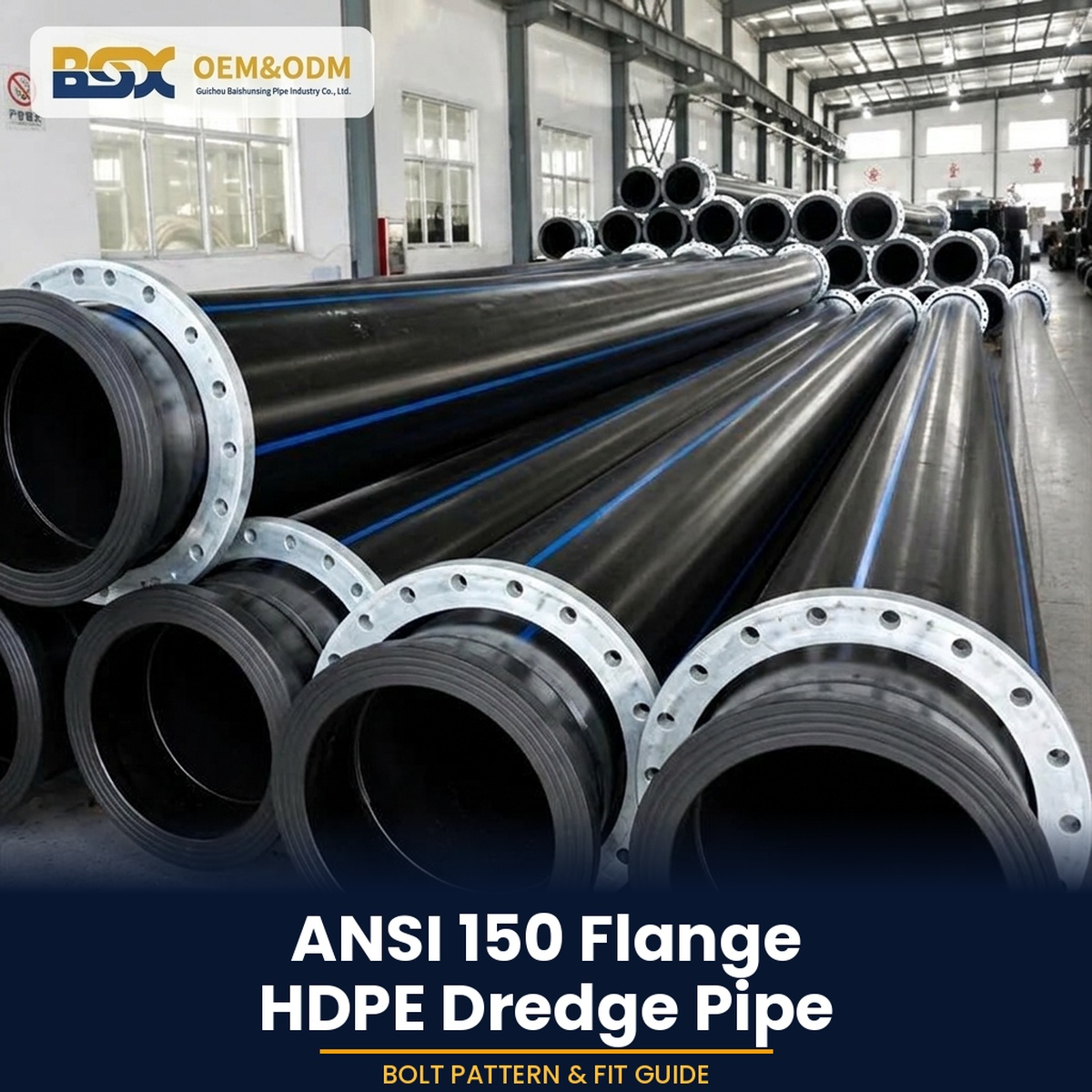
Flanged connections are an important part of HDPE dredging pipeline systems. They allow individual pipe sections, pumps, valves, and other equipment to be connected securely. For projects using standardized industrial connections, ANSI Class 150 flanges are a common configuration to consider.
However, connecting an HDPE dredge pipe to a Class 150 steel flange requires more than matching the nominal pipe diameter. Buyers must check the bolt pattern, bolt circle diameter, flange dimensions, backing ring, gasket, and HDPE stub-end compatibility.
A mismatch between these components can create installation difficulties, uneven sealing pressure, or leakage during operation.
This guide explains how ANSI Class 150 flange connections work with HDPE dredge pipes and what contractors and procurement teams should verify before ordering.
What Is an ANSI Class 150 Flange?
ANSI Class 150 is a commonly used designation for a flange pressure class. The dimensional requirements for many steel pipe flanges are covered by ASME B16.5.
The standard addresses pressure-temperature ratings, materials, dimensions, tolerances, marking, testing, and flange bolting and gasket requirements.
An important point is that Class 150 does not simply mean the flange is rated for 150 PSI under every operating condition. Allowable pressure depends on the flange material and operating
temperature.
The current ASME B16.5 standard for Pipe Flanges and Flanged Fittings covers relevant Class 150 flange requirements for applicable nominal pipe sizes.
For HDPE dredging pipelines, the steel flange is generally used as a backing ring or mating component connected through a compatible polyethylene stub end or flange adapter.
How Does an HDPE Dredge Pipe Flange Connection Work?
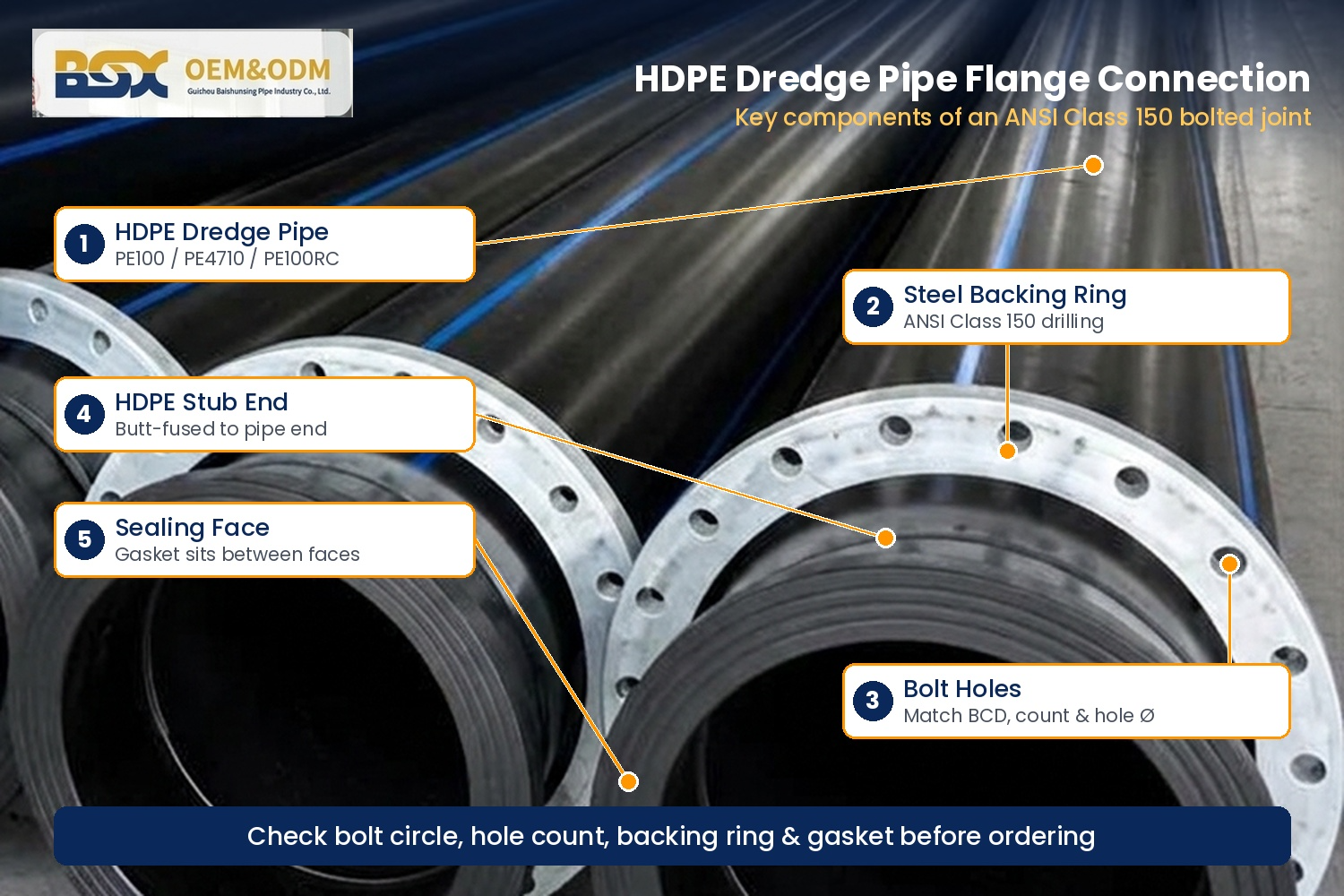
Figure caption: The main parts of an HDPE flange joint: pipe, stub end, backing ring and bolt holes.
HDPE pipes do not normally connect directly to conventional steel flanges through welded metal joints. Instead, they use specially designed polyethylene fittings.
A typical connection consists of three main components.
HDPE Stub End or Flange Adapter
The stub end is fused to the HDPE pipe, generally through a butt-fusion process.
Its flange face provides the sealing surface, while the extended section allows a steel backing ring to fit behind it.
A flange adapter is another connection option. Depending on its design, it may have a longer body that accommodates the fusion equipment.
Steel Backing Ring
The steel backing ring fits behind the HDPE stub end and provides structural support for the bolted connection.
It contains bolt holes arranged according to the required flange standard.
The backing ring should be compatible with the stub-end dimensions, flange drilling, and intended operating conditions.
Gasket and Bolts
The gasket is positioned between the mating flange faces when required by the connection design.
Bolts, nuts, and washers hold the connection together and distribute the clamping force.
The gasket material, thickness, hardness, and dimensions should be selected according to the fluid, pressure, temperature, and flange-face design.
The Plastics Pipe Institute explains the configuration and use ofPE flange adapters and stub ends, including how metal backing rings allow polyethylene pipes to connect with other piping materials.
Understanding ANSI Class 150 Bolt Patterns
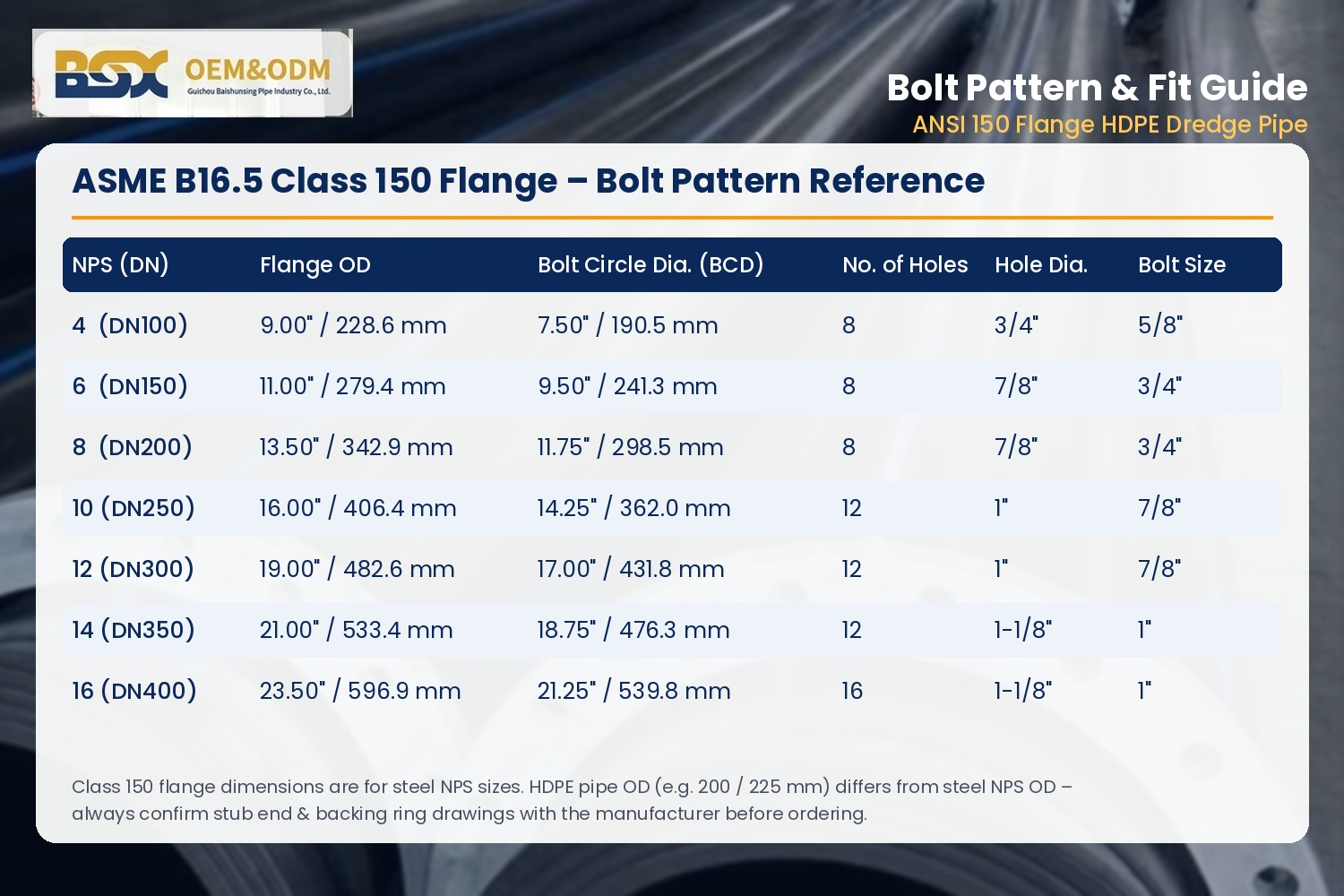
Figure caption:Reference values for ASME B16.5 Class 150 flanges. Always confirm your stub end and backing ring drawings.
Bolt Circle Diameter (BCD)
The Bolt Circle Diameter, also called the Pitch Circle Diameter (PCD), is the diameter of the imaginary circle passing through the centers of the flange bolt holes.
Both mating flanges must have compatible bolt circle dimensions.
A small mismatch can make assembly difficult or prevent bolts from passing through correctly.
Number of Bolt Holes
The number of holes depends on the nominal flange size and applicable standard.
Smaller flanges may have four holes, while larger sizes commonly use eight or twelve holes. The hole count must match between the HDPE backing ring and the mating steel flange.
Bolt Hole Diameter
Bolt hole diameter determines the size of bolts that can pass through the flange.
The hole diameter should provide the required clearance without compromising the intended bolted connection.
Flange Outside Diameter
The outside diameter affects the physical size of the flange and the space required around the connection.
It is particularly important when the pipeline is installed close to other equipment, supports, or structural components.
Flange Thickness
Flange thickness affects the available bolt length and the geometry of the complete connection
Buyers should verify it when calculating bolt length and selecting the appropriate backing ring.
ANSI 150 Flange Fit Guide for HDPE Dredge Pipes
Matching the HDPE pipe connection to an ANSI Class 150 flange requires checking all relevant dimensions rather than relying only on the nominal diameter.
Use the following checklist before ordering.
|
Fitment Factor |
What to Verify |
|
Nominal pipe size |
Required NPS or DN |
|
HDPE pipe diameter |
Actual outside diameter |
|
Stub-end |
Manufacturer's flange adapter specification |
|
dimensions |
|
|
Bolt circle diameter |
Must match the mating flange |
|
Number of holes |
Same hole count and arrangement |
|
Bolt hole diameter |
Compatible with selected bolts |
|
Backing ring |
Correct dimensions and material |
|
Gasket |
Suitable type, size, and material |
|
Bolt length |
Adequate engagement through the complete assembly |
Matching Nominal Pipe Size
Nominal pipe size and actual HDPE outside diameter are not always identical.
HDPE products commonly follow metric outside-diameter systems, while ANSI flange connections may use nominal pipe sizes expressed in inches.
For example, a DN200 HDPE pipe should not automatically be assumed to match every 8-inch flange component without checking the actual dimensions of the stub end and backing ring.
Checking the Bolt Pattern
A compatible bolt pattern must have the same bolt circle diameter, number of holes, and appropriate hole diameter.
The holes should align naturally when the flange faces are brought together.
Avoid forcing bolts into misaligned holes, as this can introduce unnecessary stress into the connection.
Confirming Backing Ring Compatibility
The backing ring should be designed for the specific HDPE stub end.
Its inside contour, thickness, outside diameter, and bolt drilling must match the intended assembly.
Using a backing ring with the wrong dimensions may cause uneven loading or inadequate support.
How to Install an ANSI 150 Flange on an HDPE Dredge Pipe
Correct installation helps maintain sealing performance and reduce the risk of leakage.
Step 1: Prepare the HDPE Pipe
Cut the pipe end squarely and prepare it for the selected butt-fusion fitting.
The pipe surface should be clean and free from contamination.
Step 2: Fuse the Stub End
Use an approved butt-fusion procedure and equipment suitable for the pipe material and dimensions.
The fusion process should follow the manufacturer's requirements for temperature, pressure, alignment, and cooling time.
Step 3: Position the Backing Ring
After the fusion connection is complete and sufficiently cooled, position the steel backing ring behind the stub end.
Check that the ring sits correctly without damaging the polyethylene flange face.
Step 4: Install the Gasket
Place the specified gasket between the mating flange faces.
Ensure that it is centered and does not obstruct the pipe opening.
Step 5: Align and Tighten the Bolts
Insert compatible bolts, nuts, and washers.
Tighten the bolts gradually in a cross or star pattern to distribute the load evenly across the flange.
For HDPE connections, excessive bolt torque can deform the polymer flange face or compromise sealing.
Always use the manufacturer's recommended torque values and tightening sequence.
Common Mistakes When Matching ANSI 150 Flanges
Several mistakes can affect the reliability of HDPE dredging pipeline connections.
Assuming all Class 150 flanges are interchangeable: Different materials, facing designs, an product configurations must still be checked.
Ignoring metric and imperial dimensions: Nominal DN and NPS sizes should not be treated as automatically identical.
Using an incompatible backing ring: The ring must match the HDPE stub end and mating flange.
Selecting incorrect bolts: Bolt diameter, length, material, and thread compatibility all matter. Using an unsuitable gasket: Incorrect gasket dimensions or material can lead to leakage. Overtightening bolts: Excessive clamping force may damage the HDPE flange face.
Careful dimensional verification before ordering helps prevent these problems.
Choosing an HDPE Dredging Pipe Supplier
A reliable supplier should provide compatible HDPE pipes, stub ends, backing rings, and flange connection specifications.
BSX Pipe offers HDPE dredging pipes manufactured using PE100, PE4710, and PE100RC materials, with different diameters and SDR configurations.
Buyers can explore the BSX HDPE Dredging Pipe range for product specifications and available connection options.
For floating and underwater pipeline projects, the BSX HDPE Floating Dredging Pipeline provides additional product information.
When requesting a quotation, provide the HDPE pipe outside diameter, SDR, required flange class, bolt pattern, backing ring dimensions, gasket requirements, and operating pressure.
Requesting a dimensional drawing before production can help confirm that the complete flange assembly will fit the existing equipment.
Conclusion
ANSI Class 150 flange connections can be used with HDPE dredging pipelines when the polyethylene stub end, steel backing ring, gasket, and mating flange are correctly matched.
Bolt circle diameter, hole count, bolt hole diameter, and flange dimensions are essential fitment details. Nominal pipe size alone is not enough to guarantee compatibility.
Before ordering, verify the applicable ASME flange dimensions and the HDPE manufacturer's connection drawings. Proper fusion, alignment, gasket selection, and controlled bolt tightening help create a reliable connection for dredging operations.
FAQ
What does ANSI Class 150 mean for an HDPE dredge pipe flange?
It identifies the flange pressure class and dimensional configuration. It does not mean the
connection has a universal 150 PSI pressure rating. Actual pressure limits depend on materials, temperature, and the complete assembly.
Can an HDPE dredge pipe connect to an ANSI 150 steel flange?
Yes. A compatible HDPE stub end or flange adapter and steel backing ring can provide a bolted connection to a matching steel flange.
How do I check whether two ANSI 150 flanges will fit together?
Compare the nominal size, bolt circle diameter, number of holes, bolt hole diameter, flange face, and other applicable dimensions against the relevant standard and manufacturer drawings.
What is the purpose of a steel backing ring in an HDPE flange connection?
It supports the HDPE stub end and provides a rigid bolting interface for connecting the polyethylene pipeline to another flanged component.
How tight should ANSI 150 flange bolts be on an HDPE dredge pipe?
Use the bolt torque and tightening sequence specified by the HDPE fitting manufacturer. Excessive torque can deform the polyethylene flange face and cause sealing problems.
Table of Contents
- Introduction
- What Is an ANSI Class 150 Flange?
- How Does an HDPE Dredge Pipe Flange Connection Work?
- Understanding ANSI Class 150 Bolt Patterns
- ANSI 150 Flange Fit Guide for HDPE Dredge Pipes
- How to Install an ANSI 150 Flange on an HDPE Dredge Pipe
- Common Mistakes When Matching ANSI 150 Flanges
- Choosing an HDPE Dredging Pipe Supplier
-
Conclusion
- What does ANSI Class 150 mean for an HDPE dredge pipe flange?
- Can an HDPE dredge pipe connect to an ANSI 150 steel flange?
- How do I check whether two ANSI 150 flanges will fit together?
- What is the purpose of a steel backing ring in an HDPE flange connection?
- How tight should ANSI 150 flange bolts be on an HDPE dredge pipe?