 EN
Introduction
HDPE dredging pipes are widely used in river dredging, port maintenance, land reclamation, and industrial slurry transportation. These pipelines move large volumes of water mixed with sand, silt, mud, and other materials. Their performance depends not only on pipe quality but also on proper transportation, handling, and installation.
A 36-foot HDPE dredge pipe section measures approximately 10.97 meters. This length can be useful for projects that require manageable pipeline sections while reducing the number of
connections along a long dredging route.
However, transporting and handling long HDPE pipes requires careful planning. Incorrect lifting, poor stacking, or inadequate load securing can damage pipe surfaces and create safety risks.
This guide explains the dimensions, practical advantages, handling procedures, shipping considerations, and storage requirements for 36-foot HDPE dredge pipe sections.
What Are 36-Foot HDPE Dredge Pipe Sections?
A 36-foot HDPE dredge pipe section is a straight polyethylene pipe approximately 10.97 meters long, designed for use in dredging and slurry transportation systems.
These pipes are commonly manufactured from PE100 or other suitable polyethylene grades. Their lightweight construction, corrosion resistance, and toughness make them suitable for floating and underwater pipeline applications.
Individual sections are typically connected using butt fusion or mechanical flange connections, depending on the pipeline design.
Common components of a dredging pipeline include:
● HDPE straight pipe sections.
● Welded stub ends and steel backing flanges.
● Bolts, nuts, and suitable gaskets.
● External floats for floating pipelines.
● Flexible connections where required.
A sectional pipeline design allows contractors to assemble, extend, relocate, and maintain the system according to project requirements.
Why Choose 36-Foot HDPE Dredge Pipe Sections?
Pipe length affects transportation, installation time, connection requirements, and overall project logistics.
Fewer Pipeline Connections
Longer pipe sections can reduce the number of joints required along a pipeline route.
Fewer mechanical connections may reduce assembly work and potential leakage points, provided the joining system is correctly designed and installed.
Efficient Installation
A 36-foot section provides a practical length for certain dredging operations where contractors need to assemble long pipeline routes.
It can help balance the benefits of longer pipe sections with transportation and handling limitations.
Suitable for Floating and Underwater Pipelines
HDPE dredge pipes can be configured for floating or submerged applications.
Floating systems may use external pipe floats, while submerged systems require suitable anchoring and support arrangements.
Corrosion and Abrasion Resistance
HDPE does not rust like conventional steel. It also offers good resistance to abrasion from
transported sand and sediment, although actual wear depends on particle characteristics and operating conditions.
36-Foot Pipe Length: Dimensions and Specifications
Before ordering, buyers should confirm the actual pipe dimensions and product specifications.
| specification | Details |
| Pipe length | 36 feet |
| Metric equivalent | Approximately 10.97 meters |
| Material | HDPE, such as PE100 |
| Diameter | Project-specific |
| SDR | Project-specific |
| Connection | Butt fusion or flange connection |
| Application | Dredging and slurry transportation |
The 36-foot length does not determine the pipe's pressure capacity or structural performance. Those depend on the material grade, outside diameter, wall thickness, SDR, and operating
conditions.
Understanding Diameter and SDR
HDPE dredging pipes are available in different outside diameters and SDR configurations. SDR represents the relationship between the outside diameter and wall thickness.
A lower SDR generally means a thicker pipe wall for the same outside diameter.
For example, SDR11 has a thicker wall than SDR17 at the same outside diameter. This affects internal diameter, pipe weight, and pressure capacity.
Buyers should compare the actual product datasheet rather than selecting a pipe based on length and nominal diameter alone.
Important ordering note: BSX Pipe's published dredging pipe information lists standard
lengths of approximately 5.8 meters (20 feet) and 11.8–12 meters (around 40 feet). A 36-foot section should therefore be confirmed with the manufacturer as a custom or project-specific requirement before ordering.
How to Handle 36-Foot HDPE Dredge Pipes Safely
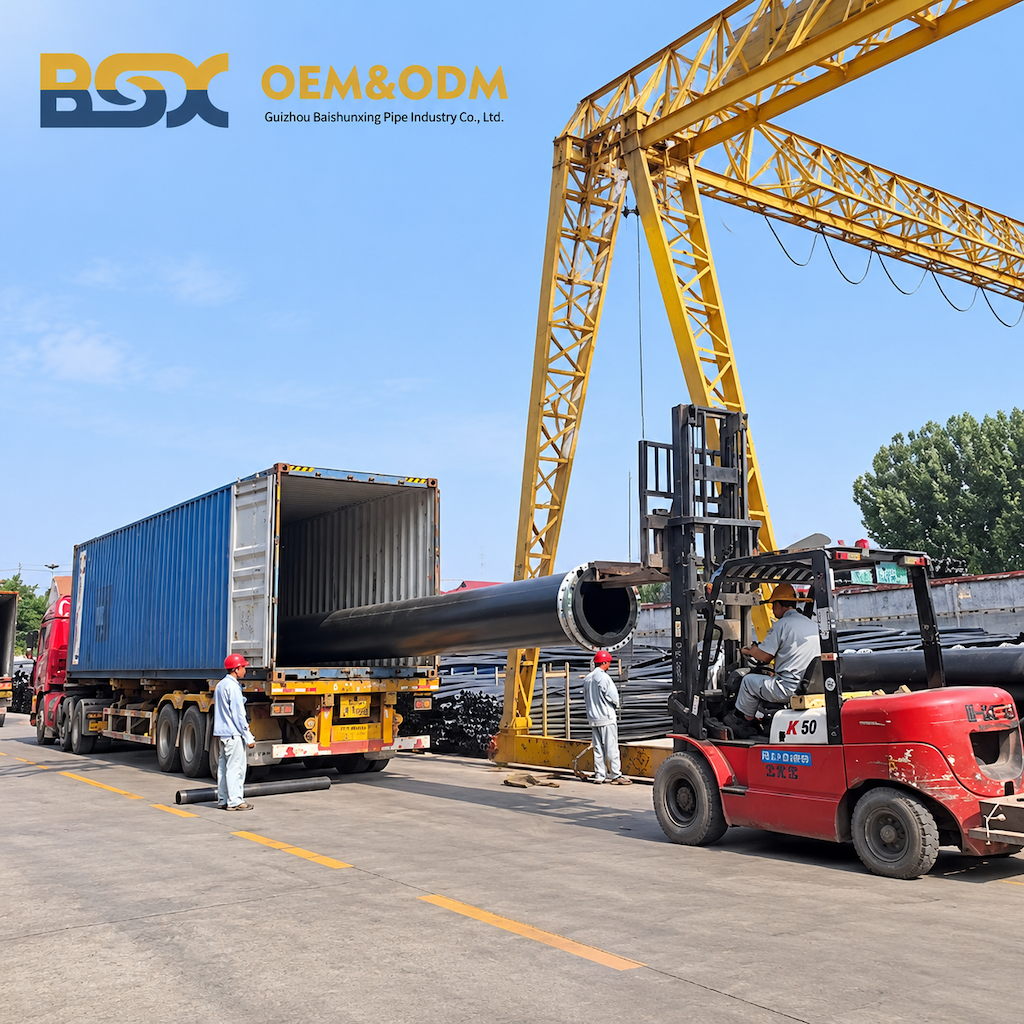
Long HDPE pipe sections require appropriate lifting equipment and controlled handling procedures.
Inspect Pipes Before Unloading
Before unloading, inspect the shipment for:
● Scratches and deep gouges.
● Cracks or deformation.
● Damaged pipe ends.
● Loose or damaged flange connections.
● Signs of shifting during transportation.
Damaged sections should be separated for inspection before installation.
The Plastics Pipe Institute provides practical guidance onhandling and unloading straight polyethylene pipe lengths, including suitable lifting arrangements and load stability.
Use Appropriate Lifting Equipment
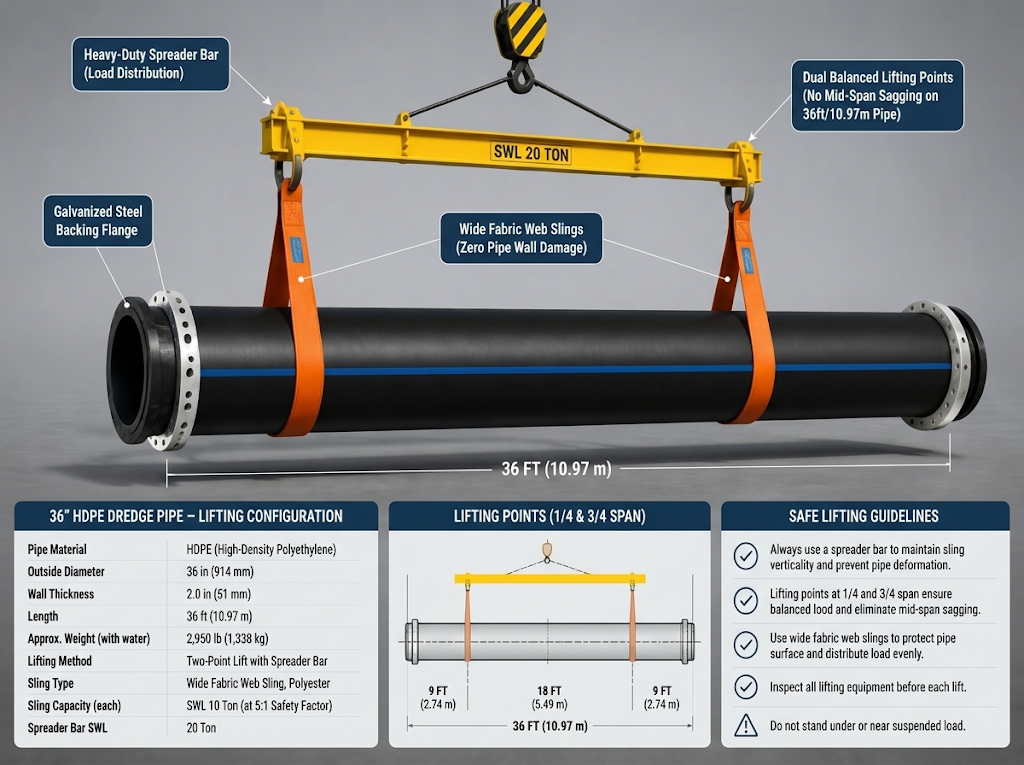
Long pipe sections should be lifted using suitable equipment based on pipe diameter, weight, length, and site conditions.
Cranes or forklifts may be used where their capacity and configuration are appropriate.
Wide web slings and spreader bars can help distribute lifting forces and reduce the risk of localized deformation.
Avoid using sharp hooks, chains, or narrow lifting points directly against the pipe surface.
Prevent Dragging and Dropping
HDPE is tough, but improper handling can still damage its surface.
Do not drag pipes across rough ground, throw them from vehicles, or drop them during unloading.
Pipe sections should be moved in a controlled manner, with trained personnel coordinating the lifting operation.
Protect Pipe Ends and Flanges
Flanged dredging pipes require additional care because damaged connection surfaces can affect assembly and sealing.
Protect stub ends, flange faces, bolt holes, and gaskets during loading and transportation. Use suitable protective covers where necessary.
Shipping and Transportation Considerations
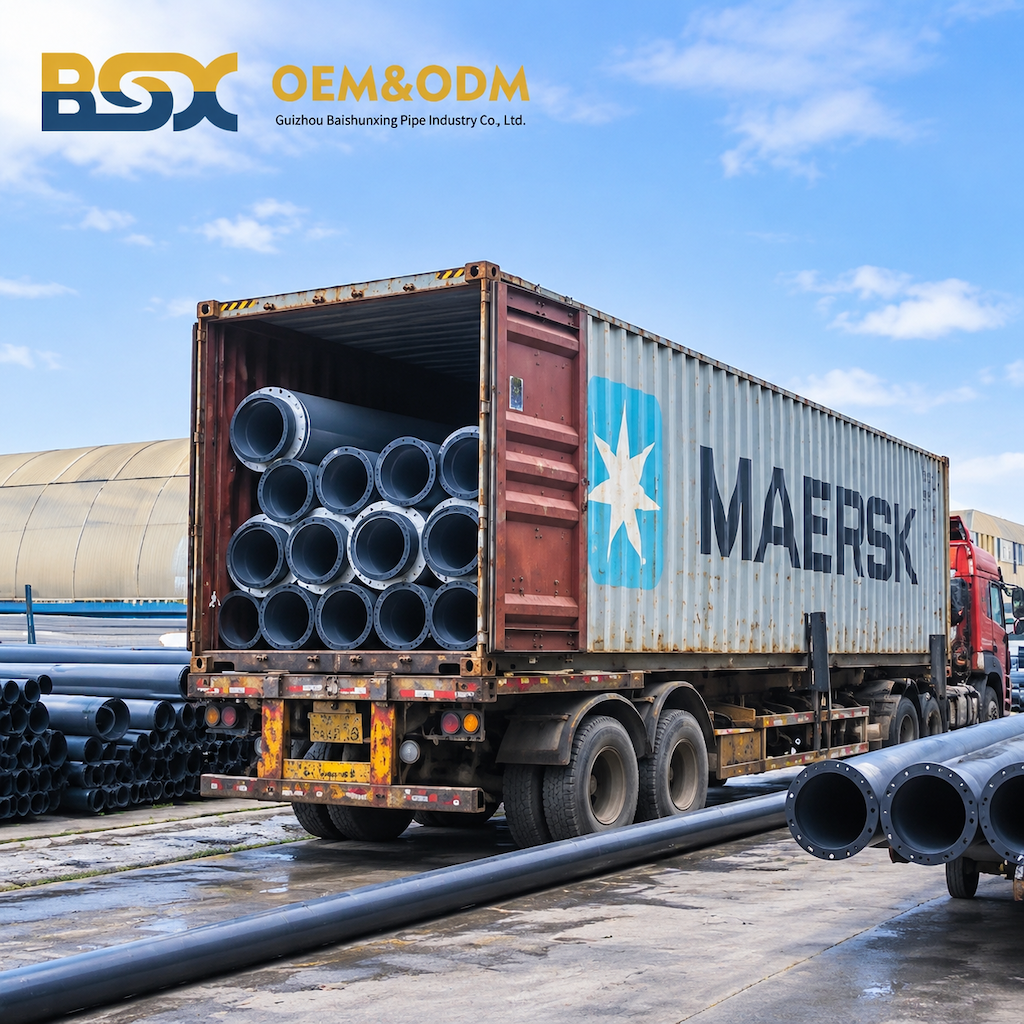
Shipping 36-foot HDPE pipe sections requires advance coordination between the manufacturer, freight provider, and receiving site.
Trailer Selection and Load Planning
A suitable flatbed trailer or other approved transport arrangement should be selected according to the pipe dimensions and shipment weight.
The loading plan should consider:
● Total pipe length.
● Number of sections.
● Pipe outside diameter.
● Individual and combined load weight.
● Trailer capacity.
● Loading and unloading access.
● Applicable road transportation regulations.
Cargo Securing
Pipe bundles must be secured to prevent shifting, rolling, or falling during transportation.
Suitable restraints, blocking, and protective materials should be used according to the cargo configuration.
TheFederal Motor Carrier Safety Administration's Cargo Securement Rules explain US requirements for preventing cargo from shifting or falling from commercial vehicles.
For interstate shipments in the United States, carriers should follow the applicable federal requirements and any relevant state transportation rules.
International Shipping
For overseas orders, buyers should confirm the loading method, container or flatbed suitability, port handling arrangements, and destination unloading requirements.
Long pipe sections may require special cargo arrangements depending on vessel capacity, shipment dimensions, and local port facilities.
The shipping quotation should clearly identify whether loading, freight, insurance, customs clearance, and destination handling are included.
Storage and Preparation Before Installation
Proper storage helps maintain pipe quality between delivery and installation.
Store straight HDPE pipe sections on a firm, level surface with adequate support along their length.
Use suitable blocks or supports to prevent rolling and avoid excessive unsupported spans.
Keep pipes away from sharp objects, heavy machinery traffic, and materials that may damage the polyethylene surface.
Protect threaded or flanged components from impact and contamination.
Before installation, inspect each section again and confirm that the dimensions, connections, and product identification match the project specifications.
Choosing the Right HDPE Dredge Pipe Supplier
A reliable manufacturer should provide accurate product dimensions, material specifications, pressure ratings, and transportation information.
BSX Pipe offers HDPE dredging pipes manufactured from PE100, PE4710, and PE100RC materials, with different diameter and SDR options.
Buyers can explore the BSX HDPE Dredging Pipe range for product specifications and available configurations.
For projects requiring floating pipeline arrangements, the BSX HDPE Floating Dredging Pipeline provides additional product information.
When requesting a quotation, provide the required pipe length, diameter, SDR, material grade, connection type, quantity, and delivery destination.
Also confirm whether 36-foot sections are available for the required production schedule and shipping arrangement.
Conclusion
36-foot HDPE dredge pipe sections can provide a practical option for projects that require long, manageable pipeline components.
Their advantages include fewer connections along the pipeline, relatively easy handling
compared with heavier steel alternatives, and suitability for different dredging configurations.
However, successful transportation and installation depend on correct load planning, suitable lifting equipment, cargo securing, and proper storage.
Before ordering, confirm the actual dimensions, SDR, material grade, flange configuration, and availability of the required section length. Careful coordination with the manufacturer and freight provider can help reduce shipping complications and support efficient dredging operations.
FAQ
How long is a 36-foot HDPE dredge pipe section?
A 36-foot section is approximately 10.97 meters long. The actual manufactured length and dimensional tolerance should be confirmed with the supplier.
What is the advantage of using longer HDPE dredge pipe sections?
Longer sections can reduce the number of pipeline connections, potentially simplifying assembly and reducing the number of mechanical joints along the route.
How should 36-foot HDPE pipes be unloaded?
They should be unloaded using suitable lifting equipment, such as cranes or appropriately configured forklifts, with suitable slings or spreader bars. Pipes should never be dropped or dragged across rough surfaces.
Can 36-foot HDPE dredge pipes be shipped internationally?
Yes, subject to suitable cargo arrangements, vessel capacity, transport regulations, and port handling facilities. Buyers should confirm the shipping configuration before placing an order.
What information is needed when ordering 36-foot HDPE dredge pipes?
Provide the required length, outside diameter, SDR, material grade, connection type, quantity, and delivery destination. Confirm custom-length availability with the manufacturer.