+86-18085038263
All Categories

Wheat Field Irrigation Project in Uttar Pradesh, India

Apr.02.2026
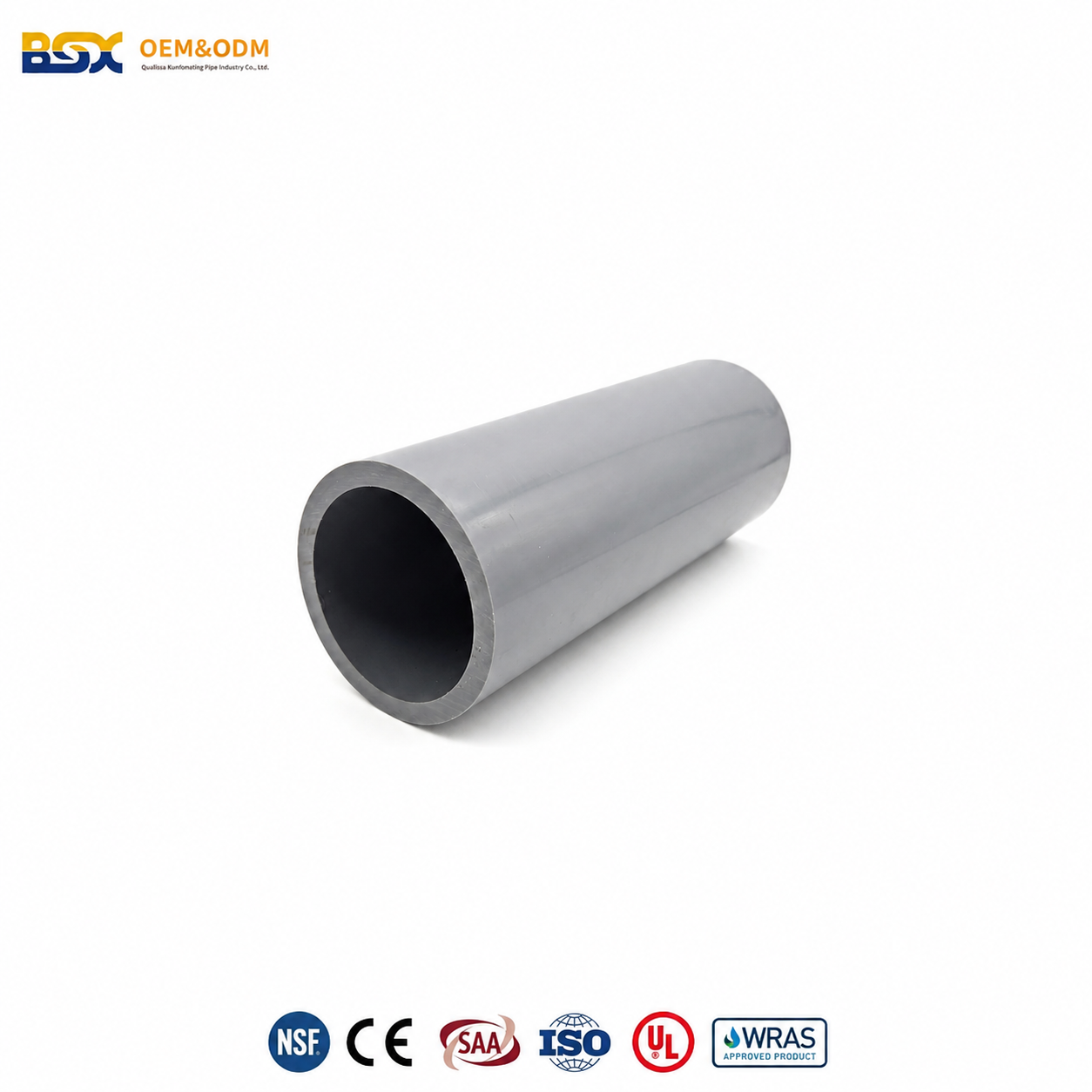
Wheat is the staple food crop in Uttar Pradesh, India, and the scientific supply of water resources is the core prerequisite for ensuring high and stable wheat yields. To address the problems of uneven irrigation, high water transmission loss, and easy corrosion of traditional pipelines in local wheat cultivation, and to boost the upgrading of agricultural infrastructure in Uttar Pradesh, this wheat water supply project adopts PVC-U drainage pipes of Baishunxing Pipes as the core water transmission pipeline materials. Relying on their excellent product performance and convenient construction characteristics, it builds an efficient, durable and environmentally friendly field water supply pipe network. The entire project strictly complies with Indian construction safety and environmental protection norms, striving to create a livelihood and high-quality project that stands the test of time and practice.

I. Project Overview and Core Construction Objectives
Located in the Ganges Western Plain area of Uttar Pradesh, India, the project covers multiple local wheat-planting villages. It mainly serves the irrigation water supply and field drainage needs during the wheat growth period, connects with the branch water transmission system of the Sarda-Sahayak Water Diversion Project, and fills the gap in the pipe network for the "last mile" of wheat irrigation in the region. With the core objectives of "high-quality laying, efficient water transmission, safety and durability, and green environmental protection", the project construction leverages the performance advantages of PVC-U drainage pipes to achieve precise water resource transmission, reduce water transmission loss and lower later maintenance costs. Meanwhile, it strictly implements the construction requirements of the Ministry of Environment, Forest and Climate Change of India, balances construction safety and ecological protection, and lays a solid water conservancy foundation for the high-quality development of the wheat industry in Uttar Pradesh.

II. Selection Basis and Core Advantages of PVC-U Drainage Pipes
Combined with the climatic conditions, soil characteristics (mild salinization in some areas) of Uttar Pradesh, India and the actual wheat irrigation needs, after multiple rounds of screening and comparison, the project has selected the international standard-compliant PVC-U drainage pipes produced by Guizhou Baishunxing Pipe Industry Co., Ltd. The core selection basis and product advantages are as follows, which perfectly adapt to the wheat water supply scenario in Uttar Pradesh:

Adapted to agricultural scenarios, corrosion and wear resistant: The soil in some farmlands in Uttar Pradesh contains a small amount of saline-alkali components. PVC-U drainage pipes have excellent acid, alkali and corrosion resistance, can be buried in underground soil for a long time without being easily corroded or aged, and effectively avoid water leakage and pipe blockage caused by corrosion and damage of traditional pipes. With a service life of not less than 50 years, they meet the demand for the long-term stable operation of the wheat water supply project, eliminating the need for frequent pipe replacement and greatly reducing later maintenance investment.

Efficient water transmission, water resource conservation: PVC-U drainage pipes feature smooth inner walls, a small friction coefficient, unobstructed water flow, and are not prone to scaling and blockage. Compared with traditional cast iron pipes and concrete pipes, the water transmission efficiency can be improved by about 30% under the same pipe diameter, which can effectively reduce head loss during water transmission and realize the efficient utilization of water resources. They accurately match the irrigation water volume needs of wheat in different growth periods, boost the development of water-saving agriculture, and conform to the trend of agricultural water-saving upgrading in Uttar Pradesh.

Light weight and convenience, suitable for field construction: Most of the wheat-planting areas in Uttar Pradesh are plain terrain. Although the terrain is flat, the field construction space is limited and the operation of large machinery is inconvenient. PVC-U drainage pipes have low density and light weight, so their handling and loading/unloading can be completed manually without large mechanical equipment. In addition, the pipe connection adopts special glue bonding or sealing rubber ring connection, with simple and fast construction, which can quickly complete the pipe network laying, shorten the construction period, avoid delaying the critical period of wheat irrigation, and reduce construction project costs at the same time.

Economical and environmentally friendly, outstanding cost performance: PVC-U drainage pipes are low in cost, as well as transportation and construction costs. Compared with other pipe materials, they can effectively control the overall project investment and meet the economic needs of the project. Meanwhile, the pipes are tasteless, non-toxic, free of secondary pollution, in line with sanitary requirements, and will not cause harm to soil, groundwater and wheat growth. They are also recyclable, conforming to the concept of green agricultural development, balancing economy and environmental protection, and complying with Indian environmental protection construction norms.

Adapted to low-pressure water transmission, meeting project needs: The project relies on the regional water diversion system to realize low-pressure water transmission. PVC-U drainage pipes are suitable for low-pressure water transmission scenarios, with a hydrostatic test pressure of up to 1.6MPa, which can achieve continuous and uniform water supply under low-pressure conditions, perfectly matching the low-pressure water transmission needs of wheat irrigation, ensuring the stable supply of irrigation water volume, and helping to increase wheat production and farmers' income.

III . Core Construction Process and Quality Control of PVC-U Drainage Pipes
The construction of PVC-U drainage pipes for this project follows the core process of "excavation - cleaning - laying - connection - testing - backfilling - maintenance" throughout, with strict quality control in each link, balancing construction efficiency and environmental protection requirements to ensure the standardized laying of the pipe network and safe water transmission. The specific construction process and quality control measures are as follows:

(1) Trench Excavation
Trench excavation is carried out by a combination of manual labor and small machinery in accordance with the trench size and burial depth determined in the construction plan. During excavation, the trench slope is strictly controlled (combined with soil type to avoid trench collapse), and the trench width is slightly larger than the pipe diameter to reserve sufficient construction space. Floating soil and debris in the trench are cleaned up in a timely manner during excavation, and the trench bottom is leveled to ensure it is firm and flat without sharp stones and debris to prevent pipe scratching. Meanwhile, in accordance with Indian dust control requirements, the excavated loose soil is covered, and water is continuously sprinkled to reduce dust during construction. Cutting and grinding operations in open areas are strictly prohibited to avoid dust pollution. If groundwater is encountered during trench excavation, drainage measures shall be taken in a timely manner to prevent trench water accumulation from affecting construction quality. The excavated topsoil is stored separately for later site greening or farmland reclamation, in line with relevant Indian requirements for construction soil utilization.

(2) Pipe Laying
Before pipe laying, the appearance of the pipes is inspected again to confirm no damage, deformation, cracks and other problems. The pipes are cleaned to remove dust and debris from the inner walls and pipe joints to ensure the joints are clean and dry. During laying, the PVC-U drainage pipes are smoothly placed into the trench, and their position is adjusted to ensure the pipe axis is straight and the slope meets the design requirements (facilitating drainage and avoiding water accumulation in the pipes). The laying gaps of the pipes are uniform to avoid extrusion and distortion. For pipes with a diameter of 100 mm or more, rubber ring joints are adopted; for pipes with a diameter of less than 100 mm, bonded joints are used to ensure the joint method complies with the pipe specification requirements. During laying, the pipes are prevented from contacting sharp objects at the trench bottom, and a layer of fine sand can be laid at the pipe bottom to protect the pipes from damage. At the same time, it adapts to the soil characteristics of some areas in Uttar Pradesh and prevents the pipes from being scratched by sharp particles in the soil.

(3) Pipe Connection
Pipe connection is the core link of construction quality. For this project, corresponding connection methods are adopted according to pipe specifications, and the operation norms are strictly controlled throughout:
1.Bonded connection: Applicable to pipes with a diameter of less than 100 mm. Before connection, the pipe joints are filed into a 15°–30° bevel with special tools, where the bevel thickness is 1/3-1/2 of the pipe wall thickness and the length is not less than 3 mm, and the bevel debris is removed. Special adhesive is evenly applied to the pipe joints and the inner walls of pipe fittings, with the application sequence of socket first and spigot later. The operation shall be fast and the application shall be uniform to avoid missing and thick coating. Immediately after application, align the direction and insert the pipe into the socket to the design-required depth (determined according to the pipe outer diameter, e.g., the insertion depth of Ø50 pipes is not less than 25mm). After insertion, rotate 1/4 turn to evenly distribute the adhesive layer and hold for 2-3 minutes to prevent joint slippage. The error between prefabricated pipe end nodes shall not exceed 5mm.

2.Rubber ring connection: Applicable to pipes with a diameter of 100 mm or more. The sealing ring is correctly installed at the pipe fitting joint to ensure no damage or displacement of the sealing ring. Insert the pipe into the pipe fitting joint with even force to ensure a tight connection between the pipe and the pipe fitting without looseness or gaps, avoiding water leakage in the later stage.

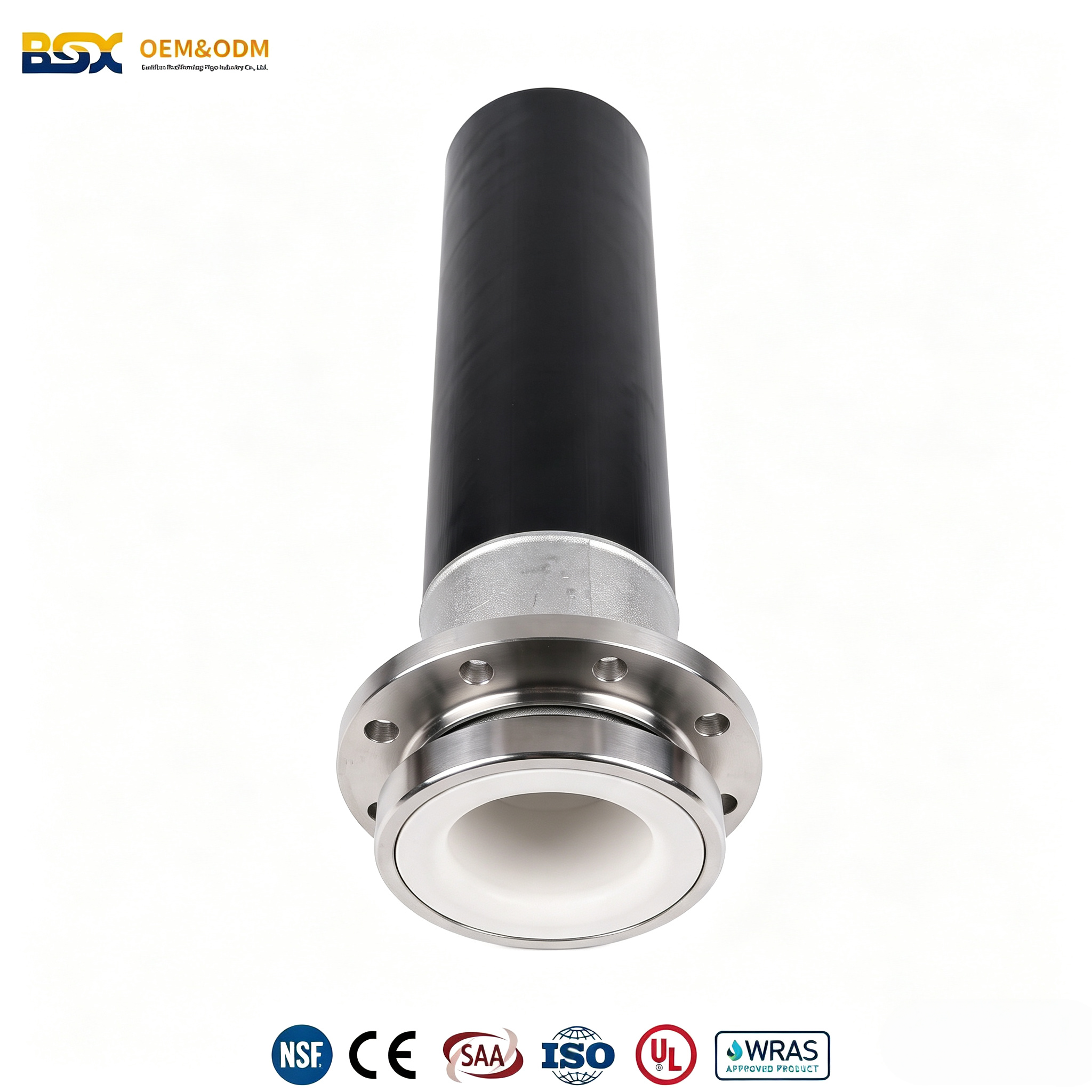
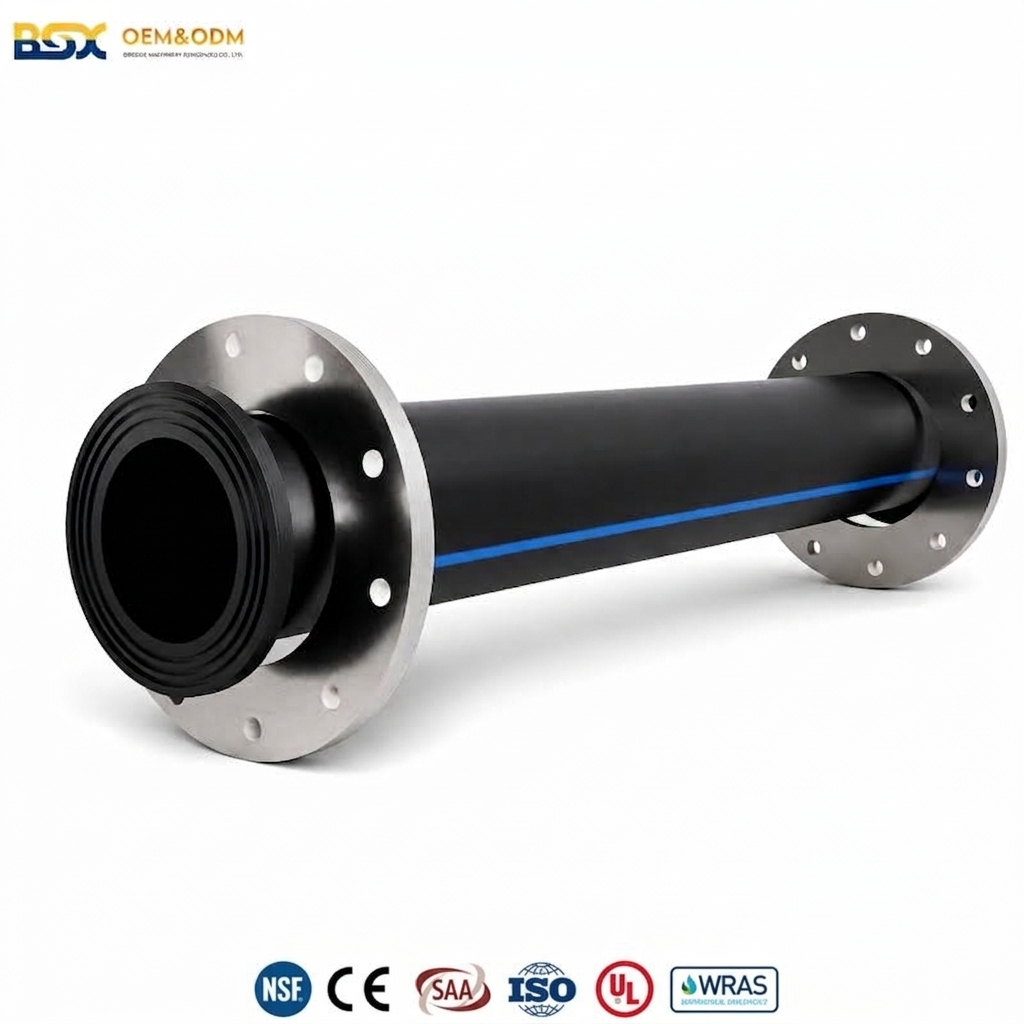
3.Flange connection: Flange connection is adopted when the pipeline crosses sewers or other pipelines to ensure the tight sealing of the connection part and compliance with pressure requirements. Flange connection is also used for the connection between the front and rear of valves and the pipeline to ensure connection stability.

4.After the connection is completed, clean up the excess adhesive at the joints in a timely manner and check whether the joints are flat and tight with no signs of leakage. If problems are found, rectify them immediately to ensure the quality of joint connection. After bonding, let it stand until the joints are cured according to the adhesive performance and local climatic conditions. Extend the curing time appropriately for winter construction to avoid subsequent construction before the joints are cured.

(4) Pipe Testing
After the pipe connection is completed, strict hydrostatic tests and water flow tests are carried out to ensure no leakage of the pipeline and unobstructed water transmission, with testing standards complying with relevant international norms and local Indian construction standards:
1. Hydrostatic test: Block both ends of the pipeline, fill the pipeline with water to remove air inside, slowly increase the pressure to the design pressure and keep it stable. Observe whether there is leakage or damage at the pipe joints and pipes. If the pressure drops too fast or leakage occurs, release the pressure immediately, investigate the problems, and re-test after rectification until the test is qualified.

2.Water flow test: After the hydrostatic test is qualified, conduct a water flow test. Open the water supply valve to allow water to flow smoothly in the pipeline, check for blockage and water leakage of the pipeline, observe whether the water flow speed and volume meet the design requirements, ensure the pipe network can meet the water transmission needs of wheat irrigation, with no water accumulation and backflow.

3.After the test is qualified, fill in the test report and file it for future reference to ensure each section of the pipeline meets the quality standards and provides a guarantee for safe operation in the later stage. The entire testing process is recorded and relevant data is retained, in line with relevant Indian requirements for project quality acceptance.

The construction of PVC-U drainage pipes for this wheat water supply project in Uttar Pradesh, India has not only solved the key pain points and difficulties of local wheat irrigation water supply and built an efficient and durable field water supply pipe network. Relying on the excellent performance of PVC-U drainage pipes, the main product of Baishunxing Pipes, it has realized precise water resource transmission, reduced water transmission loss, ensured stable water supply during the wheat growth period, helped increase wheat production and farmers' income in Uttar Pradesh, and promoted the upgrading of local agricultural infrastructure. It has connected with the irrigation advantages of the Sarda-Sahayak Water Diversion Project to further expand the coverage of wheat irrigation in Uttar Pradesh. Meanwhile, the implementation of the project has boosted local employment, spread advanced pipeline construction technologies, promoted the development of local agricultural modernization, practiced the concept of green agriculture, and realized the unification of economic, social and ecological benefits.

After the project is delivered and put into use, we will establish a sound later maintenance system, arrange a professional team to regularly inspect, maintain and overhaul the PVC-U drainage pipe network, handle various faults in a timely manner, answer local villagers' questions on use, provide technical support, ensure the long-term stable operation of the pipe network, continuously provide reliable water supply guarantee for wheat planting in Uttar Pradesh, support local food security and high-quality agricultural development, and inject lasting impetus into the construction of agricultural modernization in Uttar Pradesh, India.

Wheat Field Irrigation Project in Uttar Pradesh, India