EN
EN

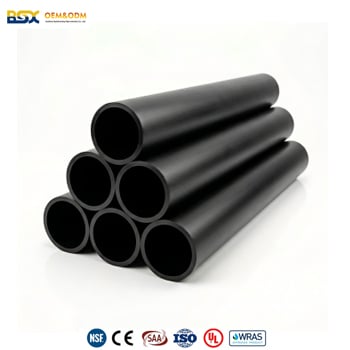
HDPE Drainage Pipe
HDPE Drainage Pipe
Raw materials: PE100, PE4710, PE100RC
Standard: ISO 4427/EN 12201/S/NZS 4130
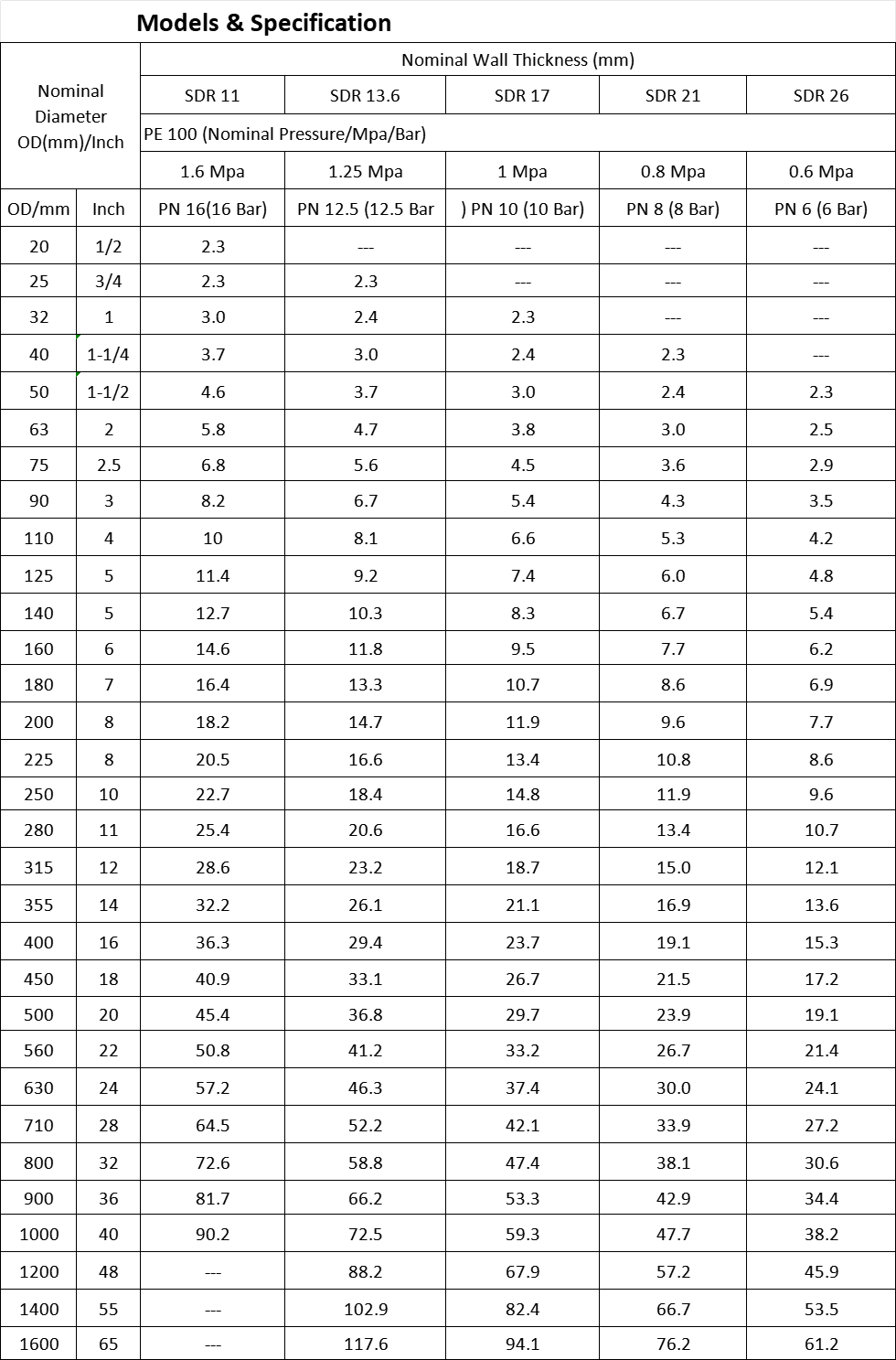
Diameter range: DN20mm-1600mm (1/2-inch to 65inch)
Pressure levels: SDR26, SDR21, SDR17, SDR13.6, SDR11
PN0.6、PN0.8、PN1.0、PN1.25、PN1.6
Certification: UL, WRAS, NSF, ISO, CE
Length: 5.8 meters (20 feet), 11.8-12 meters//L40 feet
Color: Black/Blue/Green (customizable color)
- Overview
- Recommended Products
 Product Overview
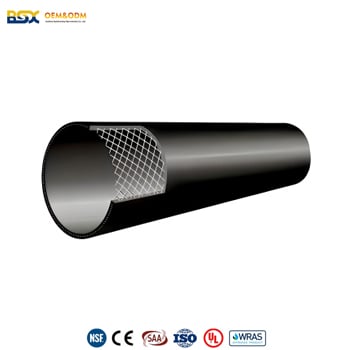
Baishunxing Pipe Industry HDPE Drainage Pipes are non-pressure pipes manufactured from high-density polyethylene resin through extrusion processes. Depending on the structure, they are commonly categorized into double-wall corrugated pipes, hollow-wall winding pipes, and solid-wall drainage pipes. Primarily used for gravity-flow (non-pressure) drainage and sewage systems, they offer exceptional chemical resistance and structural stability.
Key Features
Superior Hydraulic Performance:The mirror-smooth inner wall has an extremely low friction coefficient (Manning’s n≈0.009n≈0.009). Compared to concrete pipes, it provides a higher flow rate for the same diameter and is resistant to scaling or clogging.
Excellent Chemical Resistance:As polyethylene is a non-polar material, it resists erosion from domestic sewage, acidic/alkaline industrial wastewater, and soil chemicals. It will not rust, rot, or corrode.
Outstanding Flexibility:Classified as a flexible pipe, it features excellent elongation at break. It can follow the terrain's curvature and effectively adapt to uneven ground settlement and seismic activity, preventing pipe fracture.
Low-Temp & Impact Resistance:The embrittlement temperature is extremely low (−70∘C−70 ∘ C), allowing it to maintain good impact resistance and prevent brittle cracking during construction in cold climates.
Major Advantages
The lightweight design (only 1/8 the weight of concrete pipes) eliminates the need for heavy lifting equipment and allows manual handling. Fast installation significantly reduces construction cycles and labor costs.
Zero-Leakage Connection:Typically joined by rubber ring sockets or heat fusion welding. The excellent sealing prevents sewage leakage from contaminating groundwater and prevents external water infiltration from affecting treatment efficiency.
Extra Long Maintenance-Free Life:Under normal buried conditions, the service life exceeds 50 years. Its wear resistance is several times that of steel pipes, greatly reducing the frequency of maintenance and replacement.
Eco-Friendly:HDPE is an eco-friendly material that is non-toxic and odorless, and it is 100% recyclable, aligning with sustainable development goals.
Typical Applications
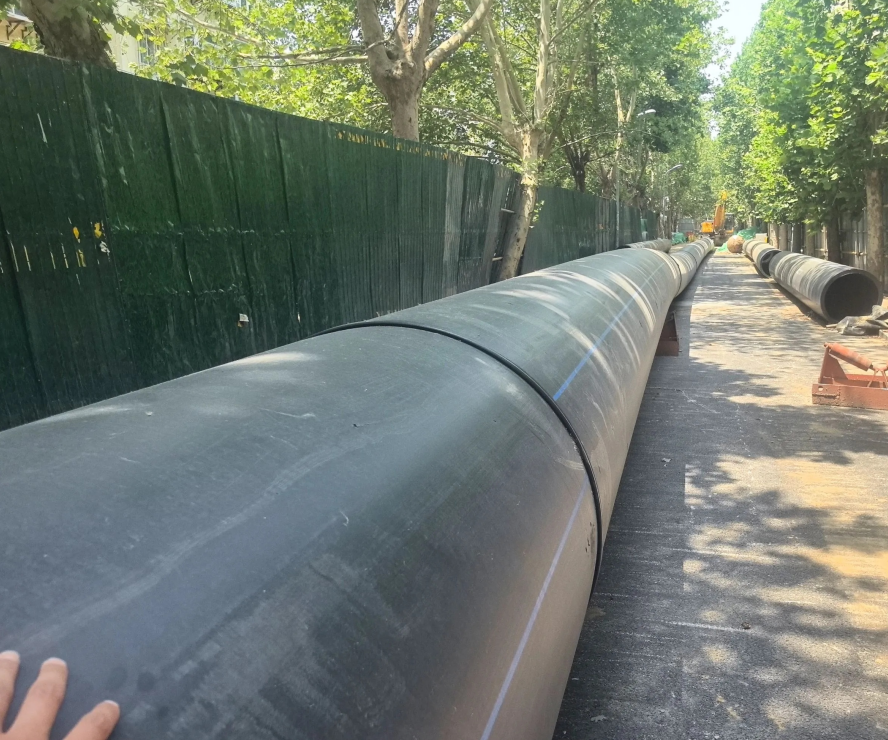
Municipal Sewage & Stormwater:Rainwater and sewage collection and discharge systems under urban main roads.
Industrial Wastewater Treatment:Discharge of corrosive wastewater from chemical, power, and pharmaceutical plants.
Agricultural & Forestry Drainage:Farmland drainage, low-pressure irrigation, and forestry drainage projects.
Road & Large Site Drainage:Drainage for highways, railways, golf courses, and large building foundations.
Mine Ventilation & Drainage:Efficient mine ventilation and transport of sand-containing slurries.
FAQ
1.What is an HDPE drainage pipe? It is a durable plastic pipe made from High-Density Polyethylene, designed for underground water and sewage management.
It typically features a corrugated exterior for strength and a smooth interior for fast water flow.
2.What are the main benefits of HDPE pipes? They are lightweight, flexible, and highly corrosion-resistant.
Compared to concrete or metal, HDPE pipes are easier to install, do not rust, and resist chemical damage.
3.HDPE vs. PVC: Which is better for drainage? HDPE is better for underground and outdoor drainage, while PVC is better for indoor plumbing.
HDPE is highly flexible and impact-resistant, making it ideal for buried infrastructure.
4.How long does an HDPE drainage pipe last? When properly installed, HDPE pipes can last 50 to 100 years.
The material does not degrade in soil and is highly resistant to biological growth and harsh chemicals.
5.Where are HDPE drainage pipes used? They are primarily used in gravity-flow drainage systems.
Common applications include highway drainage, municipal stormwater management, agricultural irrigation, and industrial wastewater.
6.Will buried HDPE pipes get crushed under pressure? No, as long as the correct "Ring Stiffness" is chosen.
The corrugated exterior design safely transfers the weight of soil and heavy traffic into the surrounding ground.
7.What do SN4 and SN8 mean for HDPE pipes? They refer to the pipe's "Ring Stiffness" (SN), which measures its resistance to external pressure.
SN8 is stronger than SN4 and is used for deeper burials or areas with heavy vehicle traffic.
8.How do you connect HDPE drainage pipes? The most common methods are rubber gasket push-on joints and heat fusion.
Gasket joints are quick and easy to install, while heat fusion creates a 100% leak-proof, permanent seal.
9.Can HDPE pipes crack in freezing weather? No, they are highly freeze-resistant.
HDPE maintains its flexibility in extreme cold environments (down to -40°C/-40°F) and will not become brittle or shatter.
10.Do HDPE pipes clog easily? No, because they have a perfectly smooth inner wall.
This low-friction surface prevents debris buildup. If maintenance is needed, they can easily withstand high-pressure water jetting.
Case
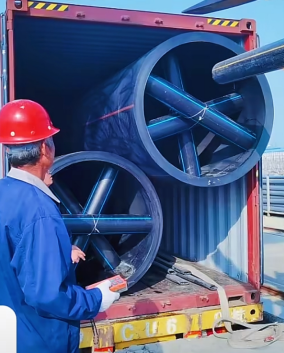
Product: HDPE Drainage Pipe
DN250mm, DN160mm PN12
Location: USA