 EN
EN

Historical Shifts and Field Realities in Fuel Logistics
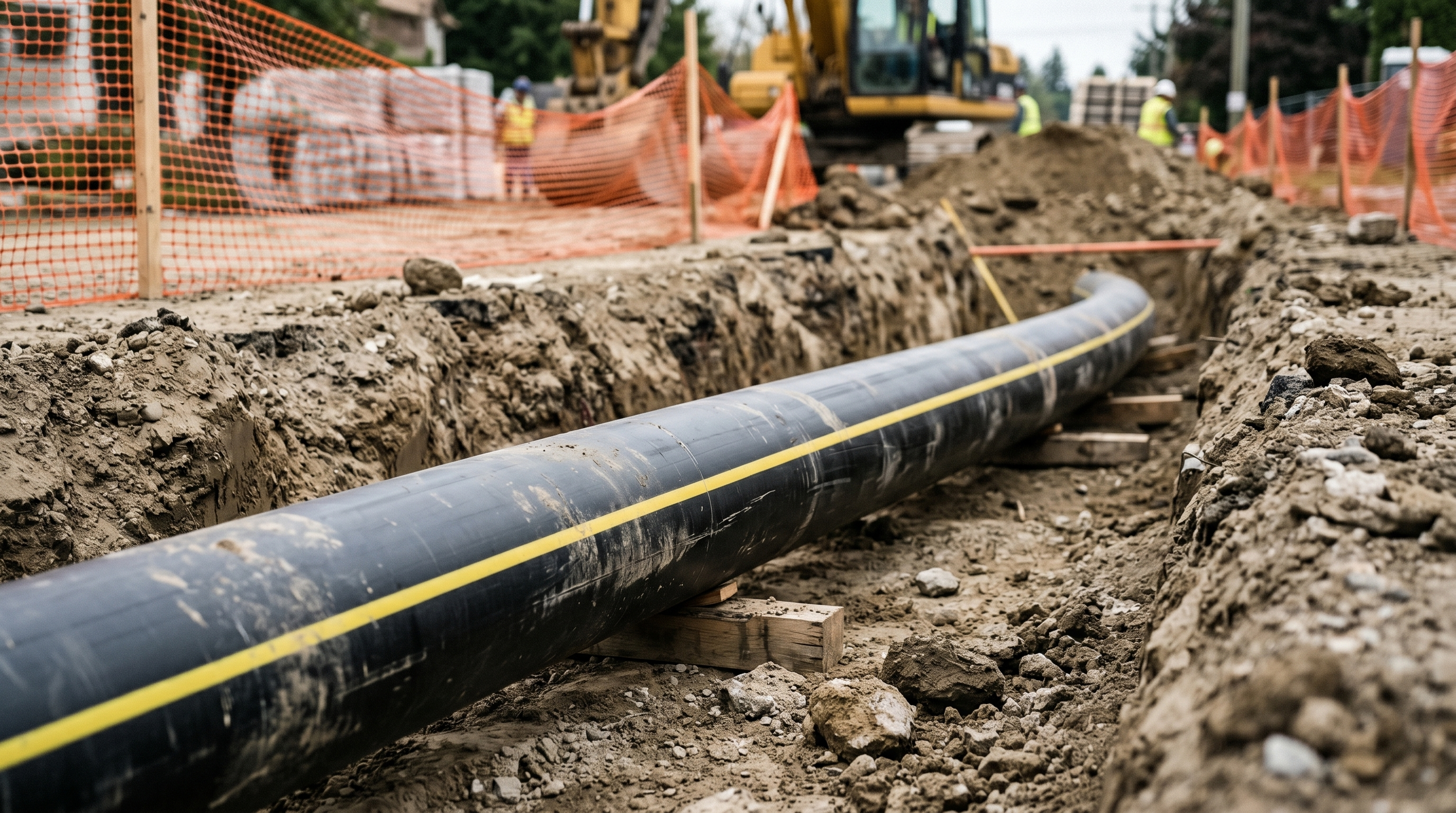
Working on a suburban infrastructure modernization project a few years ago opened my eyes to the incredible challenges facing modern energy transport. The existing underground infrastructure relied on traditional metal lines that suffered from severe rust and localized failures due to shifting soils. Upgrading the old grid to a modern PE pipe network completely changed how the utility operated, proving why high-density polyethylene is recognized as the preferred material for complex projects. When field engineers look at the high stakes of managing fuel lines, selecting a reliable PE pipe ensures long term containment and eliminates common failure points. This practical transition demonstrated that utilizing a durable PE pipe mitigates safety risks while keeping maintenance costs incredibly low over time. Today, municipal planners across the globe agree that a high-quality PE pipe serves as the preferred material for gas distribution networks because it completely eliminates the corrosion vulnerabilities of legacy systems. Transitioning to a flexible PE pipe allows installation teams to navigate crowded underground corridors with ease, cementing its status as the preferred material for gas distribution networks.
Engineering Safety Profiles and Structural Integrity Under Pressure
The technical reason why a modern PE pipe remains the preferred material for gas distribution networks lies in its exceptional physical properties and joint integrity. Unlike alternative conduits that depend on mechanical seals or rubber gaskets that degrade over decades, a PE pipe utilizes heat fusion to create a completely homogenous system. This seamless heat-fusion process ensures that the joints become stronger than the PE pipe itself, creating a leak-free network that is vital for safe fuel transport. Managing volatile hydrocarbons requires utilizing a highly stable PE pipe that can withstand rapid crack propagation and environmental stress cracking. Because the base resin is chemically inert, a certified PE pipe does not react with ground moisture, acidic soils, or the fuel molecules traveling inside, making it the preferred material for gas distribution networks. The inherent flexibility of a heavy-duty PE pipe also allows it to absorb seismic waves and ground shifts without cracking or breaking apart. This structural elasticity makes a robust PE pipe the preferred material for gas distribution networks operating in unstable geological zones, where rigid lines would fail immediately.
Authoritative Industry Endorsements and Regulatory Approvals
Rigorous studies conducted by global institutions like the Plastics Pipe Institute confirm that a high-performance PE pipe offers an operational lifespan exceeding one hundred years under standard operating conditions. These independent evaluations explain why government agencies and safety boards recognize a certified PE pipe as the preferred material for gas distribution networks. Industry regulations mandate strict quality controls, and a verified PE pipe consistently exceeds the performance baselines required for handling high-pressure fuel lines. Experts frequently emphasize that utilizing an advanced PE pipe significantly lowers the risk of catastrophic ruptures, which is why international builders consider it the preferred material for gas distribution networks. The exceptional performance history of this polymer gives municipal engineers the data-driven confidence needed to phase out obsolete cast-iron and steel networks. By choosing a fully tested PE pipe, utility operators ensure complete compliance with international safety codes while benefiting from a product designed to protect public communities. This widespread institutional validation reinforces why a modern PE pipe stands out as the ultimate preferred material for gas distribution networks worldwide.
Financial and Operational Longevity and Economic Advantages
From a purely financial perspective, installing a durable PE pipe delivers remarkable long-term savings that positively impact public and private infrastructure budgets. When utility managers choose a premium PE pipe, the total cost of ownership drops dramatically because the system requires virtually no emergency repairs or cathodic protection. The lightweight nature of a specialized PE pipe supports advanced trenchless installation methods such as horizontal directional drilling, which significantly reduces labor expenses and surface disruption. This ease of installation confirms that a versatile PE pipe is the preferred material for gas distribution networks running beneath busy urban streets and highways. Preventing fuel loss through leak-free joints ensures that energy providers maximize their delivery efficiency while protecting the environment from hazardous emissions. Every kilometer of installed PE pipe represents a long-term reduction in operational overhead, further proving why it remains the preferred material for gas distribution networks. Investing in a top-grade PE pipe ensures that utility providers can allocate their financial resources efficiently while maintaining a highly secure fuel grid.
Supply Chain Excellence and High Standards in Modern Production
Achieving absolute safety in fuel transport requires sourcing high-grade components from an established manufacturer with exceptional extrusion capabilities and strict quality control protocols. This is exactly where BSX adds tremendous engineering value, utilizing state-of-the-art production lines to manufacture premium PE pipe options that easily satisfy global performance criteria. The massive production capacity at BSX ensures that large-scale infrastructure developments receive a steady supply of flawless components, making our specialized PE pipe the preferred material for gas distribution networks. Our rigorous testing procedures guarantee that every single segment of PE pipe features uniform wall thickness, exceptional tensile strength, and superior resistance to chemical degradation. Partnering with a dedicated supplier like BSX allows international distribution networks to deploy safe, long-lasting energy lines with absolute confidence. By maintaining an integrated global supply chain and focusing on technical perfection, BSX delivers optimized piping solutions that reinforce why a premium PE pipe is universally recognized as the preferred material for gas distribution networks.
Table of Contents
- Historical Shifts and Field Realities in Fuel Logistics
- Engineering Safety Profiles and Structural Integrity Under Pressure
- Authoritative Industry Endorsements and Regulatory Approvals
- Financial and Operational Longevity and Economic Advantages
- Supply Chain Excellence and High Standards in Modern Production