 EN
EN

EPDM vs NBR Seals for PP Compression Fittings: How to Choose the Right Material
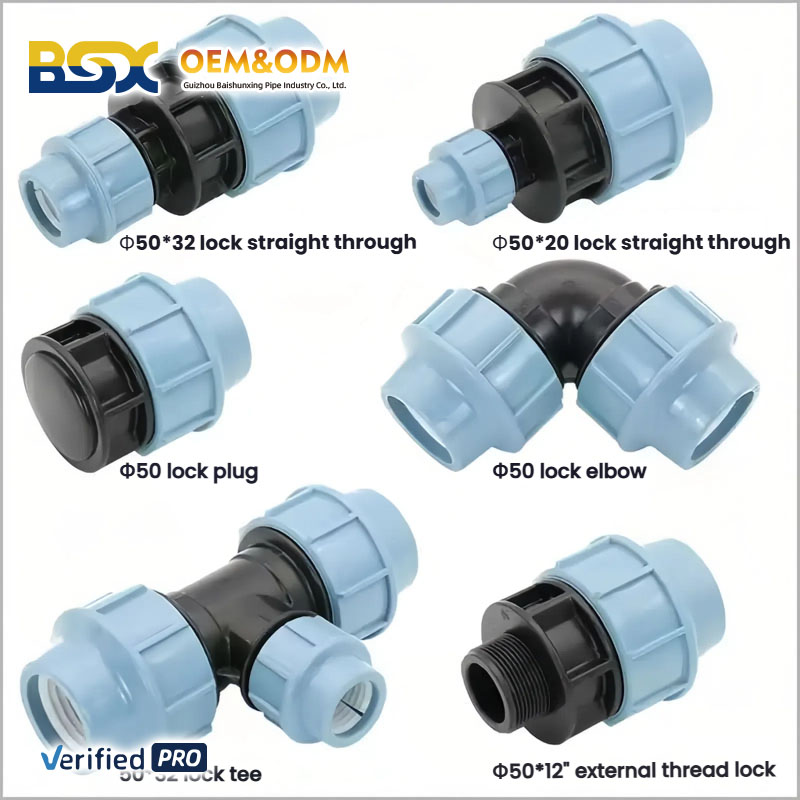
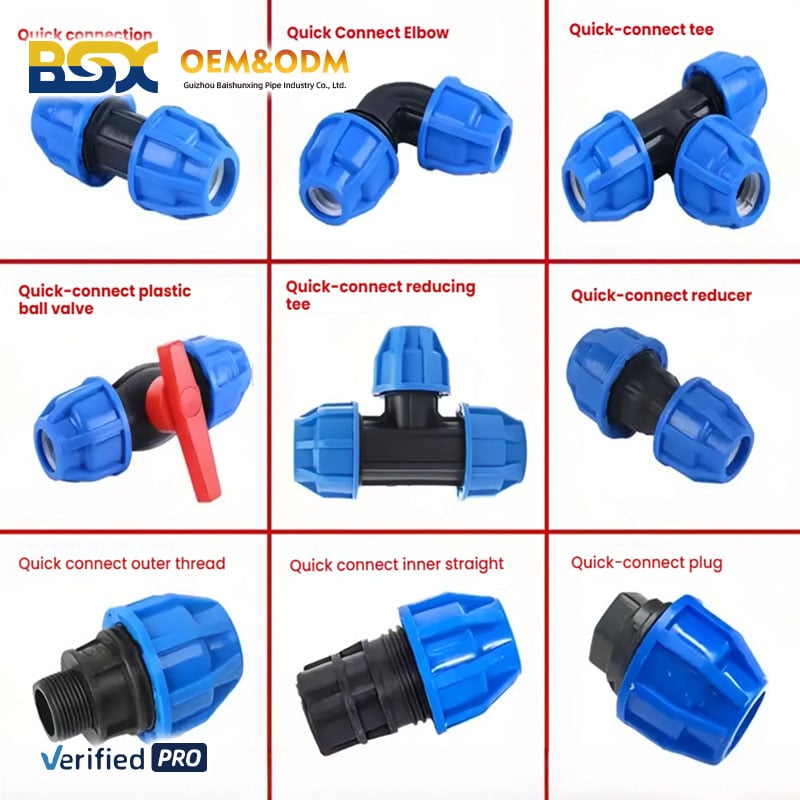
PP compression fittings are widely used in water supply, irrigation, industrial piping, and chemical transportation systems because of their corrosion resistance, lightweight construction, and easy installation. However, the long-term reliability of a compression fitting depends on more than the polypropylene body. The sealing material inside the fitting also plays a critical role in preventing leakage and maintaining system performance.
Among the most commonly used sealing materials are EPDM and NBR. While both materials provide reliable sealing performance, they are designed for different operating environments. EPDM is particularly suitable for water, wastewater, and many chemical applications, while NBR offers superior resistance to oils, fuels, and petroleum-based fluids.
Understanding the differences between EPDM and NBR can help engineers, contractors, distributors, and system designers select the right PP compression fittings for their specific applications.
Why Seal Material Matters in PP Compression Fittings
When selecting PP compression fittings, many users focus primarily on the fitting body, including polypropylene quality, pressure rating, dimensions, and connection method. However, the seal is equally important because it creates the actual barrier that prevents fluid from escaping through the connection.
A fitting may remain mechanically intact even when its seal has already started to deteriorate. Exposure to incompatible chemicals can cause an elastomer to swell, soften, harden, crack, or lose its elasticity. Once the sealing element can no longer maintain sufficient contact pressure, leakage may occur even if the PP fitting itself remains undamaged.
Operating temperature also affects seal performance. Higher temperatures can accelerate chemical reactions and material degradation, potentially reducing the service life of the sealing component.
For this reason, selecting a PP compression fitting should involve evaluating the fitting body and sealing material as a complete system. The correct combination depends primarily on the fluid, operating temperature, pressure, and installation environment.
EPDM Seals: A Reliable Choice for Water and Chemical Applications
EPDM (Ethylene Propylene Diene Monomer) is widely used in PP compression fittings designed for water and water-based chemical applications. Its material characteristics provide excellent resistance to water, steam, dilute acids, alkalis, ozone, and weathering.
This makes EPDM particularly suitable for applications such as municipal water distribution, agricultural irrigation, wastewater treatment, and water treatment systems. It is also commonly selected for systems that handle fertilizers or diluted water-based chemicals.
Another important advantage of EPDM is its resistance to outdoor environmental conditions. Compared with many other elastomers, EPDM provides excellent resistance to UV radiation, ozone, and weathering. This makes it a practical option for irrigation pipelines and other installations where PP compression fittings may remain exposed to sunlight for extended periods.
For water-based systems, EPDM can provide reliable sealing performance over long operating periods when the temperature and chemical conditions remain within the compound's specified limits.
When Is EPDM Not Suitable?
Despite its excellent performance with water and many chemicals, EPDM has an important limitation: it is generally unsuitable for petroleum-based fluids and many hydrocarbon products.
Exposure to fuels, mineral oils, lubricating oils, and certain hydrocarbon solvents can cause EPDM to swell or soften. Excessive swelling can change the dimensions of the seal and reduce its ability to maintain a stable sealing force.
Therefore, EPDM should generally be avoided when PP compression fittings are intended for applications involving diesel, gasoline, petroleum-based oils, or other hydrocarbon-rich fluids.
For these environments, NBR is usually a more appropriate sealing material. However, chemical compatibility should always be verified against the specific fluid, concentration, temperature, and seal compound before final material selection.
NBR Seals: Designed for Oil and Fuel Applications
NBR (Nitrile Butadiene Rubber) is widely recognized for its excellent resistance to mineral oils, fuels, and many petroleum-based fluids. Its resistance to hydrocarbons makes it a common choice for sealing applications where EPDM would be unsuitable.
NBR seals can be used in PP compression fittings for applications such as fuel transfer, diesel distribution, industrial oil handling, hydraulic systems, and lubrication circuits. When the primary concern is resistance to petroleum-based media, NBR generally offers a significant advantage over EPDM.
The performance of NBR is influenced by its formulation, particularly its acrylonitrile content. Different NBR compounds can provide different balances of oil resistance, flexibility, low-temperature performance, and mechanical strength. Therefore, the specific NBR compound should be matched to the requirements of the application rather than treating all NBR seals as identical.
For industrial piping systems handling oils or fuels, selecting the appropriate NBR compound can help maintain sealing reliability and reduce the risk of premature leakage.
Understanding the Limitations of NBR
NBR's excellent oil and fuel resistance does not mean that it is the best sealing material for every application.
Compared with EPDM, NBR generally has lower resistance to ozone, UV radiation, and long-term outdoor weathering. For PP compression fittings installed outdoors and continuously exposed to sunlight, EPDM may therefore provide better long-term environmental resistance.
NBR also has limitations when exposed to hot water, steam, and certain oxidizing chemicals. Standard NBR compounds commonly operate within a temperature range of approximately -40°C to 108°C, although the actual allowable range depends on the specific formulation and operating conditions.
For applications involving water, steam, weather exposure, or certain chemical environments, EPDM is often the more suitable choice. For oil and fuel systems, NBR is generally preferred.
The key is not to determine which material is universally "better," but to determine which material is more compatible with the actual operating environment.
EPDM vs NBR: Quick Comparison
| Property | EPDM | NBR |
|---|---|---|
| Water Resistance | Excellent | Good |
| Acid Resistance | Excellent | Fair |
| Alkali Resistance | Excellent | Fair |
| Oil Resistance | Poor | Excellent |
| Fuel Resistance | Poor | Excellent |
| Ozone Resistance | Excellent | Poor |
| UV Resistance | Excellent | Poor |
| Weather Resistance | Excellent | Fair |
| Typical Temperature Range* | Approximately -50°C to 150°C | Approximately -40°C to 108°C |
| Typical Applications | Water, irrigation, wastewater, chemicals | Oils, fuels, hydraulic fluids |
*Actual temperature limits depend on the specific seal compound, fluid, pressure, and operating conditions.
The comparison shows a straightforward distinction: EPDM is generally the better choice for water, outdoor, and many chemical applications, while NBR is generally preferred for oil, fuel, and petroleum-based fluids.
How to Select the Right Seal for PP Compression Fittings
Selecting between EPDM and NBR does not need to be complicated. The first consideration should always be the fluid being transported.
If the piping system carries drinking water, irrigation water, wastewater, fertilizers, or compatible water-based chemicals, EPDM is usually a strong choice. If the system handles diesel, gasoline, mineral oil, lubricating oil, or other petroleum-based fluids, NBR is generally more appropriate.
The second consideration is operating temperature. Temperature can significantly affect elastomer performance, so the expected minimum and maximum operating temperatures should be compared with the manufacturer's specifications. Applications involving hot water or steam may favor EPDM, while moderate-temperature oil and fuel applications are commonly suited to NBR.
The third consideration is the installation environment. Outdoor piping systems exposed to sunlight, ozone, and changing weather conditions generally benefit from EPDM's superior environmental resistance. For indoor industrial systems where hydrocarbon compatibility is the primary concern, NBR may be the better solution.
Pressure, fluid concentration, installation conditions, and expected service life should also be considered. When the application involves aggressive chemicals or unusual operating conditions, compatibility should be confirmed with the seal manufacturer before installation.
Why Choose BSX PP Compression Fittings?
As a professional manufacturer of plastic piping systems, BSX provides PP compression fittings designed for agricultural, municipal, industrial, and water management applications.
BSX offers PP compression fittings with different sealing options, including EPDM and NBR, allowing customers to select a configuration based on the characteristics of their application. This flexibility is particularly useful for distributors, contractors, and engineering projects that require different sealing materials for different fluid systems.
The fittings are manufactured using quality polypropylene materials and are designed to provide reliable connections, corrosion resistance, and leak prevention. BSX also supports OEM and ODM requirements, making it possible to customize fitting specifications and sealing solutions according to project requirements.
For projects involving water distribution, irrigation, wastewater, chemical handling, or industrial fluid transportation, working with an experienced PP compression fitting manufacturer can simplify material selection and help reduce the risk of seal-related failures.
EPDM vs NBR: Which One Should You Choose?
There is no universal answer to whether EPDM or NBR is the better sealing material. The correct choice depends on the fluid and operating environment.
For water supply, irrigation, wastewater, outdoor piping, and many water-based chemical applications, EPDM is generally the preferred option because of its excellent resistance to water, ozone, UV exposure, and weathering.
For oil, diesel, gasoline, hydraulic fluids, and petroleum-based applications, NBR is generally the better choice because of its superior resistance to hydrocarbons.
The most important principle is simple: match the seal material to the medium and operating conditions rather than selecting a seal based solely on price or general material performance.
When the application is properly evaluated before installation, the right seal can help extend fitting service life, reduce leakage risks, and minimize maintenance costs.
Conclusion
The sealing material is an important part of PP compression fitting performance. Although the polypropylene body provides structural strength and corrosion resistance, the elastomer seal determines whether the connection can maintain reliable fluid containment over time.
EPDM is generally well suited to water, irrigation, wastewater, outdoor installations, and many chemical applications. Its excellent resistance to water, ozone, UV radiation, and weathering makes it a reliable choice for these environments.
NBR, on the other hand, is particularly suitable for oil, fuel, and petroleum-based fluid applications. Its strong hydrocarbon resistance makes it the preferred option when compatibility with oils and fuels is the primary requirement.
By evaluating the fluid, temperature, pressure, and installation environment before selecting a seal, users can choose the most appropriate PP compression fitting configuration and achieve more reliable long-term performance.
If you are unsure whether EPDM or NBR is suitable for your project, consulting an experienced PP compression fitting manufacturer such as BSX can help you identify the appropriate sealing solution.
FAQ
Which seal is better for water supply systems?
EPDM is generally the preferred option for water supply systems because of its excellent water resistance and strong resistance to ozone, UV exposure, and weathering.
Can NBR seals be used for diesel fuel systems?
Yes. NBR is commonly selected for diesel, gasoline, mineral oil, and other petroleum-based fluids because of its excellent hydrocarbon resistance. The specific seal compound should still be verified for the intended operating conditions.
Are EPDM seals resistant to sunlight?
Yes. EPDM generally provides excellent resistance to UV radiation, ozone, and weathering, making it well suited to outdoor piping applications.
Which seal material lasts longer?
Neither material is universally longer-lasting. EPDM generally provides better service life in water, outdoor, and many chemical environments, while NBR can provide better service life in oil and fuel applications. Compatibility with the operating medium is the key factor.
Can BSX provide customized PP compression fittings?
Yes. BSX provides OEM and ODM support for PP compression fittings, including different sizes, specifications, designs, and sealing material options according to project requirements.
Table of Contents
- EPDM vs NBR Seals for PP Compression Fittings: How to Choose the Right Material
- Why Seal Material Matters in PP Compression Fittings
- EPDM Seals: A Reliable Choice for Water and Chemical Applications
- When Is EPDM Not Suitable?
- NBR Seals: Designed for Oil and Fuel Applications
- Understanding the Limitations of NBR
- EPDM vs NBR: Quick Comparison
- How to Select the Right Seal for PP Compression Fittings
- Why Choose BSX PP Compression Fittings?
- EPDM vs NBR: Which One Should You Choose?
- Conclusion
- FAQ