 EN
EN

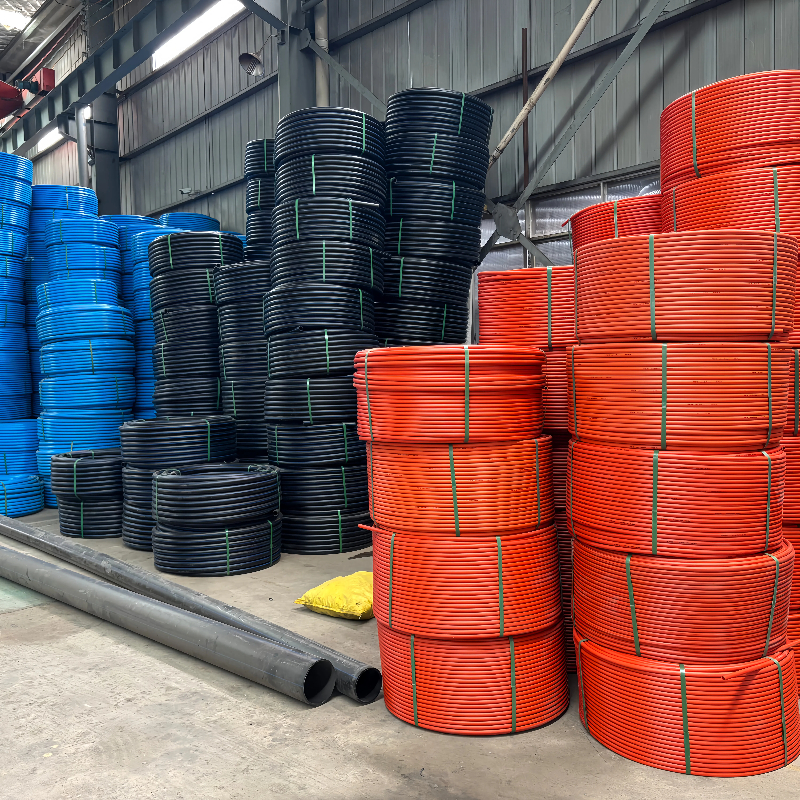
PVC Irrigation Pipe Sizing Guide: GPM, Pressure, and Pipe Diameter
Choosing the right PVC irrigation pipe size is important for maintaining proper water flow, pressure, and irrigation uniformity. An undersized pipe can create excessive friction loss and reduce pressure at sprinklers or emitters, while an oversized pipe may increase material and installation costs.
PVC irrigation pipe sizing depends on more than nominal diameter. Flow rate, pressure, pipe length, elevation, velocity, irrigation method, and system layout all affect the final pipe selection.
This guide explains how GPM, PSI, pipe diameter, friction loss, zoning, and PVC pipe schedules work together when sizing an irrigation system.
What Determines PVC Irrigation Pipe Size?
The main factors are flow rate, pressure, pipe diameter, and friction loss.
Flow rate is measured in gallons per minute (GPM), while pressure is measured in pounds per square inch (PSI). The required flow determines how much water the pipe must carry, while available pressure determines how much pressure can be lost through the system.
For the same flow rate, a larger pipe generally produces lower water velocity and lower friction loss. This becomes increasingly important for long pipelines and high-flow mainlines.
Hydraulic calculations should use the pipe's actual inside diameter, because pipes with the same nominal size can have different inside diameters depending on wall thickness and pipe schedule.
For preliminary sizing, the following values provide a useful reference for Schedule 40 PVC at approximately 5 ft/s:
| Nominal Pipe Size | Approx. Inside Diameter | Approx. Flow at 5 ft/s |
|---|---|---|
| 1 inch | 1.049 in | 13 GPM |
| 1.5 inch | 1.610 in | 30 GPM |
| 2 inch | 2.067 in | 52 GPM |
| 3 inch | 3.068 in | 120 GPM |
| 4 inch | 4.026 in | 210 GPM |
These values are approximate preliminary references, not final design limits. Actual sizing should also consider friction loss, fittings, valves, elevation, required terminal pressure, and manufacturer specifications.
How GPM Affects PVC Irrigation Pipe Diameter
Flow rate is one of the first values required for irrigation pipe sizing. A sprinkler zone may require significantly more water than a small drip system, so the appropriate pipe diameter can vary considerably between applications.
As GPM increases, water velocity and friction loss generally increase when the pipe diameter remains unchanged. Increasing the pipe diameter allows the same flow to move at a lower velocity.
For this reason, there is no universal PVC pipe size for irrigation. A 1-inch pipe may be suitable for a short, low-flow lateral, while a larger pipe may be required for a long mainline carrying water to several zones.
A practical approach is to determine the maximum flow required by the active zone, select a preliminary pipe diameter, and then verify velocity and pressure loss through hydraulic calculations.
Why Hydraulic Velocity Matters
Water velocity affects friction loss. Higher velocity generally produces greater friction loss, reducing the pressure available at downstream irrigation equipment.
A velocity of around 5 ft/s is commonly used as a preliminary design target for water piping, but it should not be treated as a universal maximum. The appropriate value depends on the application, pipe material, system pressure, layout, and engineering requirements.
For PVC pressure pipe, friction loss can be evaluated using the Hazen-Williams or Darcy-Weisbach method. A Hazen-Williams C factor of 150 is commonly used as a conservative design value for PVC pressure pipe.
The basic relationship is simple: higher flow + smaller pipe diameter = higher velocity + greater friction loss. Increasing pipe diameter can therefore improve hydraulic performance, particularly in long or high-flow sections.
How Pipe Length and Elevation Affect Sizing
Pipe length directly affects pressure loss. As water travels through a pipeline, friction gradually reduces available pressure. A diameter that works well for a short run may therefore be unsuitable for a much longer pipeline carrying the same flow.
Elevation must also be considered. When water moves uphill, additional head is required, reducing downstream pressure. Downhill sections can increase static pressure and may require pressure regulation.
For fields with significant elevation changes, pipe sizing should therefore consider both friction loss and elevation head rather than relying on a simple GPM chart.
Mainline vs. Lateral Pipe Sizing
Irrigation systems commonly include mainlines, sub-mainlines, and laterals, and each section can require a different pipe diameter.
The mainline carries water from the source toward irrigation zones and may handle relatively high flow. The sub-mainline distributes water to individual zones, while the lateral delivers water to sprinklers, drip lines, or other irrigation equipment.
Because their flow requirements differ, these sections should not automatically use the same pipe size. Each section should be sized according to its design flow and allowable pressure loss.
How Irrigation Zoning Affects Pipe Size
Zoning can reduce peak flow demand and make hydraulic management easier.
For example, if an irrigation project requires 60 GPM when all areas operate simultaneously, dividing it into six 10-GPM zones means downstream piping can often be designed around the active zone flow rather than the total theoretical demand.
However, zoning does not mean every pipe can be reduced in size. The mainline still needs to handle the flow required by the zones it serves, and pressure loss, elevation, valves, and operating conditions must still be evaluated.
Proper zoning can help balance pipe cost, pump capacity, pressure stability, and irrigation uniformity.
Sprinkler vs. Drip Irrigation Pipe Sizing
Irrigation method also affects pipe sizing.
Sprinkler systems commonly require higher operating pressure and greater flow per zone. The piping must maintain sufficient pressure at the most hydraulically disadvantaged sprinkler.
Drip systems generally operate at lower pressure and flow, but pressure uniformity is still important because pressure differences can affect emitter discharge.
Therefore, sprinkler and drip systems should not be sized using identical assumptions. The final pipe diameter depends on zone flow, required pressure, pipe length, elevation, and irrigation equipment.
How to Calculate PVC Irrigation Pipe Friction Loss
Friction loss is a key part of PVC irrigation pipe sizing because it determines how much pressure is lost as water moves through the pipeline.
The Hazen-Williams equation is widely used for water-flow calculations in PVC pressure pipe. The calculation considers flow rate, inside diameter, pipe length, and the Hazen-Williams coefficient. Valves, fittings, and elevation can also affect the final pressure available to the irrigation equipment.
A practical sizing process is:
Determine GPM → Select preliminary pipe diameter → Calculate friction loss → Account for fittings and valves → Account for elevation → Verify downstream pressure
If pressure is insufficient at the final sprinkler or emitter, possible solutions include increasing pipe diameter, reducing zone flow, shortening the pipeline, modifying the layout, or creating additional zones.
Schedule 40 vs. Schedule 80 PVC for Irrigation
Pipe schedule and pipe diameter are two different considerations.
Schedule 40 and Schedule 80 PVC have different wall thicknesses. For the same nominal size, Schedule 80 generally has a smaller inside diameter because of its thicker wall. This can affect flow velocity and friction loss.
Schedule 40 may be suitable when its pressure capacity and physical strength meet the installation requirements. Schedule 80 may be selected where greater pressure capability or physical resistance is required.
However, Schedule 80 is not automatically better for irrigation. The selection should consider working pressure, pressure surges, temperature, installation conditions, applicable standards, cost, and hydraulic performance.
Always check the manufacturer's pressure rating and temperature information for the specific pipe rather than relying on the Schedule designation alone.
How Temperature Affects PVC Pressure Rating
PVC pressure capacity decreases as operating temperature increases. Therefore, a pressure rating established at a standard reference temperature should not automatically be treated as the allowable working pressure at higher temperatures.
Irrigation systems exposed to high ambient or water temperatures should account for temperature when determining the appropriate pressure rating.
The expected temperature, working pressure, surge pressure, pipe specification, and installation conditions should all be considered during final pipe selection.
A Practical PVC Irrigation Pipe Sizing Process
A reliable sizing process begins with the actual operating requirements of the irrigation system.
First, determine the design flow in GPM. For sprinkler irrigation, calculate the combined flow of the sprinklers operating in the same zone. For drip irrigation, calculate the total flow required by the emitters or drip lines.
Next, determine the available pressure at the water source and the minimum pressure required by the irrigation equipment.
Then evaluate pipe length, elevation changes, fittings, valves, filters, and other components that may contribute to pressure loss.
Select a preliminary pipe diameter and calculate the expected friction loss. Finally, verify the pressure available at the most hydraulically disadvantaged point.
If pressure is too low, increasing pipe diameter is one option. Reducing zone flow, changing the layout, shortening the pipeline, or adding another zone may also improve system performance.
Common PVC Irrigation Pipe Sizing Mistakes
A common mistake is selecting pipe diameter based only on pump capacity. The actual flow required by each irrigation zone may be much lower or higher than the pump's maximum capacity.
Ignoring pipe length is another problem. A diameter suitable for a short run may create excessive pressure loss over a long pipeline.
Elevation changes are also important. Significant uphill runs can reduce available pressure, while downhill sections can increase static pressure.
Finally, nominal diameter and Schedule number should not be used as the only design criteria. Actual inside diameter, pressure rating, operating temperature, and manufacturer specifications should be included in the final calculation.
PVC Irrigation Pipe Sizing: Key Takeaways
The correct PVC irrigation pipe size depends on the relationship between flow, pressure, diameter, friction loss, and system layout.
Larger pipe diameters generally reduce velocity and friction loss, making them particularly useful for long runs and high-flow mainlines. However, oversizing can increase material and installation costs.
For preliminary sizing, GPM and velocity provide a useful starting point. Final design should also consider pipe length, elevation, fittings, valves, irrigation method, zoning, operating temperature, and required downstream pressure.
Hydraulic calculations based on the actual pipe inside diameter and operating conditions provide a more reliable result than a general GPM chart alone.
Conclusion
Proper PVC irrigation pipe sizing helps maintain efficient water delivery, stable pressure, and consistent irrigation coverage. Pipe diameter should not be selected from GPM alone. Flow rate, pressure, pipe length, inside diameter, elevation, friction loss, zoning, and irrigation method all influence the final selection.
A GPM and velocity reference can provide a useful starting point, but final pipe selection should be verified through hydraulic calculations based on actual operating conditions.
By matching pipe diameter and pressure capability to system requirements, irrigation designers can avoid unnecessary oversizing, reduce pressure losses, and build more reliable irrigation networks.
FAQ About PVC Irrigation Pipe Sizing
What size PVC pipe do I need for irrigation?
The required size depends on flow rate, available pressure, pipe length, elevation, irrigation method, and allowable friction loss. A 2-inch Schedule 40 PVC pipe, for example, has an inside diameter of approximately 2.067 inches and carries about 52 GPM at approximately 5 ft/s under the stated reference conditions. Final sizing should be verified hydraulically.
How many GPM can a 1-inch PVC irrigation pipe handle?
A 1-inch Schedule 40 PVC pipe has an inside diameter of approximately 1.049 inches. At approximately 5 ft/s, its theoretical flow is about 13 GPM. Actual design flow depends on pipe length, pressure requirements, and allowable friction loss.
Is bigger PVC pipe better for irrigation?
Not necessarily. Larger pipe can reduce velocity and friction loss, but it also increases material and installation costs. The goal is to select a diameter that provides the required flow and pressure without unnecessary oversizing.
Should irrigation mainlines be larger than laterals?
Often, yes. Mainlines typically carry more water than individual laterals, so they commonly require a larger diameter. The actual size should still be determined by design flow, pipe length, elevation, pressure requirements, and hydraulic calculations.
Is Schedule 40 or Schedule 80 better for irrigation?
Neither is universally better. Schedule 40 may be suitable where its pressure and physical requirements are adequate, while Schedule 80 may be appropriate for higher-pressure or higher-risk applications. The final choice depends on pressure rating, temperature, installation conditions, cost, and hydraulic requirements.
Table of Contents
- PVC Irrigation Pipe Sizing Guide: GPM, Pressure, and Pipe Diameter
- What Determines PVC Irrigation Pipe Size?
- How GPM Affects PVC Irrigation Pipe Diameter
- Why Hydraulic Velocity Matters
- How Pipe Length and Elevation Affect Sizing
- Mainline vs. Lateral Pipe Sizing
- How Irrigation Zoning Affects Pipe Size
- Sprinkler vs. Drip Irrigation Pipe Sizing
- How to Calculate PVC Irrigation Pipe Friction Loss
- Schedule 40 vs. Schedule 80 PVC for Irrigation
- How Temperature Affects PVC Pressure Rating
- A Practical PVC Irrigation Pipe Sizing Process
- Common PVC Irrigation Pipe Sizing Mistakes
- PVC Irrigation Pipe Sizing: Key Takeaways
- Conclusion
- FAQ About PVC Irrigation Pipe Sizing