 EN
EN

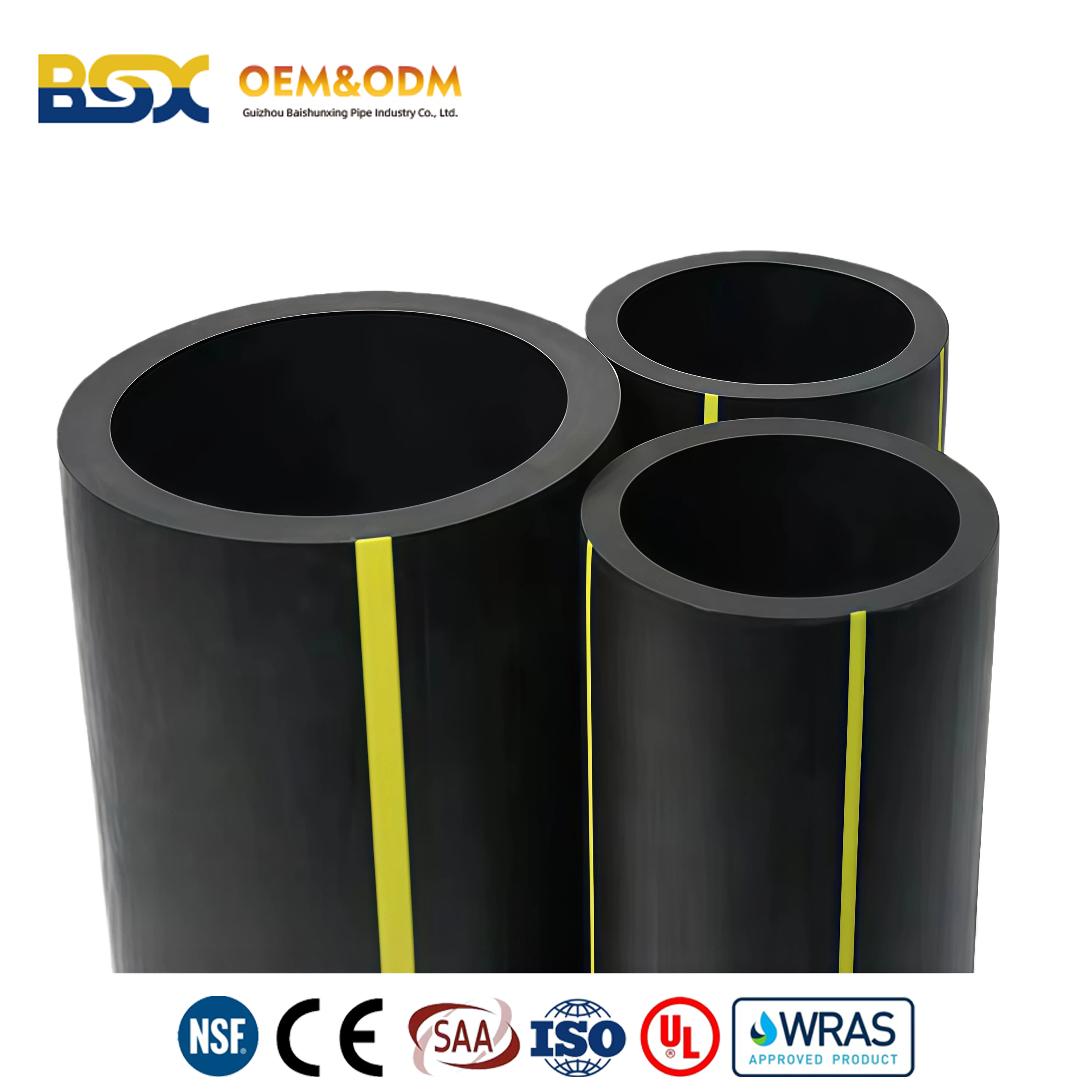
Corrosion Immunity: How HDPE Gas Pipe Eliminates the #1 Cause of Metallic Pipeline Failures
Chemical inertness in soil, moisture, and electrolyte-rich environments prevents electrochemical degradation
HDPE gas pipe maintains structural integrity in aggressive environments due to its non-metallic composition. Its molecular structure resists chemical reactions with soil electrolytes, moisture, and acidic or alkaline conditions—factors that drive electrochemical corrosion in steel and cast iron. This inherent immunity eliminates the need for protective coatings or cathodic protection systems. Unlike metals, HDPE does not participate in galvanic series reactions when buried alongside dissimilar utilities, removing a major source of localized corrosion.
Zero risk of pinhole leaks, galvanic corrosion, or tuberculation—critical advantages over steel and cast iron
HDPE’s polymer structure inherently prevents corrosion mechanisms that dominate metallic pipeline failures. It cannot develop pinhole leaks from rust penetration, suffer galvanic corrosion at contact points with other metals, or accumulate mineral-based tuberculation on its smooth interior surface—a common cause of flow restriction and wall thinning in iron-based systems. These properties eliminate the primary failure mode responsible for approximately 70% of incidents in metallic gas distribution networks.
Leak-Free Integrity: Fusion-Jointed HDPE Gas Pipe as a Monolithic, Sealed System
Molecular-level heat fusion eliminates gaskets, bolts, and seal degradation over time
HDPE gas pipe uses heat fusion—not mechanical joints—to create a single, continuous material. During butt or electrofusion, pipe ends are heated to a molten state and fused under controlled pressure, forming a permanent molecular bond. This process removes all reliance on gaskets, bolts, threads, or elastomeric seals—components prone to drying, loosening, or corrosion over time. The result is a monolithic, sealed system with no discrete leak paths, ensuring long-term fugitive emission control and eliminating maintenance tied to joint integrity.
ASTM F2619 validation: Fusion joints achieve ≥100% pipe body strength under hydrostatic and cyclic loads
ASTM F2619 testing confirms that properly executed fusion joints meet or exceed the pipe body’s rated strength under hydrostatic pressure and cyclic loading. In many cases, the joint zone becomes stronger than the base material due to homogenization during fusion. This means the entire pipeline behaves as a seamless tube—without weak points vulnerable to stress concentration. For operators, this delivers a quantifiable safety margin against pressure surges, ground settlement, and seismic activity.
PE4710 HDPE Gas Pipe: Engineered Material Performance for 100-Year Design Life
Superior slow crack growth resistance (PENT >10,000 hrs) in aggressive stress-cracking conditions
PE4710 HDPE gas pipe offers exceptional resistance to slow crack growth (SCG), validated by the Pennsylvania Notch Test (PENT) exceeding 10,000 hours—well above industry minimums. Its bimodal molecular architecture maintains structural integrity under real-world stressors like rock impingement, bending during installation, or exposure to surfactants and hydrocarbons. Unlike legacy polyethylenes, PE4710 remains highly resistant to environmental stress cracking, directly supporting its validated 100-year design life in gas distribution.
Hydrostatic Design Basis (HDB) of 1600 psi @ 73°F supports ISO 9080–validated 50–100+ year service life
The Hydrostatic Design Basis (HDB) of 1600 psi at 73°F (23°C) forms the engineering foundation for PE4710’s long-term performance. Derived through ISO 9080 extrapolation of long-term hydrostatic strength data, this rating accounts for thermal contraction, pressure surges up to twice operating pressure, and installation stresses. Combined with PE4710’s strain tolerance exceeding 100%, the HDB ensures dimensional stability and safety margin retention across decades of service.
Certified Safety: Traceability, Compliance, and Quality Assurance for HDPE Gas Pipe Deployment
Robust certification frameworks ensure consistent safety performance across HDPE gas pipe deployment. Material traceability begins at the resin level, with each batch assigned unique identifiers linked to manufacturing lots and test reports—enabling full chain-of-custody tracking from production to installation. Compliance with ASTM D2513 and ISO 4437 is verified through third-party audits covering material properties, dimensional tolerances, and fusion procedure qualifications. Quality assurance mandates destructive testing of fusion joints per ASTM F2619 and hydrostatic validation per ISO 1167. Independent certification bodies provide ongoing oversight—including unannounced facility inspections—ensuring auditable safety records throughout the pipeline’s service life.
Proven Longevity and Low Lifecycle Risk: Real-World Validation of HDPE Gas Pipe Safety Performance
54-year operational HDPE gas mains in the Netherlands—still at full pressure (Kiwa 2023)
A 2023 Kiwa study of HDPE gas mains installed in the Netherlands in 1969 confirmed uninterrupted operation at full original pressure after 54 years. These early-generation polyethylene pipes showed no signs of corrosion, chemical degradation, or stress cracking—demonstrating the material’s intrinsic long-term stability. Modern PE4710 builds on this proven baseline with enhanced resin technology, enabling utilities to confidently project service lives exceeding 100 years.
PHMSA 2022 data: <0.001 leaks/km-year across North American HDPE natural gas distribution networks
U.S. Pipeline and Hazardous Materials Safety Administration (PHMSA) 2022 data show HDPE gas distribution networks across North America experience fewer than one leak per 1,000 km per year—<0.001 leaks/km-year. This rate is orders of magnitude lower than metallic systems, where corrosion and joint failures dominate incident reports. The fusion-jointed, monolithic construction—combined with HDPE’s resistance to soil stress, abrasion, and seismic movement—underpins this unmatched field performance and reinforces HDPE as the safest, lowest-risk choice for modern gas infrastructure.
FAQs
What makes HDPE gas pipes corrosion-resistant?
HDPE gas pipes are highly resistant to corrosion due to their chemical inertness and non-metallic composition. They do not react with soil electrolytes, moisture, or chemicals, unlike metal pipes that face electrochemical degradation.
How are fusion joints in HDPE pipes different from mechanical joints?
The fusion jointing process in HDPE pipes forms a single, continuous material through molecular-level heat fusion, eliminating the need for gaskets, bolts, and seals. This ensures a monolithic, leak-free system.
What does PE4710 HDPE gas pipe’s 100-year design life mean?
PE4710 HDPE gas pipe is engineered to last over 100 years under recommended conditions, supported by its high resistance to slow crack growth, stress cracking, and thermal or pressure fluctuations.
How is the safety of HDPE gas pipes certified?
HDPE gas pipes undergo rigorous certification processes, including compliance with ASTM and ISO standards, destructive testing of fusion joints, and hydrostatic validation. Independent third-party audits ensure consistent safety and quality.
Are HDPE gas pipes field-proven?
Yes, HDPE gas pipes have demonstrated long-term performance, with examples like 54-year-old mains in the Netherlands still operating at full pressure. North American networks also report negligible leak rates compared to metallic systems.
Table of Contents
- Corrosion Immunity: How HDPE Gas Pipe Eliminates the #1 Cause of Metallic Pipeline Failures
- Leak-Free Integrity: Fusion-Jointed HDPE Gas Pipe as a Monolithic, Sealed System
- PE4710 HDPE Gas Pipe: Engineered Material Performance for 100-Year Design Life
- Certified Safety: Traceability, Compliance, and Quality Assurance for HDPE Gas Pipe Deployment
- Proven Longevity and Low Lifecycle Risk: Real-World Validation of HDPE Gas Pipe Safety Performance