 EN
EN

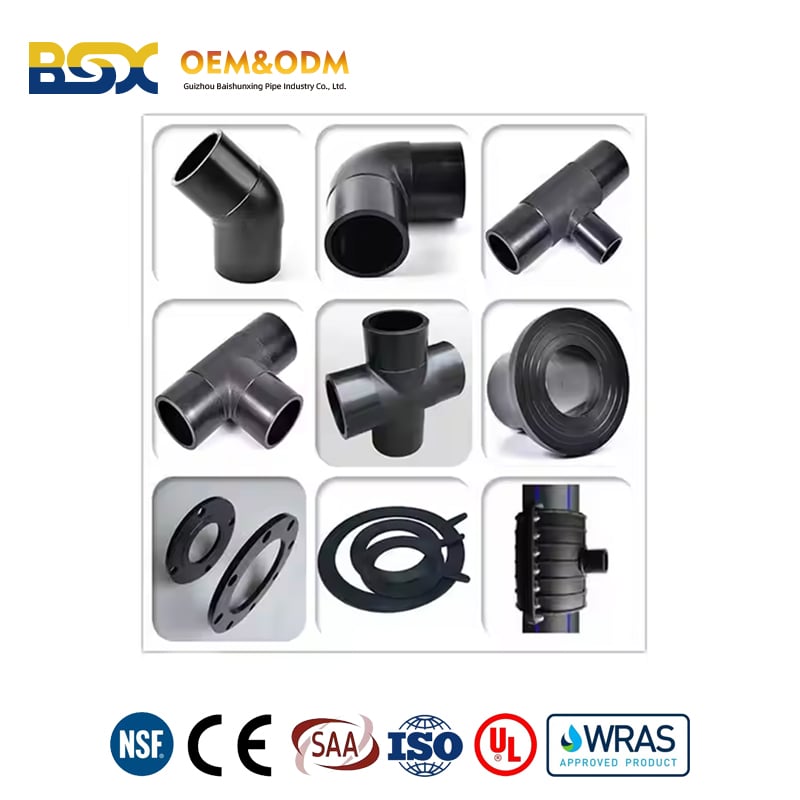
The Material Science Behind HDPE Fittings’ Chemical Resistance
How High-Density Polyethylene’s Molecular Structure Ensures Inertness
High-density polyethylene (HDPE) derives its exceptional chemical resistance from a tightly packed, linear molecular architecture. Composed of long ethylene chains with minimal branching, HDPE forms highly crystalline regions that restrict molecular mobility and impede chemical penetration. Its non-polar carbon–hydrogen backbone renders it inherently inert toward polar substances—including water, acids, and bases—while strong carbon–carbon bonds resist oxidation at ambient temperatures. Unlike metals, HDPE fittings are immune to galvanic corrosion, rusting, and pitting. Their hydrophobic surface further limits moisture and ion absorption, preserving mechanical integrity during prolonged chemical exposure. This structural stability underpins the decades-long service life of HDPE piping systems in aggressive industrial environments.
Proven Resistance to Acids, Bases, Solvents, and Oxidizers: What HDPE Fittings Withstand
HDPE fittings exhibit broad-spectrum resistance across major chemical classes. They withstand dilute and concentrated inorganic acids—including hydrochloric, sulfuric, and nitric—as well as strong alkalis like sodium hydroxide. Aliphatic hydrocarbons, alcohols, and many organic solvents cause no measurable swelling or degradation. Oxidizing agents such as hydrogen peroxide and sodium hypochlorite remain compatible within defined concentration and temperature limits. Crucially, HDPE requires no anticorrosion coatings or cathodic protection—unlike metal alternatives—maintaining surface integrity and strength throughout its lifecycle. It also resists environmental stress cracking when exposed to surfactants or detergents. This consistent inertness makes HDPE the preferred choice for transporting corrosive fluids in chemical processing, wastewater treatment, and industrial manufacturing, where leak prevention, low maintenance, and extended system life are mission-critical.
Real-World Performance Limits of HDPE Fittings in Chemical Service
While HDPE fittings provide outstanding chemical resistance, their real-world performance depends on operational context—not just laboratory data.
Temperature, Concentration, and Exposure Time: Key Degradation Factors
Three interdependent variables define HDPE’s practical resistance limits:
- Temperature: Chemical attack accelerates markedly above 60°C (140°F), reducing safe service thresholds for aggressive media.
- Concentration: Resistance is highly concentration-dependent—e.g., HDPE tolerates 30% sulfuric acid reliably but degrades rapidly at 70%.
- Exposure time: Short-term immersion tests do not reflect cumulative effects of decades-long continuous contact; long-term design must account for progressive permeation and embrittlement.
Pressure, Cyclic Stress, and Mixed-Chemical Environments: Beyond Lab Conditions
Field installations introduce complexities absent from standardized testing:
- Operating pressure: Elevated pressure increases chemical permeation rates, necessitating thicker DR-rated fittings for sustained chemical service.
- Cyclic stress: Repeated thermal expansion/contraction and pressure fluctuations induce fatigue not captured in static tests.
- Chemical mixtures: Synergistic interactions among multiple chemicals—common in wastewater or process streams—can accelerate degradation beyond predictions from single-chemical resistance charts.
HDPE Fittings in Action: Corrosion-Free Piping for Demanding Chemical Applications
Wastewater Treatment and Chemical Processing: Proven HDPE Fittings Use Cases
In municipal wastewater treatment, HDPE fittings resist acids, alkalis, hydrogen sulfide, and biofilm-induced corrosion—eliminating rust, minimizing scale buildup, and maintaining flow consistency. Field experience shows up to 50% longer maintenance intervals compared to carbon steel. Chemical processing plants rely on HDPE for conveying sulfuric acid, caustic soda, and industrial solvents, where its inertness prevents leaks that could disrupt production or trigger environmental incidents. Mining operations benefit equally: HDPE withstands acidic slurries and abrasive particles without internal erosion, thanks to its smooth, non-reactive bore. These applications confirm HDPE’s reliability where traditional materials fail—delivering corrosion-free performance, reduced downtime, and lower total cost of ownership.
HDPE Fittings vs. PVC and PP: Why Chemical Resistance Often Trumps Thermal Rating
When selecting piping materials for chemical service, engineers must weigh thermal capacity against chemical inertness—and HDPE frequently prevails due to its unmatched stability in aggressive media. PVC offers moderate thermal performance but degrades in polar solvents and suffers UV-induced embrittlement outdoors. Polypropylene (PP) resists many chemicals but lacks HDPE’s impact strength and flexibility, increasing vulnerability to mechanical cracking. In environments dominated by strong acids, bases, or oxidizers, chemical resistance directly governs safety, maintenance frequency, and system longevity. HDPE’s crystalline, non-polar structure maintains integrity over years of exposure—whereas PVC and PP begin to swell, soften, or crack under identical conditions. Though HDPE’s maximum continuous service temperature (60°C) is lower than CPVC or PVDF, most chemical processes operate well within this range. Prioritizing HDPE over thermally rated alternatives reduces corrosion failures, extends service life, and lowers lifecycle costs—a decisive advantage where chemical resilience is non-negotiable.
FAQ
What makes HDPE fittings chemically resistant?
HDPE’s chemical resistance stems from its tightly packed, linear molecular structure, hydrophobic surface, and inert carbon-hydrogen backbone, which block chemical penetration and resist degradation.
Which chemicals are compatible with HDPE fittings?
HDPE fittings resist acids, alkalis, aliphatic hydrocarbons, alcohols, organic solvents, and specific oxidizing agents like hydrogen peroxide within defined conditions.
Are there limits to HDPE’s chemical resistance?
Yes, factors like temperature, chemical concentration, exposure time, pressure, and mixed chemical environments can affect HDPE's performance in specific applications.
How do HDPE fittings compare to PVC and PP?
HDPE fittings often outperform PVC and polypropylene in chemical resistance, impact strength, and flexibility but have lower maximum service temperatures than CPVC or PVDF.