 EN
EN
Evaluating Financial Realities of Urban Water Infrastructure
Municipalities face massive budget constraints when managing water and wastewater systems. Over several decades, traditional piping systems incur massive expenditures due to corrosion, joint leaks, and water loss. When reviewing a major public works upgrade in a rapidly expanding metropolitan area, engineers discovered that upgrading to HDPE pipe resolved chronic water main breaks caused by shifting ground. The decision to implement HDPE pipe shifted the fiscal outlook entirely, demonstrating significant long-term cost benefits for municipal projects. City administrators often overlook how initial material expenses pale in comparison to lifetime operational costs. By analyzing the long-term cost benefits of high-density polyethylene, city planners realize that HDPE pipe eliminates the constant need for emergency repairs. Investing in durable HDPE pipe ensures that municipal projects remain well within budget constraints over fifty to one hundred years, proving that HDPE pipe is an economically sound choice for sustainable municipal projects.
Exceptional Durability and Zero Leakage Technology
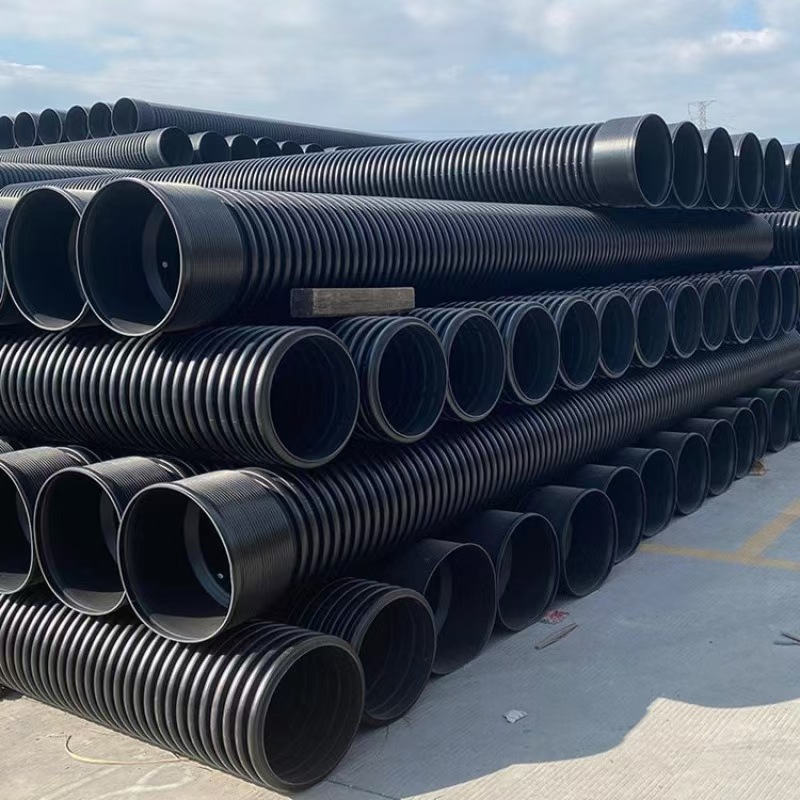
The structural advantages of HDPE pipe stem from its unique physical properties and connection methods. Unlike concrete or iron networks that suffer from corrosive soils and chemical degradation, HDPE pipe offers complete immunity to biological growth and harsh chemical compounds commonly found in wastewater. According to data published by the Plastics Pipe Institute, heat-fused joints create a continuous, monolithic HDPE pipe system that is completely leak-free. This zero-leak performance directly drives the long-term cost benefits that financial directors look for in municipal projects. Water loss from older systems costs local governments millions annually, but utilizing HDPE pipe prevents treated water from escaping into the surrounding environment. The flexibility of HDPE pipe also allows it to bend with dynamic soil movements and seismic activity without cracking. Eliminating mechanical joints reduces weak spots where failures typically occur, showcasing why HDPE pipe represents a major leap forward in terms of reliability, bringing long-term cost benefits to municipal projects.
Trenchless Installation Methods and Labor Savings
Installation expenses make up a huge portion of any public works budget, often exceeding the cost of materials themselves. Because HDPE pipe is lightweight and highly flexible, it supports advanced trenchless installation techniques like horizontal directional drilling and pipe bursting. Implementing trenchless installation with HDPE pipe dramatically reduces the need for extensive excavation, minimizing disruption to local businesses and busy traffic corridors. A study by the American Water Works Association notes that trenchless applications using HDPE pipe save up to forty percent in labor and surface restoration expenses compared to traditional open-cut methods. These immediate installation savings compound the long-term cost benefits over the lifecycle of municipal projects. Contractors can pull long segments of HDPE pipe through small entry points, reducing heavy machinery requirements and accelerating project timelines. The labor efficiencies gained from using HDPE pipe create an immediate fiscal advantage while ensuring that municipal projects remain trouble-free for generations, maximizing the long-term cost benefits for municipal projects.
Lifecycle Performance Metrics and Structural Life Expansion
Engineering evaluations require analyzing full lifecycle performance metrics rather than just upfront procurement prices. Independent research shows that HDPE pipe possesses a design life exceeding one hundred years under standard operating pressures. This extended lifespan directly enhances the long-term cost benefits by deferring replacement cycles far into the future, a crucial factor for the financial planning of municipal projects. While alternative materials require cathodic protection, routine flushing, and expensive slip-lining interventions within thirty years, HDPE pipe maintains its smooth interior wall surface indefinitely. This low friction coefficient prevents scale buildup and maintains high flow capacities over time, minimizing pumping energy costs and maximizing long-term cost benefits for municipal projects. Lower energy requirements translate into lower monthly utility bills for public water utilities. When municipal projects utilize HDPE pipe, the combination of low maintenance, minimal energy consumption, and immense durability results in the lowest total cost of ownership, securing long-term cost benefits for all municipal projects.
Supply Chain Excellence and Advanced Production Standards
Achieving these significant financial advantages requires sourcing high-performance materials from a manufacturer with world-class production capabilities and reliable delivery networks. This is where BSX plays a vital role in modern civil engineering by leveraging advanced high-capacity extrusion technology to produce flawless HDPE pipe that meets strict international specifications. The immense manufacturing capacity of BSX guarantees that large-scale municipal projects receive consistent material quality on schedule, eliminating costly delays that can stall public infrastructure developments. Through meticulous quality control and an integrated global logistics framework, BSX delivers optimized piping solutions designed to maximize the long-term cost benefits across diverse municipal projects. Securing top-tier HDPE pipe from a dedicated supplier like BSX ensures that municipal projects achieve optimal hydraulic efficiency, minimal environmental impact, and superior structural reliability, protecting public investments and delivering outstanding long-term cost benefits for communities around the globe.