 EN

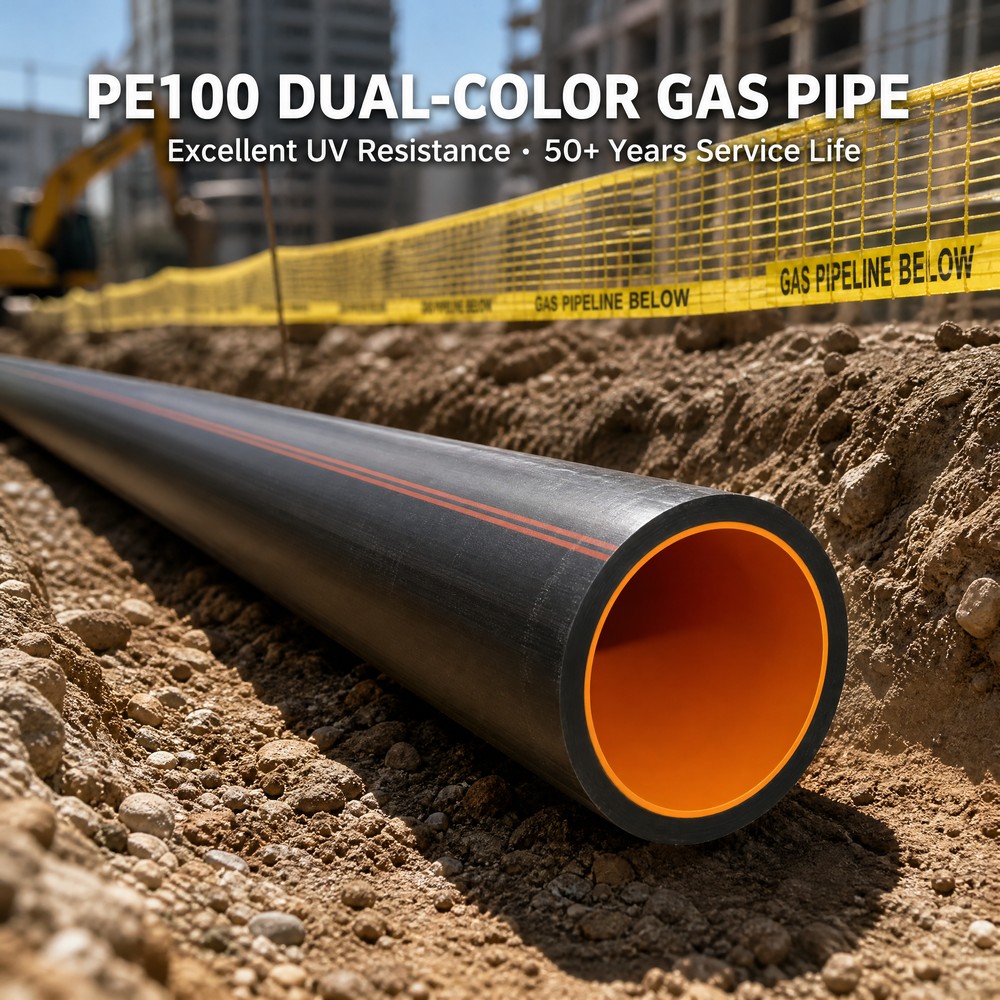
What ISO 4437 Requires for PE Pipe Used in Gas Distribution Systems
Material Grades, Pressure Ratings, and Long-Term Service Life Expectations
ISO 4437 defines the requirements for polyethylene (PE) pipes and fittings used for gaseous fuel distribution systems, covering material performance, dimensional requirements, mechanical properties, and quality control procedures.
The standard commonly applies to PE materials such as PE 80 and PE 100, which are classified according to their Minimum Required Strength (MRS).
- PE 80: MRS of 8.0 MPa
- PE 100: MRS of 10.0 MPa
PE 100 materials provide higher pressure capability compared with PE 80 due to their improved long-term hydrostatic strength. In addition, PE100-RC (Resistance to Crack) materials are enhanced PE100 grades developed for applications requiring improved resistance to slow crack growth, such as trenchless installation and challenging ground conditions.
Pressure capability is determined by several factors, including:
- Material grade
- Standard Dimension Ratio (SDR)
- Design coefficient
- Operating temperature
- Application requirements
Common SDR classifications include SDR 11 and SDR 17.6. For example, PE100 SDR 11 pipes are widely used in gas distribution systems requiring higher pressure performance, while SDR 17.6 provides a lower-pressure alternative with thinner wall construction.
The design pressure of a PE gas pipe is calculated based on the material’s MRS value, SDR classification, and applicable safety factors. Manufacturers must ensure that raw materials meet the required mechanical performance through long-term hydrostatic strength testing according to standards such as ISO 1167.
ISO 4437-based PE gas pipes are designed for a minimum service life of 50 years under specified operating conditions. In practice, properly manufactured and correctly installed PE gas distribution systems often achieve significantly longer operational lifetimes due to polyethylene’s excellent resistance to corrosion, chemical attack, and environmental stress.
To maintain long-term performance, PE compounds typically include carbon black or stabilizer systems that protect against oxidation and environmental degradation.
Key Performance Requirements: Slow Crack Growth Resistance and Material Durability
Why Slow Crack Growth Resistance Matters in PE Gas Pipes
Slow crack growth (SCG) resistance is one of the most important performance characteristics for PE gas distribution pipes.
Unlike sudden failures, slow crack growth develops gradually under long-term stress caused by:
- Internal pressure
- Ground movement
- Point loading
- Installation conditions
- Environmental factors
ISO 4437 requires PE gas pipes to demonstrate adequate resistance to slow crack growth through standardized testing methods.
Common evaluation methods include:
- Notched Pipe Test (NPT) according to ISO 13479
- Full Notch Creep Test (FNCT) for advanced material evaluation
PE100-RC materials provide enhanced SCG resistance compared with conventional PE100 grades and are commonly selected for:
- Trenchless pipe installation
- Reduced excavation projects
- Rocky soil conditions
- Challenging installation environments
In addition to slow crack growth resistance, PE gas pipes must maintain dimensional stability, hydrostatic strength, and resistance to environmental degradation throughout their service life.
Manufacturers must implement strict quality control procedures to ensure that each production batch maintains consistent material properties and complies with ISO 4437 requirements.
How to Verify PE Pipe Compliance with ISO 4437
Certification, Testing, and Traceability Requirements
For international PE gas pipe procurement, compliance verification involves more than reviewing a certificate. Buyers should evaluate the complete quality system, including material documentation, production control, and testing records.
In Europe, PE pipes for gas distribution are commonly specified according to EN 1555, which is technically aligned with ISO 4437 requirements.
Depending on the country and utility requirements, manufacturers may need approval from recognized certification organizations such as:
- Kiwa
- DVGW
- Bureau Veritas
- Other accredited certification bodies
Third-party certification programs typically include:
- Factory production audits
- Product testing
- Periodic surveillance
- Batch verification
Traceability Documentation
Traceability is essential for gas distribution projects.
Professional PE pipe manufacturers should provide documentation covering:
- Raw material resin batch
- Material grade
- Production date
- Extrusion parameters
- Pipe dimensions
- Pressure test results
- Quality inspection records
Important testing data may include:
- Melt flow rate (MFR)
- Oxidation induction time (OIT)
- Hydrostatic pressure testing
- Dimensional inspection
- Mechanical performance verification
For large infrastructure projects, complete traceability allows operators to verify that installed pipes match approved specifications and production records.
PE100-RC Verification: Why Additional Testing May Be Required
Beyond Standard SDR11 Pressure Testing
Standard ISO 4437 production testing verifies essential properties such as:
- Dimensions
- Hydrostatic strength
- Material consistency
However, PE100-RC materials are specifically developed for enhanced resistance to slow crack growth.
Their improved performance is typically demonstrated through additional testing methods, including:
- Full Notch Creep Test (FNCT)
- Notched Pipe Test (NPT)
- Strain hardening modulus evaluation where applicable
These tests evaluate the material’s ability to resist crack initiation and propagation under long-term mechanical stress.
For buyers sourcing PE100-RC gas pipes, it is important to confirm:
- The actual compound grade used
- Third-party certification
- Test reports linked to the supplied material
- Batch traceability
This prevents risks caused by material substitution or inconsistent production quality.
Global Adoption and Procurement Considerations for ISO 4437 PE Gas Pipes
International Standards and Market Requirements
ISO 4437 is widely recognized as a key international reference for PE pipes used in gaseous fuel distribution.
Different regions may implement the requirements through local standards or regulatory systems.
Europe
European gas utilities commonly reference:
- EN 1555 series
- ISO 4437 technical requirements
National utility approvals and third-party certification may also be required depending on the market.
United Kingdom
The UK continues to use internationally recognized PE gas pipe standards through national specifications and utility requirements.
Asia and Emerging Markets
Many countries in Asia, Africa, and Latin America reference ISO-based standards for infrastructure projects, especially where international engineering specifications are required.
For global buyers, ISO 4437 compliance provides confidence in:
- Material quality
- Long-term reliability
- International project acceptance
- Consistent manufacturing practices
Beyond ISO 4437: Supporting Standards for PE Gas Pipe Systems
Related Standards for Design, Testing, and Application
While ISO 4437 defines requirements for PE pipes used in gas distribution, complete system reliability depends on additional standards and engineering practices.
ISO 13479 – Slow Crack Growth Testing
ISO 13479 specifies the notched pipe test method used to evaluate resistance to slow crack growth in polyethylene pipes.
This testing is particularly important for PE100-RC materials and long-term durability assessment.
ISO 12176 – Equipment and Components for PE Pipe Joining
PE gas pipe systems depend on reliable joining methods, including:
- Butt fusion
- Electrofusion
Proper jointing procedures and qualified equipment help ensure leak-free operation.
ISO 15494 – Industrial Thermoplastic Piping Systems
ISO 15494 provides requirements for industrial thermoplastic piping systems, including material and dimensional considerations for industrial applications.
ISO 4427 – PE Water Supply Systems
ISO 4427 covers polyethylene piping systems for water supply applications.
Because gas and water applications have different requirements, selecting the correct standard is essential:
- ISO 4437 → gaseous fuel distribution
- ISO 4427 → water supply applications
Using application-specific materials and standards prevents incorrect product selection and ensures system reliability.
What Buyers Should Check When Purchasing ISO 4437 PE Gas Pipes
Selecting a reliable PE pipe manufacturer requires evaluating more than product pricing.
Professional buyers should confirm:
Material Documentation
- PE80 or PE100 grade confirmation
- Resin manufacturer information
- Material certificates
Product Certification
- ISO 4437 compliance
- EN 1555 certification where applicable
- Third-party approvals
Quality Control
- Hydrostatic pressure test records
- Dimensional inspection reports
- Batch traceability
- Production monitoring
Manufacturing Capability
- Modern extrusion equipment
- Experienced technical team
- Stable production capacity
- Export experience
A qualified PE gas pipe supplier should provide complete technical documentation and consistent product quality throughout the project lifecycle.
Frequently Asked Questions (FAQ)
What is the minimum service life of PE pipes under ISO 4437?
PE pipes manufactured according to ISO 4437 requirements are designed for a minimum service life of 50 years under specified operating conditions. Proper installation and operation can allow PE gas systems to achieve much longer service periods.
What materials are commonly used for ISO 4437 PE gas pipes?
The most common materials are PE 80 and PE 100. PE100 offers higher strength and pressure performance, while PE100-RC provides enhanced resistance to slow crack growth.
How is ISO 4437 compliance verified?
Compliance is verified through material testing, production quality control, traceability documentation, and, where required, third-party certification schemes aligned with regional requirements.
What tests are used to evaluate PE100-RC performance?
PE100-RC materials are commonly evaluated through slow crack growth tests such as the Full Notch Creep Test (FNCT) and Notched Pipe Test (NPT).
What is the difference between ISO 4437 and ISO 4427?
ISO 4437 applies to polyethylene pipes used for gaseous fuel distribution, while ISO 4427 applies to polyethylene pipes used for water supply systems.
How do I choose a reliable ISO 4437 PE pipe manufacturer?
Buyers should evaluate certification records, material traceability, production capability, quality control procedures, and technical support before selecting a supplier.
Table of Contents
- What ISO 4437 Requires for PE Pipe Used in Gas Distribution Systems
- Material Grades, Pressure Ratings, and Long-Term Service Life Expectations
- Key Performance Requirements: Slow Crack Growth Resistance and Material Durability
- Why Slow Crack Growth Resistance Matters in PE Gas Pipes
- How to Verify PE Pipe Compliance with ISO 4437
- Certification, Testing, and Traceability Requirements
- Traceability Documentation
- PE100-RC Verification: Why Additional Testing May Be Required
- Beyond Standard SDR11 Pressure Testing
- Global Adoption and Procurement Considerations for ISO 4437 PE Gas Pipes
- International Standards and Market Requirements
- Beyond ISO 4437: Supporting Standards for PE Gas Pipe Systems
- Related Standards for Design, Testing, and Application
- What Buyers Should Check When Purchasing ISO 4437 PE Gas Pipes
- Frequently Asked Questions (FAQ)
- What is the minimum service life of PE pipes under ISO 4437?
- What materials are commonly used for ISO 4437 PE gas pipes?
- How is ISO 4437 compliance verified?
- What tests are used to evaluate PE100-RC performance?
- What is the difference between ISO 4437 and ISO 4427?
- How do I choose a reliable ISO 4437 PE pipe manufacturer?