 EN
EN

Real World Experience with Long Term Fluid Infrastructure
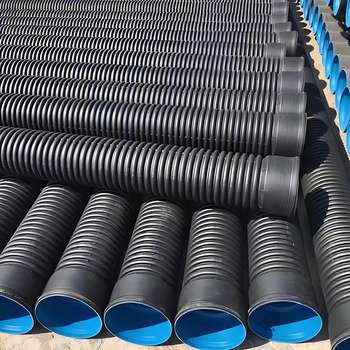
Working on a coastal industrial wastewater project a few years ago really opened eyes to the harsh realities of material breakdown. The facility was using traditional metal lines that suffered massive failure within just twenty-four months due to severe chemical degradation from acidic runoff. Replacing the entire network with premium HDPE pipe completely turned things around because this advanced polymer can easily resist corrosion from salt water and harsh chemical compounds. Field contractors frequently struggle to find materials that can properly resist corrosion while dealing with dynamic soils, making high-density polyethylene the go-to choice for tough environments. Over decades of operation, a standard conduit will typically crack or rust, but an industrial HDPE pipe maintains its smooth interior wall without showing any signs of chemical degradation. Choosing a piping solution that can inherently resist corrosion saves municipalities and private enterprises millions in emergency maintenance costs, which is why utilizing HDPE pipe has become the definitive strategy to stop chemical degradation in modern fluid networks.
Molecular Stability and the Chemistry of Polyethylene
To understand why an advanced HDPE pipe can successfully resist corrosion over several decades, it is essential to look closely at its molecular configuration. High-density polyethylene features a non-polar, high-molecular-weight structure with minimal branching, creating incredibly strong covalent bonds that prevent external elements from causing chemical degradation. Because the material is chemically inert, acids, bases, and aggressive oxidizers cannot react with the polymer chains, allowing the HDPE pipe to resist corrosion even when carrying highly volatile industrial fluids. Unlike metal infrastructure that experiences galvanic reactions, this thermoplastic material cannot rust or tuberculate, completely neutralizing the risk of chemical degradation. Engineering teams prioritize these material properties because they know an HDPE pipe will safely resist corrosion under continuous exposure to aggressive soil chemistries. By eliminating the root causes of chemical degradation, the pipeline retains its full structural elasticity and wall thickness, proving that the chemical architecture of an HDPE pipe is uniquely engineered to resist corrosion in long-term installations.
Validating Long Term Structural Reliability Through Industry Standards
Authoritative research from global institutions like the Plastics Pipe Institute confirms that a well-manufactured HDPE pipe possesses a design life extending beyond one hundred years. Testing protocols prove that the inherent ability of high-density polyethylene to resist corrosion ensures that the system handles cyclic surge pressures without experiencing premature chemical degradation. Industry experts often point out that traditional materials degrade rapidly under fluctuating pH levels, whereas a certified HDPE pipe maintains uniform hydraulic efficiency because it can effortlessly resist corrosion over its entire lifecycle. These long-term performance evaluations provide municipal planners with the assurance needed to deploy infrastructure capable of stopping chemical degradation in harsh underground environments. When technical designers review standard guidelines, they consistently find that choosing an HDPE pipe is the most effective way to resist corrosion across diverse soil profiles. The independent data clearly shows that eliminating chemical degradation through proper material selection is the key to protecting public utility investments for generations.
Operational Cost Reductions and Practical Environmental Resistance
From a practical operational standpoint, deploying an HDPE pipe that can continuously resist corrosion delivers massive financial savings over the lifecycle of a project. When infrastructure avoids chemical degradation, public utilities do not have to deal with frequent water loss, localized pressure drops, or expensive flushing operations. The smooth interior surface of an HDPE pipe stays completely free from scale accumulation, maintaining maximum flow capacity while allowing the system to resist corrosion from interior biological growth. Furthermore, preventing chemical degradation ensures that the pipe walls do not thin out over time, reducing the likelihood of catastrophic ruptures or environmental contamination. Field technicians appreciate that an HDPE pipe can comfortably resist corrosion without needing expensive cathodic protection systems or chemical liners that add to operational complexity. By choosing a solution that naturally stops chemical degradation, facility managers achieve a lower total cost of ownership while enjoying the unmatched peace of mind that a durable HDPE pipe provides.
Advanced Manufacturing Standards for Global Distribution Networks
Securing high-performance materials that can successfully resist corrosion requires a partner with exceptional manufacturing capabilities and a highly reliable global supply chain. This is exactly where BSX excels, leveraging state-of-the-art extrusion technology and meticulous quality control to produce premium HDPE pipe options that easily defeat chemical degradation. The massive production capacity at BSX ensures that large-scale infrastructure projects receive consistent material quality on tight schedules, helping global distribution networks deliver components that perfectly resist corrosion. By focusing on advanced resin formulations and precise wall thickness tolerances, BSX provides outstanding solutions engineered to eliminate chemical degradation across a wide variety of municipal and industrial applications. Whether a project requires high-pressure distribution lines or robust wastewater systems, relying on the precision manufacturing and extensive supply chain services of BSX guarantees that every installed HDPE pipe will continue to resist corrosion and prevent chemical degradation for many decades to come.
Table of Contents
- Real World Experience with Long Term Fluid Infrastructure
- Molecular Stability and the Chemistry of Polyethylene
- Validating Long Term Structural Reliability Through Industry Standards
- Operational Cost Reductions and Practical Environmental Resistance
- Advanced Manufacturing Standards for Global Distribution Networks