 EN
EN

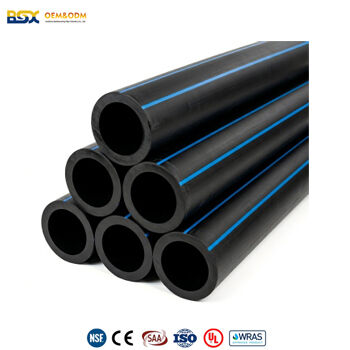
Material Chemistry: How HDPE’s Molecular Structure Enables Extreme Environmental Resilience
The exceptional durability of HDPE pipe stems from its unique polymer architecture. High crystallinity—typically 70–80%—results from tightly packed linear chains that create robust intermolecular forces. This inert hydrocarbon backbone actively prevents electrochemical corrosion and degradation from soil microbes, acids, and salts, unlike metals or concrete that deteriorate through oxidation or chemical reactions.
High crystallinity and inert hydrocarbon backbone prevent corrosion and degradation
HDPE’s minimal molecular branching allows dense crystalline regions to form, delivering:
- Impermeability to ions and contaminants that trigger corrosion in metallic pipes
- Hydrophobicity that resists biofilm adhesion and microbiologically influenced corrosion (MIC)
- Inertness to electrochemical reactions, eliminating cathodic protection needs required for steel systems
Resistance to environmental stress cracking (ESC) and oxidative aging across temperature extremes (−40°C to 50°C+)
The material maintains ductility even at sub-zero temperatures due to its long-chain polymer structure, which absorbs impact energy without brittle fracture. UV-stabilized formulations and antioxidant additive packages further enhance resilience—preventing photo-oxidative degradation in exposed installations and neutralizing free radicals that drive thermoplastic aging. This integrated molecular design enables reliable performance across extreme thermal cycles, from arctic installations to desert heat waves, without developing stress cracks or embrittlement.
Superior Chemical Resistance: HDPE Pipe vs. Traditional Alternatives in Aggressive Media
Performance comparison: HDPE pipe outperforms ductile iron, PVC, and coated steel in acidic, saline, and wastewater environments
High-density polyethylene (HDPE) pipe resists chemical attack at a molecular level. Its inert hydrocarbon backbone and high crystallinity prevent corrosion—a critical weakness in ductile iron and coated steel when exposed to acidic or saline media. PVC, though moderately resistant, suffers from progressive brittleness and leaching of plasticizers over time. In wastewater environments—where pH swings and aggressive compounds like hydrogen sulfide are common—HDPE maintains structural integrity while alternatives degrade. The table below summarizes key performance differences:
| Feature | HDPE Pipe | Ductile Iron | PVC | Coated Steel |
|---|---|---|---|---|
| Resistance to acids | Excellent | Poor (corrodes) | Good | Moderate (coating fails) |
| Resistance to saline | Excellent | Poor | Good | Poor (pitting) |
| Longevity in wastewater | >50 years | <20 years (lined) | 25–30 years | 15–20 years |
| Leachate / contamination risk | Minimal | High (rust) | Moderate (plasticizers) | High (coating breakdown) |
Broad pH stability (1–14) validated through municipal infrastructure and industrial chemical conveyance case studies
HDPE pipe functions reliably across the full pH spectrum—from strongly acidic (pH 1, e.g., sulfuric acid) to highly alkaline (pH 14, e.g., caustic soda)—a benchmark confirmed in thousands of real-world installations. Municipal wastewater plants routinely handle acidic industrial influent and alkaline cleaning agents within the same network without degrading the pipe. In industrial settings, HDPE has replaced lined steel in concentrated chemical conveyance systems, eliminating corrosion allowances, reducing wall thickness requirements, and removing the need for costly coatings or cathodic protection. These applications demonstrate HDPE’s maintenance-free reliability where traditional alternatives fail.
Proven Long-Term Structural Integrity: Slow Crack Growth Resistance and 50+ Year Service Life
ISO 13479 and ASTM D5397 test validation confirming HDPE pipe’s resistance to slow crack growth under sustained load
HDPE pipe’s long-term structural integrity is rigorously validated by ISO 13479 and ASTM D5397—standardized tests that simulate decades of sustained pressure loading to assess resistance to slow crack growth (SCG). These methods confirm how HDPE’s molecular structure inhibits both crack initiation and propagation under demanding conditions. Unlike brittle materials prone to sudden failure, HDPE maintains structural integrity even with minor imperfections, offering inherent redundancy and predictable performance. As a result, HDPE pipe consistently achieves service lives exceeding 50 years in municipal water distribution, stormwater management, and industrial process piping—backed by decades of field performance and internationally recognized test protocols.
FAQ
What makes HDPE pipes resistant to corrosion and degradation?
HDPE pipes have a high level of crystallinity and a chemically inert hydrocarbon backbone. These features prevent corrosion, biofilm adhesion, microbiologically influenced corrosion (MIC), and electrochemical reactions.
How does HDPE resist extreme environmental conditions?
HDPE’s long-chain polymer structure allows it to maintain ductility in extreme temperatures ranging from −40°C to 50°C+. Additives such as UV stabilizers and antioxidants protect it from photo-oxidative degradation and extend its lifespan.
Why are HDPE pipes preferred in wastewater and chemical environments?
HDPE pipes outperform traditional materials like ductile iron, PVC, and coated steel in acidic, saline, and wastewater conditions due to their high resistance to chemical attacks and structural integrity.
What is the lifespan of HDPE pipes?
HDPE pipes have a service life exceeding 50 years, validated through ISO 13479 and ASTM D5397 tests for resistance to slow crack growth and sustained load.
How does HDPE handle broad pH ranges?
HDPE performs reliably across the full pH range (1–14), making it ideal for environments involving strong acids, alkalis, and industrial chemicals.