EN
EN
Mining Tailings
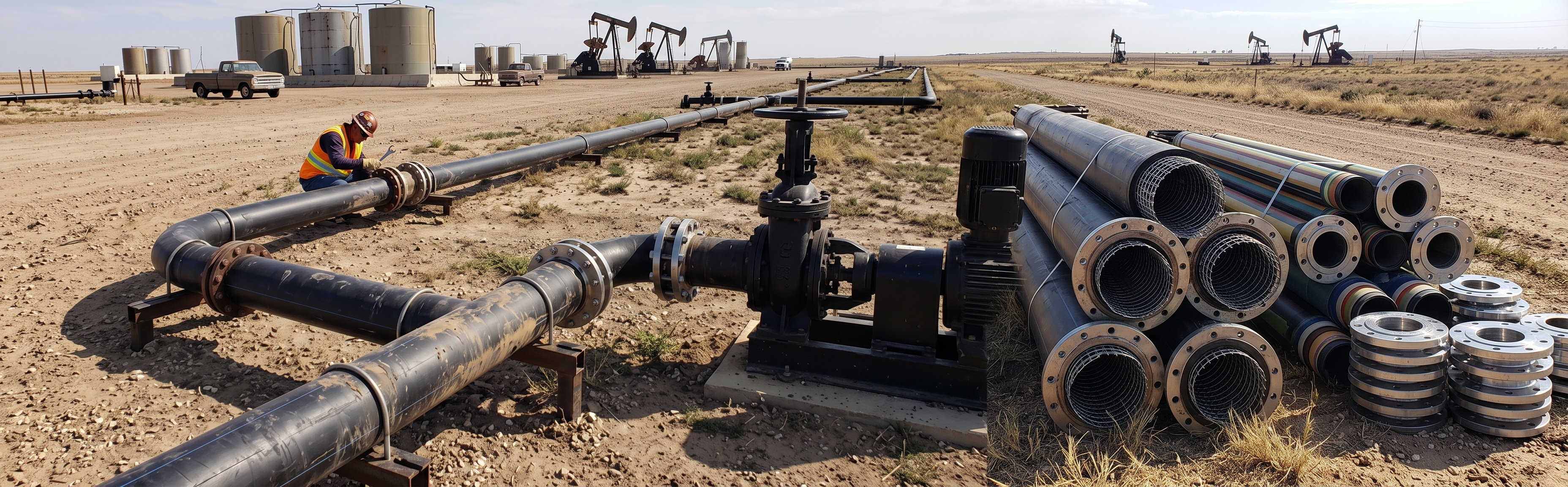
Mining PE Pipe Solutions for Tailings Transportation
Steel Wire Reinforced PE and Co-extruded POE Mining Pipeline Systems
High-Performance Mining Pipeline Systems Designed for Abrasion, Pressure and Extreme Operating Conditions
1. Operating Environment & Media Characteristics
Mining tailings transportation systems continuously operate under extreme, high-load, and high-wear conditions. Unlike standard water pipelines, the slurry transport medium presents unique challenges, typically containing:
Abrasive Materials: Quartz sand and raw mineral particles.
Heavy Loads: High-concentration solid materials.
Harsh Environments: Corrosive chemical components.
Dynamic Stress: High-velocity flowing slurry.
2. Pain Points of Traditional Pipelines
When exposed to these severe factors, traditional piping systems frequently fail, resulting in significant operational inefficiencies:
Severe internal wall wear
Insufficient pressure capacity
Pipe body deformation
Connection leakage
Frequent downtime for maintenance and repairs
3. The BSX Pipe Solution
To resolve these critical industry challenges, BSX Pipe provides a comprehensive Mining PE Pipeline System. Our specialized product portfolio includes:
PE Mining Pipe
Steel Wire Reinforced PE Mining Pipe
Co-extruded POE Mining Pipe
Core Advantages:
Specifically engineered for diverse and demanding mining conditions, BSX Pipe delivers a superior tailings transportation solution characterized by outstanding wear resistance, exceptional structural strength, and an extended service life—ensuring continuous, reliable operation.
Severe Abrasion from High-Concentration Slurry
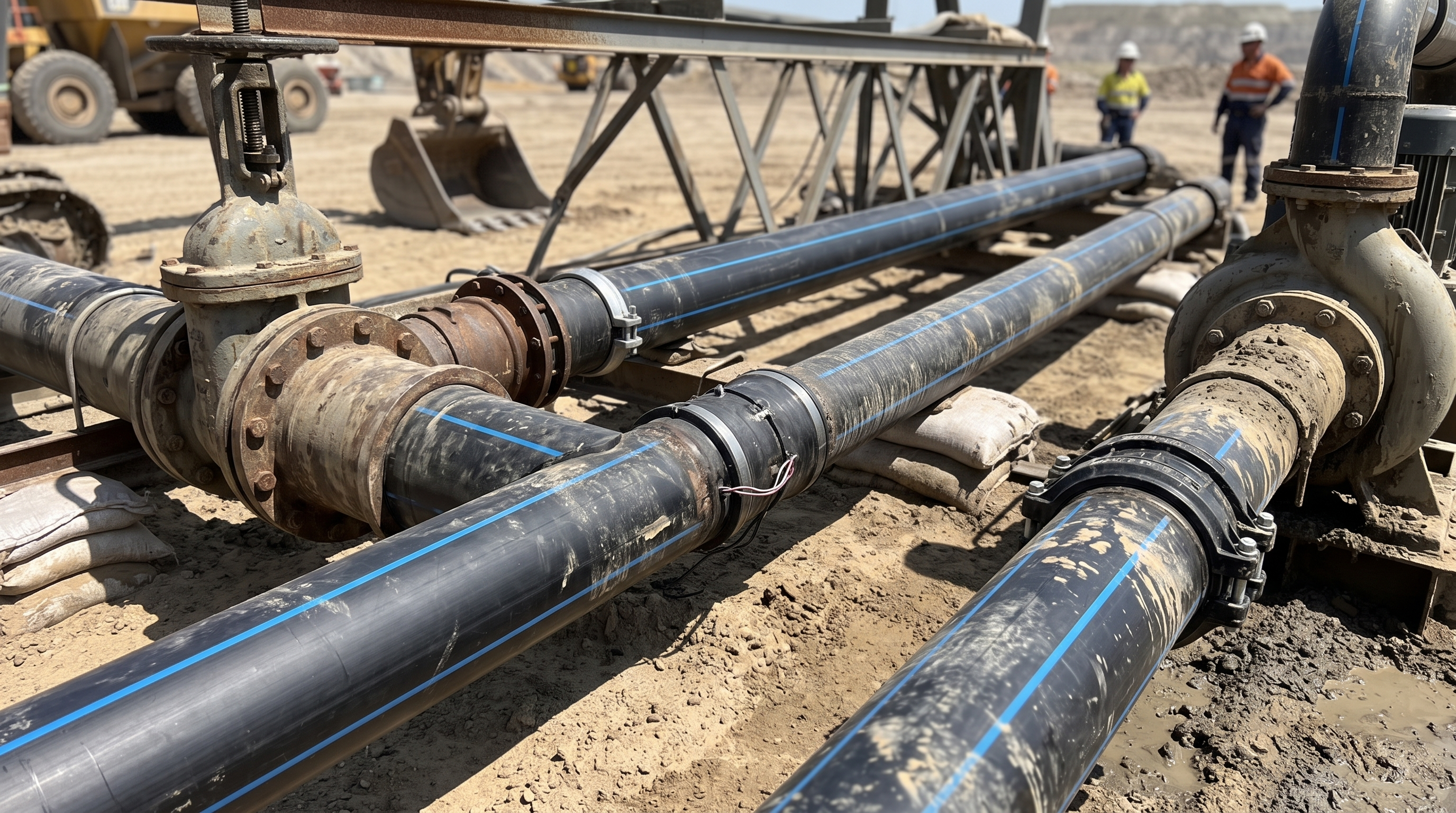
Severe wear caused by high-concentration slurry. Wear is the primary challenge in tailings transport. As high-concentration slurry flows at high velocity, abrasive materials within it continuously scour the inner pipe walls. Key abrasive components in the slurry include quartz particles, metallic minerals, and rock fragments. Long-term wear poses several operational risks:
Wall thinning: Compromises structural integrity.
Reduced transport capacity: Lowers operational efficiency.
Increased leakage risk: Leads to system failures and downtime.
High-risk wear zones: Wear is particularly severe in critical, high-stress areas, including pump discharge zones, pipe elbows, and high-velocity flow sections.
BSX Piping Solutions:
To address severe wear, BSX Piping utilizes advanced wear-resistant materials. For standard pipe sections, we recommend co-extruded POE mining pipes to absorb kinetic energy impacts; for high-risk zones (such as elbows and pump outlets), we recommend steel-wire reinforced PE mining pipes to maximize strength, prevent leakage, and extend the system's overall service life.
Wear-Resistant PE Materials Extend Pipeline Operating Life
Wear-resistant PE material extends pipeline service life
Designed to meet the demands of long-distance slurry transport, BSX PE mining pipelines leverage superior material properties to maximize service life and serve as a replacement for traditional steel piping systems in high-load operating conditions.
Key performance characteristics of PE mining pipelines:
Exceptional wear resistance: Highly resistant to the continuous scouring and abrasion caused by slurry.
Low friction coefficient: Optimizes fluid dynamics, prevents mineral scaling, and reduces pumping energy consumption.
High impact toughness: Effectively absorbs mechanical shocks, maintains structural stability under high pressure, and offers strong resistance to deformation.
By choosing BSX PE mining pipeline systems, mining enterprises can eliminate corrosion-related risks and drastically reduce maintenance-related downtime, thereby achieving a highly cost-effective tailings transport solution and significantly extending the pipeline's service life.
Steel Wire Reinforced PE Provides Higher Pressure Capability
Steel-wire-reinforced PE mining pipes utilize a composite structure of PE and steel wire reinforcement.
The steel wire reinforcement layer enhances:
Hoop strength;
Resistance to internal pressure;
Dimensional stability.
Suitable for:
High-pressure slurry transport;
Long-distance tailings discharge;
Deep-mine dewatering systems.
Co-extruded POE Layer Enhances Abrasion Resistance
Co-extruded POE mining pipes utilize multi-layer co-extrusion technology.
The structure typically consists of a PE main body layer and a POE wear-resistant reinforcement layer.
POE material offers high elasticity, high impact resistance, and excellent wear resistance.
This helps reduce damage from particle impact and inner-wall abrasion, thereby lowering the frequency of pipe replacement.
BSX Mining Pipeline System Solutions
PE Mining Pipe Flexible Solution for General Mining Transportation
PE mining pipes are suitable for:
Mine water supply and drainage;
Low- to medium-pressure tailings transport;
Circulating water systems in mineral processing plants.
Engineering advantages: Excellent chemical resistance; suitable for acidic mine water, alkaline wastewater, and industrial processing media.
Flexible underground installation offering high toughness and resistance to ground settlement; convenient on-site installation. Ideal for mountainous mines and areas with complex terrain.
Steel Wire Reinforced PE Mining Pipe High Strength Pipeline for Heavy-Duty Applications
Steel wire mesh reinforced PE mining pipe is an important choice for high-pressure mining transportation.
Composite Reinforcement Structure
Structural Features: Outer PE material is corrosion-resistant and wear-resistant. The steel wire reinforcement layer provides high strength and limits radial deformation.
Suitable Applications: Long-distance Tailings Pipeline; High Pressure Slurry Transport; Mine Dewatering Pipeline.
Co-extruded POE Mining Pipe Advanced Wear Protection System
Co-extruded POE mining pipe designed for extreme wear conditions.
Multi-layer Performance
The POE reinforcement layer provides:
Superior abrasion resistance;
Impact protection;
Extended service intervals.
The PE base layer maintains: flexibility, chemical stability, and connection reliability.
Recommended Applications
High-concentration tailings;
Mineral sand transport;
High-wear slurry systems.
Technical Specifications & International Engineering Standards
Applicable Standards
ISO 4427 — PE pressure piping system
ISO 12162 — Thermoplastics classification
CJ/T 225 — Steel wire reinforced PE composite pipes
ASTM D3350 — Polyethylene pipe material classification
Engineering Parameter Framework
|
Parameter |
PE Mining Pipe |
Steel Wire Reinforced PE Pipe |
Co-extruded POE Pipe |
|
Application |
General Mining Transport |
High Pressure Slurry |
Severe Abrasion |
|
Structure |
PE Solid Wall |
PE + Steel Wire Composite |
PE + POE Multi-layer |
|
Pressure Capability |
Medium |
High |
Customized |
|
Abrasion Resistance |
Good |
Excellent |
Superior |
|
Flexibility |
Excellent |
Good |
Excellent |
|
Chemical Resistance |
Excellent |
Excellent |
Excellent |
|
Joint Method |
Butt Fusion |
Electro/Fusion Connection |
Fusion Connection |
|
Service Life |
50 Years+ |
50 Years+ |
50 Years+ |