EN
EN

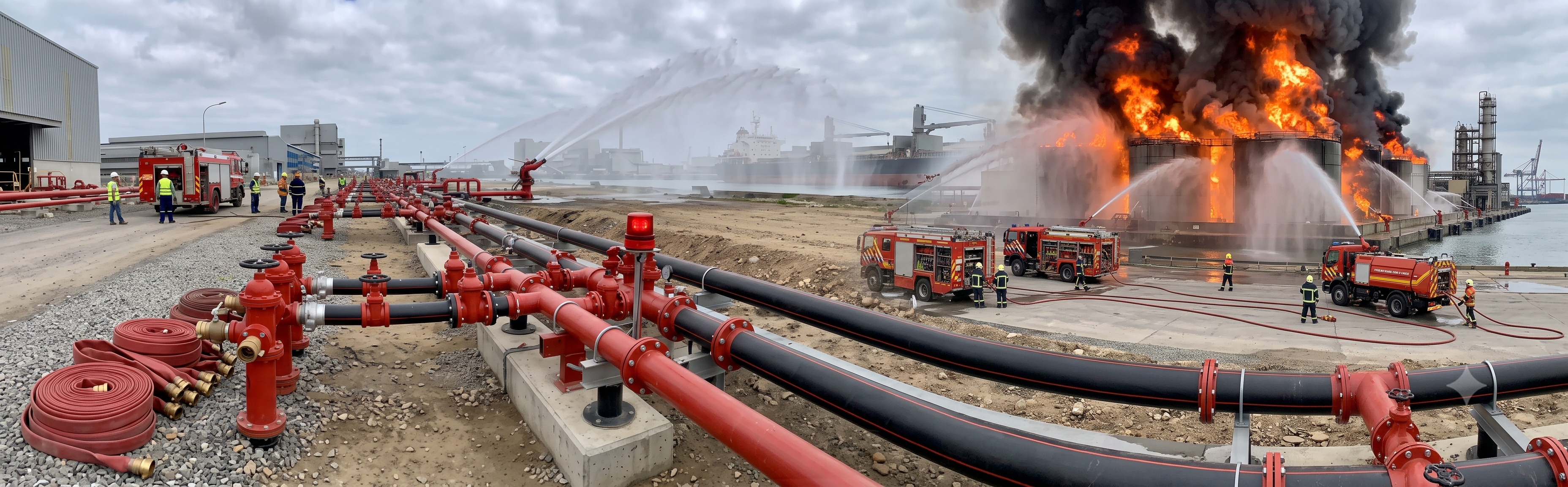
Fire Protection
Underground Fire Protection Water Pipeline Systems
PE & Steel Wire Reinforced PE Pipes for Reliable Fire Networks
Engineered Fire Water Main Solutions Combining PE Flexibility and Reinforced Composite Strength for Critical Safety Applications
Firefighting water supply systems differ from standard water pipelines; they must operate reliably over the long term and deliver stable pressure and the required flow rate immediately during fire emergencies.
BSX Pipe offers comprehensive firefighting piping solutions—including PE pipes and steel-wire reinforced PE pipes—suitable for the following applications:
Underground fire hydrant systems
Industrial fire water supply networks
Automatic sprinkler systems for warehouses
Municipal emergency water supply
Mining and energy facilities
By combining the corrosion resistance of PE materials with the high-pressure capability of steel-wire reinforced composite structures, BSX helps build low-maintenance, highly reliable fire water supply networks for diverse projects worldwide.
Fire Protection Pipeline Engineering Challenges
Fire Water Networks Must Maintain Instant Flow During Emergency Activation
Firefighting piping systems typically remain in a static standby state for extended periods but must activate instantly in the event of a fire. The system must withstand fire pump startup pressure, sudden valve opening, hydraulic shock, and high flow demands. Inadequate pipe performance can lead to pressure instability, leakage, pipe rupture, and reduced firefighting capability.
Therefore, the design of firefighting piping must prioritize:
Pressure rating (PN class)
Surge resistance (water hammer pressure)
Long-term pressure performance
Underground Corrosion Reduces Traditional Fire Pipeline Reliability
Fire protection pipelines typically remain in service underground for over 30 years. Conventional metal pipes are susceptible to soil corrosion, electrochemical reactions, and the effects of groundwater chemicals. Over time, issues such as internal rusting, reduced flow capacity, and maintenance difficulties can arise. For fire protection systems, any factor that impairs flow capacity compromises emergency response effectiveness.
Different Fire Protection Projects Require Different Pressure Solutions
Pressure requirements vary significantly across different systems.Low & Medium Pressure Fire Networks:
Suitable for: Commercial buildings, municipal hydrant systems, and general underground fire mains. Typically utilizes: PE100 HDPE pipe. High-Pressure Fire Networks Suitable for:
Industrial plants
Petrochemical facilities
Mining sites
Long-distance fire water transmission
Requires: Steel wire-reinforced PE composite pipe. Offers superior: Hoop strength, pressure resistance, and structural stability.
BSX Fire Protection Pipeline System Solutions
PE100 HDPE Fire Protection Pipes Corrosion-Free Underground Fire Mains
HDPE PE100 piping is suitable for most underground fire-fighting water supply systems. It offers high hydraulic efficiency; the smooth inner wall of PE pipe reduces friction loss and pumping energy consumption while maintaining stable flow rates over the long term. It provides excellent resistance to impact and ground movement; the PE material's superior flexibility allows it to accommodate soil settlement, ground vibration, and thermal expansion, thereby reducing the risk of underground pipeline rupture. Thermal fusion jointing ensures leak-free performance.PE pipes are joined using butt fusion or electrofusion to create a continuous pipeline structure.
Advantages:
Eliminates mechanical leakage points
Improves system reliability
Extends service life
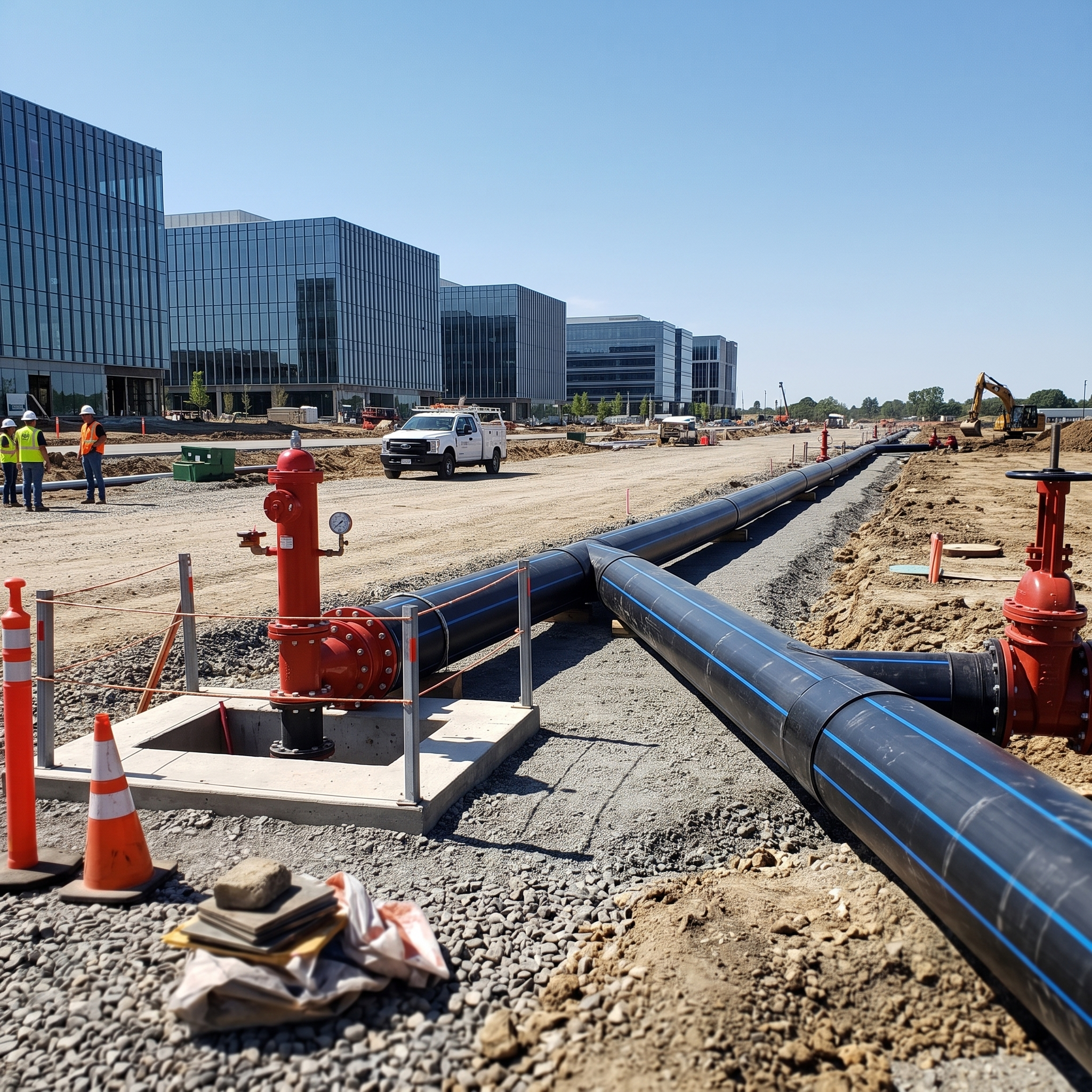
Steel Wire Reinforced PE Composite Pipe High Pressure Fire Water Transmission Solution
For high pressure, large diameter fire protection systems, BSX offers steel wire reinforced PE composite pipes. Their structure comprising an inner PE layer, a high strength steel wire skeleton, and an outer PE protective layer forms a high strength composite pressure pipeline. The steel wire reinforcement layer provides superior pressure resistance, enhancing hoop strength, burst pressure resistance, and dimensional stability. These pipes are suitable for high pressure fire mains, long-distance transmission, and large diameter systems, offering improved resistance to pressure surges such as the sudden pressure fluctuations that occur when fire pumps start.
The steel reinforced structure minimizes pipe expansion and enhances resistance to pressure induced stress, corrosion, chemical attack, and groundwater damage. Compared to steel pipes, they require no anti-corrosion maintenance.
Complete BSX Fire Pipeline System Configuration
|
Application |
Recommended Product |
|
Building Underground Fire Main |
PE100 Pipe |
|
Municipal Fire Hydrant Network |
PE100 Pipe |
|
Industrial Fire Water System |
Steel Wire Reinforced PE |
|
Large Diameter Fire Transmission |
Steel Wire Reinforced PE |
|
High Pressure Fire Pump Connection |
Reinforced PE System |
|
Pipe Size |
Hazard Level & Scale |
Recommended Applications |
|
|
DN63 – DN110 |
Terminal Branches & Light Duty |
Indoor fire hydrant branches, small-to-medium residential buildings, and terminal water replenishment for standard sprinkler drops. |
|
|
DN125 – DN200 |
Commercial & Sprinkler Mains |
Commercial complexes, standard warehouses, and primary sprinkler system loops requiring stable pressure delivery. |
|
|
DN225 – DN315 |
Industrial & High-Hazard |
Heavy industrial plants, large logistics hubs, and high-hazard areas requiring high-volume water curtains or deluge systems. |
|
|
DN355 & Above |
Municipal & Mega-Infrastructure |
Municipal fire water ring mains, international airports, deep-water seaports, and exterior hydrant networks for mega-infrastructure. |
|
PE Fire Protection Pipeline Technical Specifications
BSX fire protection systems are engineered according to international PE piping requirements.
Applicable Standards:
ISO 4427 — PE piping systems for water supply
EN 12201 — Polyethylene piping systems
ASTM D3035 — PE pressure pipe specifications
CJ/T 189 — Steel wire reinforced polyethylene composite pipe
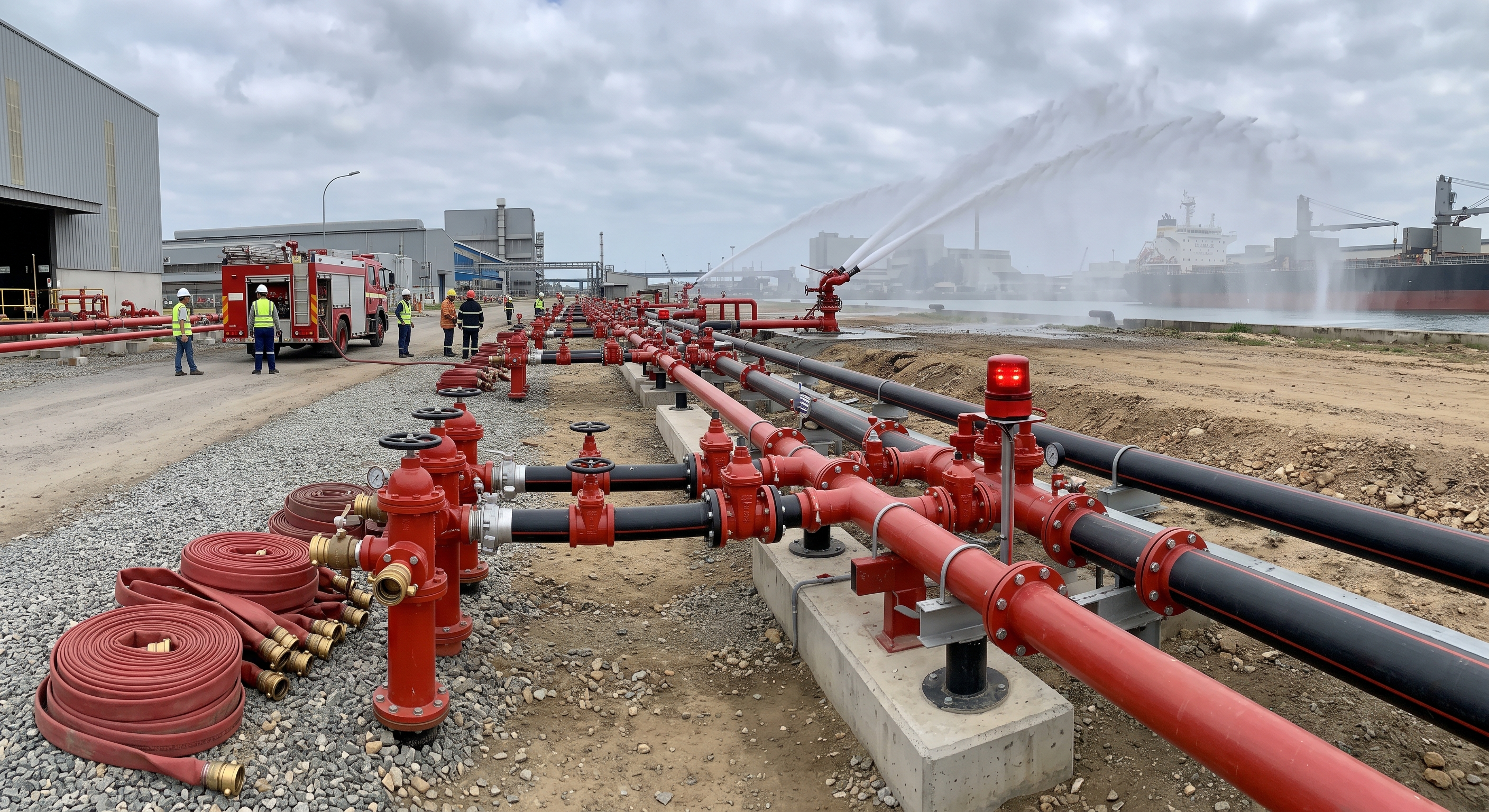
Typical Engineering Parameters:
|
Parameter |
PE100 Pipe |
Steel Wire Reinforced PE |
|
Material |
PE100 HDPE |
PE + Steel Wire Composite |
|
Pressure Rating |
PN6–PN16 |
PN10–PN35 |
|
Diameter Range |
DN20–DN1600 |
DN50–DN1600 |
|
Connection |
Butt Fusion / Electrofusion |
Electrofusion / Flange |
|
Flexibility |
Excellent |
High |
|
High Pressure Capability |
Medium |
Excellent |
|
Application |
Standard Fire Networks |
Critical Fire Systems |
Why Choose BSX Fire Protection Pipes?
[ 01 ] Extreme Pressure Reliability
Engineered to maintain stable, high-capacity water pressure and withstand extreme structural stress during critical fire emergencies.
[ 02 ] 100% Rust-Proof & Clog-Free
Corrosion-immune interiors prevent scaling and buildup, ensuring maximum hydraulic flow and eliminating the risk of sprinkler head blockages.
[ 03 ] Leak-Proof Network Integrity
Advanced jointing technologies create permanent, secure seals, preventing dangerous water pressure drops across your entire fire ring main.
[ 04 ] Direct Source Factory & OEM
As a direct B2B manufacturer, we eliminate middleman markups while offering flexible OEM customization for specific pipe sizes and SDR pressure ratings.
[ 05 ] Global Safety Compliance
Every batch undergoes rigorous in-house hydrostatic burst testing to strictly meet international municipal, commercial, and industrial fire safety standards.