 EN
EN
UV Resistance of HDPE Irrigation Pipe: Carbon Black and Weather Protection
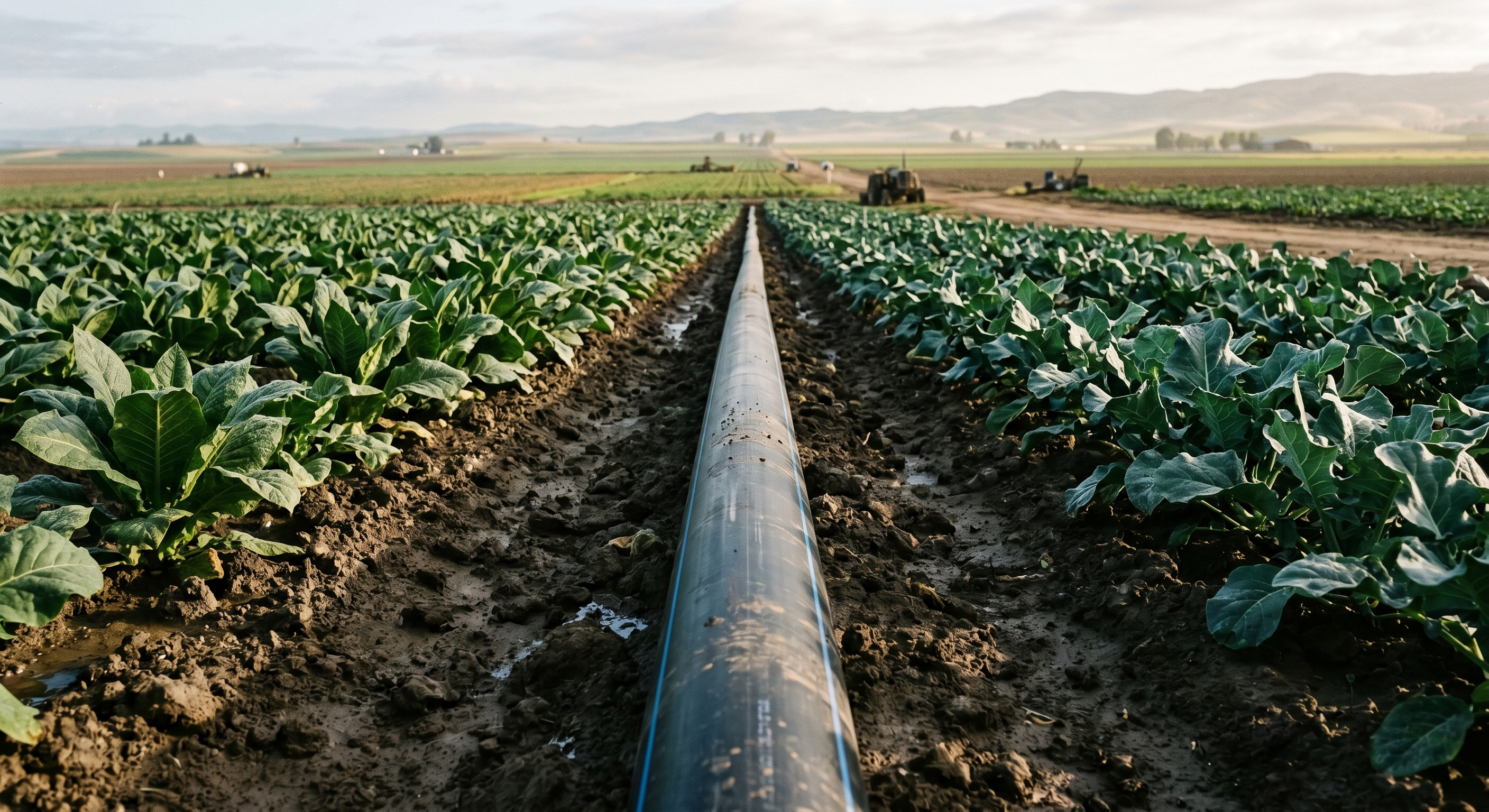
HDPE irrigation pipe is often installed outdoors or in shallow trenches where it may be exposed to direct sunlight, temperature changes, moisture, and mechanical stress. Without adequate UV stabilization, prolonged ultraviolet exposure can gradually affect the polymer structure and reduce surface durability.
Carbon black is widely used to improve the UV resistance of polyethylene pipe. When properly incorporated and dispersed in the HDPE compound, it helps absorb and attenuate UV radiation before it can penetrate deeply into the polymer. Combined with correct material selection, installation, and operating conditions, carbon black stabilization helps HDPE irrigation pipe maintain its mechanical performance during long-term outdoor service.
How Carbon Black Protects HDPE Irrigation Pipe from UV Radiation
Ultraviolet radiation can initiate photo-oxidative degradation in polyethylene. UV energy can generate reactive species within the polymer, which then react with oxygen and contribute to molecular-chain degradation. Over time, this process may cause surface oxidation, cracking, embrittlement, and reduced mechanical performance.
Carbon black provides an effective physical barrier against this process. Fine carbon black particles distributed throughout the HDPE matrix absorb and attenuate incoming UV radiation, reducing the amount of energy that reaches the polymer chains. Good dispersion is particularly important because it helps provide more uniform UV protection throughout the pipe wall.
This protection does not mean that HDPE is completely unaffected by long-term weathering. Rather, it significantly slows the rate of UV-induced degradation. For irrigation systems exposed to sunlight, a properly stabilized HDPE compound is therefore an important part of long-term pipe performance.
Carbon Black Content and Dispersion in HDPE Pipe
Carbon black concentration is an important factor in outdoor HDPE pipe performance, but content alone does not determine UV resistance. The type of carbon black, particle characteristics, dispersion quality, compound formulation, pipe manufacturing process, and expected exposure conditions all influence weathering performance.
For this reason, manufacturers typically use controlled carbon black masterbatch or a properly formulated PE compound to achieve consistent dispersion during extrusion. Poor dispersion can create localized concentrations of carbon black and reduce material uniformity, while inadequate stabilization can leave the polymer more vulnerable to prolonged UV exposure.
The familiar black appearance of outdoor HDPE pipe is therefore more than a color choice. Properly formulated black PE compounds are commonly used because carbon black provides effective protection against solar UV radiation. However, the actual material formulation should always be verified against the applicable pipe specification rather than assuming that color alone guarantees UV resistance.
ASTM D3350 and HDPE Material Classification
ASTM D3350 provides a cell classification system for identifying polyethylene plastic pipe and fitting materials. The classification considers properties such as density, melt index, flexural modulus, tensile strength, slow crack growth resistance, hydrostatic strength, color, ultraviolet stabilization, and thermal stability.
For irrigation pipe manufacturers and buyers, ASTM D3350 can provide a useful framework for evaluating the underlying PE compound. However, the cell classification should not be treated as a direct prediction of service life. ASTM itself states that D3350 is intended for material identification and is not designed to provide application-specific engineering data or determine suitability for a particular installation.
Therefore, when specifying HDPE irrigation pipe for outdoor use, material classification should be considered together with pipe dimensions, pressure rating, operating temperature, installation conditions, and expected UV exposure.
Weathering, Temperature, and Mechanical Stress
UV radiation is only one part of the environmental conditions affecting HDPE irrigation pipe. Outdoor pipe can also experience daily and seasonal temperature changes, soil movement, pressure fluctuations, impact, and other mechanical stresses.
Temperature cycling causes the pipe to expand and contract. Although HDPE has good flexibility and can accommodate movement better than many rigid materials, repeated environmental and mechanical stresses should still be considered during system design and installation.
Prolonged UV exposure can gradually weaken the outermost material if stabilization is inadequate. Mechanical damage, point loading, sharp rocks, poor backfill, or excessive operating pressure can then become more significant sources of failure.
For this reason, HDPE pipe durability depends on the combined performance of the material, installation, and operating environment, rather than UV resistance alone.
Installation Practices That Improve HDPE Irrigation Pipe Longevity
Even a high-quality UV-stabilized HDPE irrigation pipe can experience premature damage if it is poorly installed. Proper trench preparation, bedding, backfilling, joint fusion, and pressure testing help prevent mechanical stresses that can reduce long-term reliability.
For buried systems, suitable trench depth and backfill should protect the pipe from excessive external loads and accidental damage. Rocks or construction debris that create concentrated point loads should be avoided around the pipe.
Fusion joints also require appropriate equipment, procedures, and operator training. Butt fusion and electrofusion can produce strong, leak-resistant connections when performed according to the pipe and fitting manufacturer's procedures.
For above-ground installations, additional attention should be given to UV exposure, thermal movement, pipe support, and accidental impact. The installation design should reflect local climate conditions and the expected operating pressure and temperature.
HDPE Irrigation Pipe vs. PVC for Outdoor Applications
Both HDPE and PVC can be used in irrigation systems, but their material characteristics differ. HDPE offers high flexibility, good impact resistance, and heat-fused joints that can create continuous piping systems with fewer mechanical connections.
PVC is rigid and widely used in agricultural and landscape irrigation, but its installation and mechanical behavior differ from HDPE. When selecting between the two, engineers should consider pressure requirements, installation conditions, soil movement, temperature, jointing methods, UV exposure, and total lifecycle requirements.
For outdoor applications, the key question is not simply whether a pipe is made from HDPE or PVC. The more important consideration is whether the selected pipe compound and design are appropriate for the expected environmental and hydraulic conditions.
Common Factors That Reduce HDPE Irrigation Pipe Service Life
Several factors can compromise the long-term performance of HDPE irrigation pipe. Inadequate UV stabilization can accelerate surface degradation, while poor carbon black dispersion can create inconsistencies in protection and material properties.
Incorrect pressure selection is another important issue. Operating a pipe continuously outside its rated design conditions can accelerate creep and reduce expected service performance. Elevated temperatures can also affect the long-term pressure capability of polyethylene.
Installation-related problems, including poor bedding, point loading, improper fusion, excessive bending, and insufficient protection from external damage, may create localized stresses that are more important than the effects of UV exposure alone.
The best approach is therefore to select a properly formulated HDPE irrigation pipe, verify the applicable material and pipe standards, and install it according to the manufacturer's recommendations and project requirements.
FAQ About HDPE Irrigation Pipe UV Resistance
What makes HDPE irrigation pipe resistant to UV radiation?
UV-stabilized HDPE commonly uses carbon black to absorb and attenuate ultraviolet radiation. This reduces UV penetration into the polymer and slows photo-oxidative degradation during outdoor exposure.
Why is carbon black used in HDPE irrigation pipe?
Carbon black is an effective UV stabilizer for polyethylene because it provides strong UV absorption when properly dispersed in the polymer matrix. It is widely used in black polyethylene products intended for outdoor service.
Does black HDPE pipe mean it has unlimited UV resistance?
No. Black color alone does not guarantee a specific service life. UV performance depends on the complete material formulation, carbon black dispersion, manufacturing quality, exposure conditions, and application requirements.
What does ASTM D3350 tell buyers about HDPE pipe material?
ASTM D3350 provides a classification system for polyethylene pipe and fitting materials based on several material properties, including ultraviolet stabilization. It helps identify and compare PE compounds, but it should not be used by itself to predict the service life of a specific irrigation installation.
Is ASTM D2513 an irrigation pipe UV standard?
No. ASTM D2513 is specifically a specification for polyethylene gas pressure pipe, tubing, and fittings used in fuel gas distribution. It should not be presented as the primary irrigation-pipe UV standard.
How can installation affect HDPE irrigation pipe longevity?
Proper trenching, bedding, backfilling, fusion, pressure testing, and protection from point loads help prevent mechanical damage and stress concentrations. Good installation practices are essential for realizing the long-term performance potential of UV-stabilized HDPE pipe.
Conclusion
The UV resistance of HDPE irrigation pipe depends on more than its black appearance. Proper carbon black stabilization and dispersion help protect polyethylene from ultraviolet radiation and slow photo-oxidative degradation during outdoor exposure.
However, long-term performance also depends on material classification, pipe design, operating temperature and pressure, installation quality, and local environmental conditions. By selecting an appropriately formulated HDPE irrigation pipe and following applicable material standards and installation practices, irrigation system designers and buyers can improve durability and reduce maintenance requirements in demanding outdoor applications.
Table of Contents
- UV Resistance of HDPE Irrigation Pipe: Carbon Black and Weather Protection
- How Carbon Black Protects HDPE Irrigation Pipe from UV Radiation
- Carbon Black Content and Dispersion in HDPE Pipe
- ASTM D3350 and HDPE Material Classification
- Weathering, Temperature, and Mechanical Stress
- Installation Practices That Improve HDPE Irrigation Pipe Longevity
- HDPE Irrigation Pipe vs. PVC for Outdoor Applications
- Common Factors That Reduce HDPE Irrigation Pipe Service Life
-
FAQ About HDPE Irrigation Pipe UV Resistance
- What makes HDPE irrigation pipe resistant to UV radiation?
- Why is carbon black used in HDPE irrigation pipe?
- Does black HDPE pipe mean it has unlimited UV resistance?
- What does ASTM D3350 tell buyers about HDPE pipe material?
- Is ASTM D2513 an irrigation pipe UV standard?
- How can installation affect HDPE irrigation pipe longevity?
- Conclusion